IN
PASSING
Move your cursor, then scroll
/ work / eternity
Role
Director
Editor
Year
2025
Deliverable
Short Documentary
Category
Society
Art
Creative Direction
Media Production
Coursework
A portrait of two Sydney street artists from opposing worlds. We followed their work, the subculture, and where their paths collide to document the textures and tensions ingrained in graffiti and street art, the oh-so local, ephemeral, and perpetual.
/ work / eternity
Deliverable
Short Documentary
Category
Society
Art
Role
Director
Editor
Year
2025
IN
PASSING
A portrait of two Sydney street artists from opposing worlds. We followed their work, the subculture, and where their paths collide to document the textures and tensions ingrained in graffiti and street art, the oh-so local, ephemeral, and perpetual.
Tap anywhere, then scroll
Creative Direction
Creative Direction
Coursework
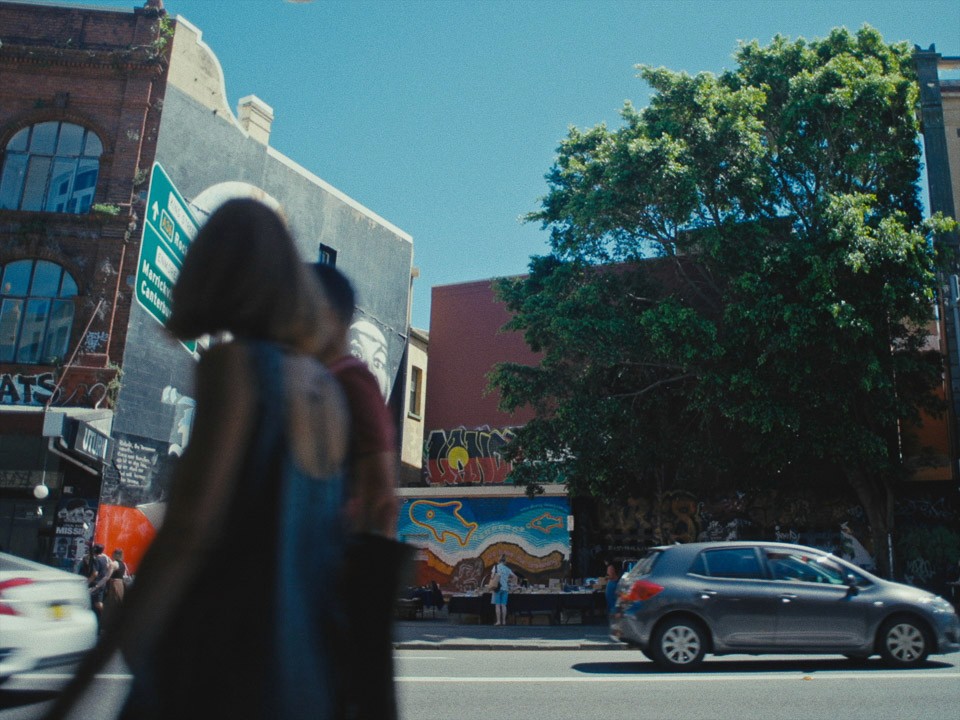
Watch the Film
Dreamland
I. The Work
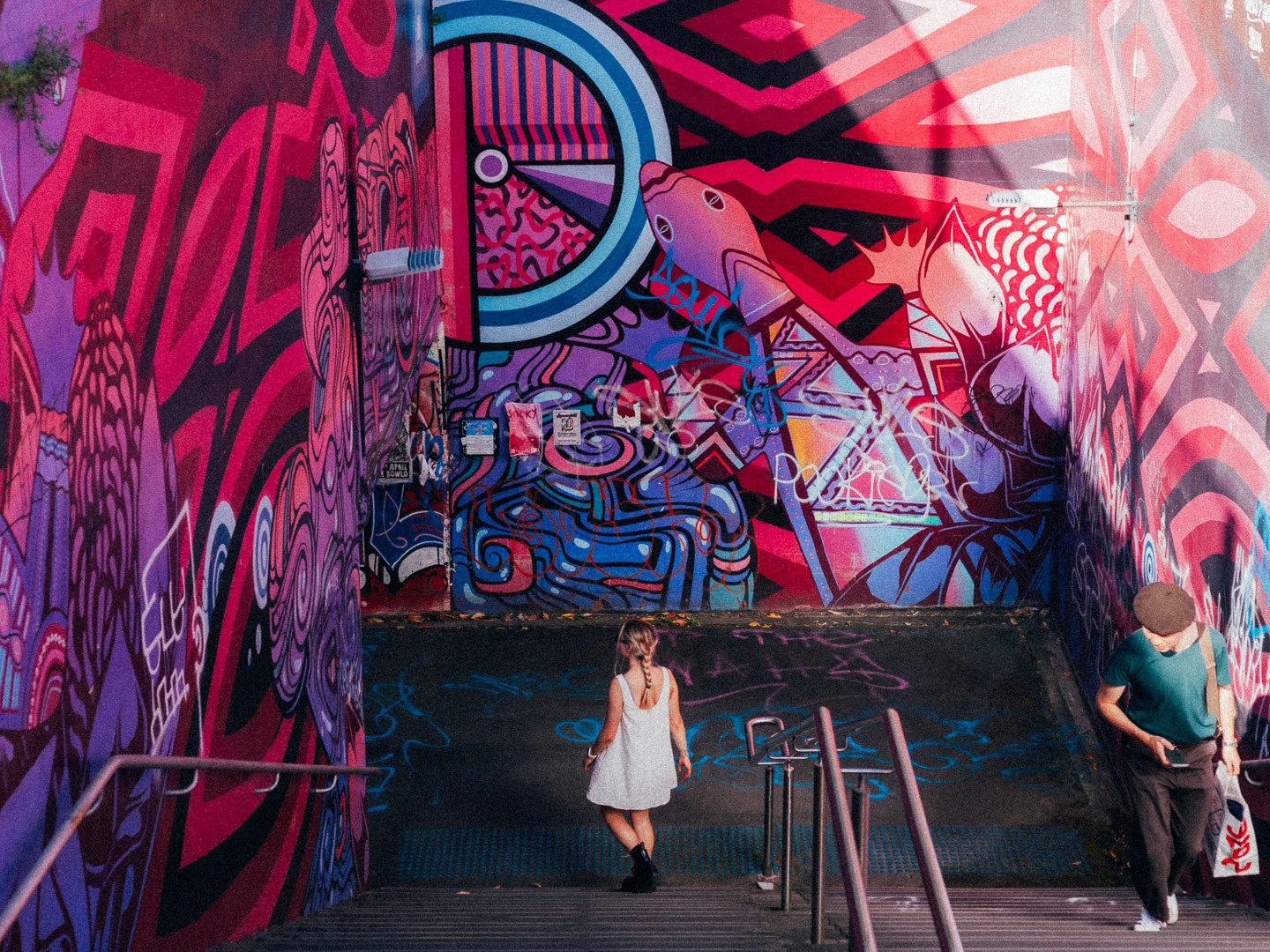
The Inner West. A place where, depending on who you ask, the same surface can be either a crime scene or a cultural landmark. Or both. Such tension, so messy, so unsettled, yet so alive, is precisely what we wanted In Passing to sit well within and to explore.
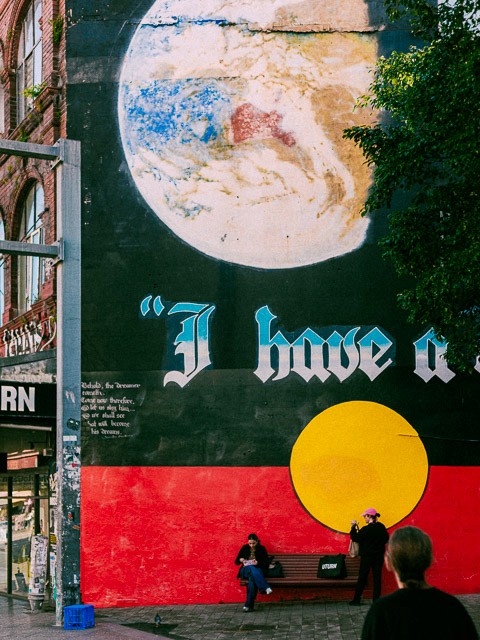
Our short documentary centres on two street artists who couldn't be any more different. Mistery, one of Sydney's foundational graffiti writers, contrasted with Oliver Wall, an emerging muralist with a formal fine arts background. In conversation with them, we painted a portrait of an overlooked subculture in constant negotiation with itself, over legality, authorship, meaning, and who gets to decide what belongs on a wall. Below: heritage-listed I Have a Dream mural, King St, Newtown.
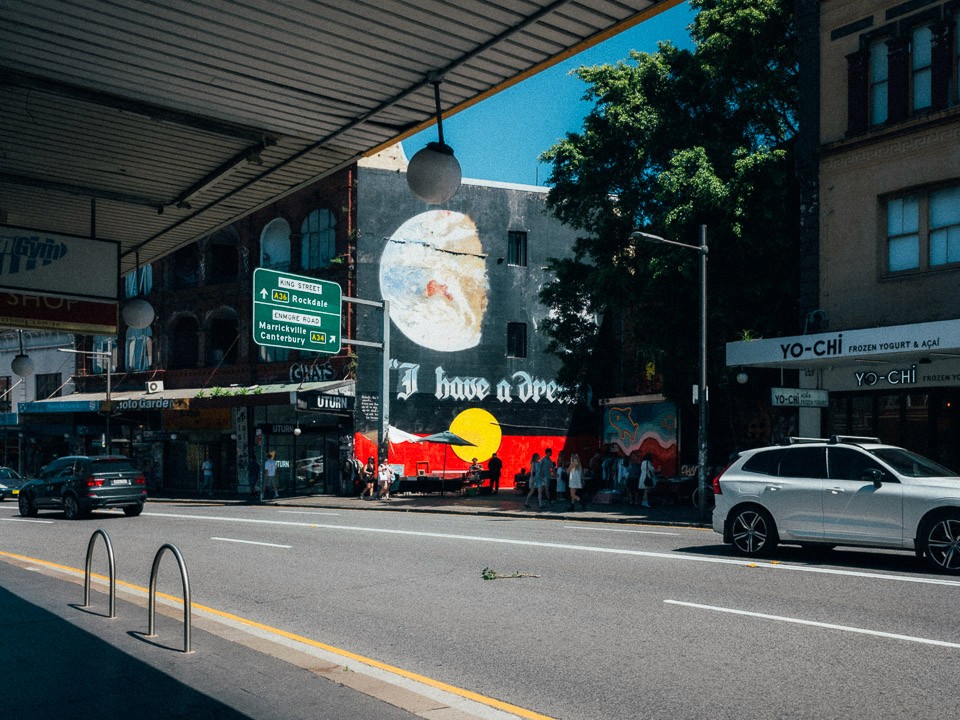
Hover to reveal
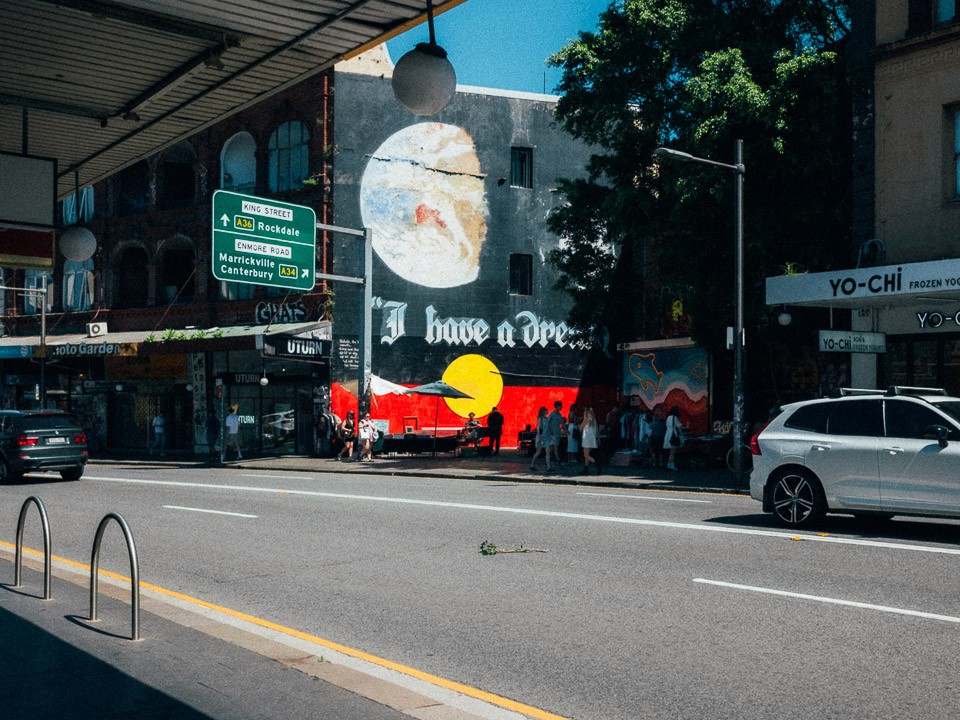
Historical photograph (1991) by Juilee Pryor, City of Sydney Archives
Contemporary photograph (2025) by Minh Le for In Passing
Narrative
To achieve our artistic ambitions, we landed on a hybrid documentary approach. Structurally, the film leans towards the expository mode as it's dialogue-driven, though we borrowed just enough from essayistic and observational, and even poetic, to keep it from hardening into a lecture.
And there's the conversation. Or rather, two conversations to the fantasy of one. Despite never having met each other, the "dialogue" between Mistery and Oliver Wall is the heart of our film. The intention was always to let the juxtaposition do the heavy lifting, with voices cut against each other so precisely that it plays like an ongoing exchange.
Storytelling is non-linear by design. Each perspective from each artist recontextualises the other as the film unfolds, two separate threads quietly building toward a convergence neither subject ever knew they were part of. Conversing past and around each other, yet every so often, they'd land in the same place without realising it. Fine, I'll rewatch Oppenheimer.
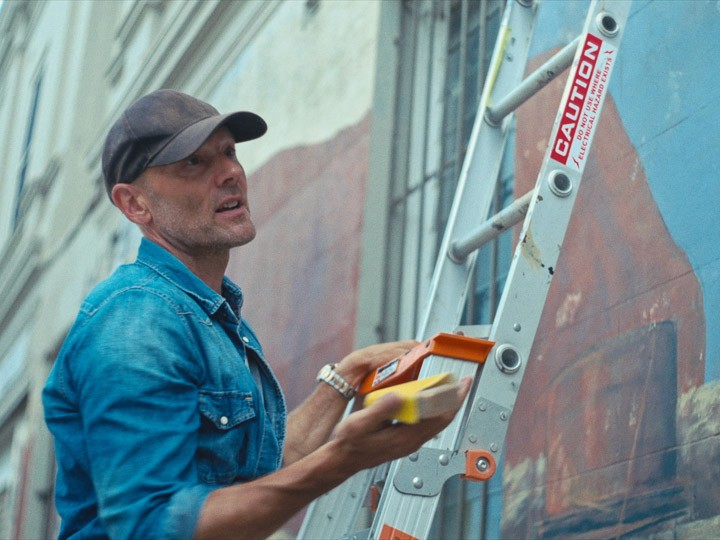
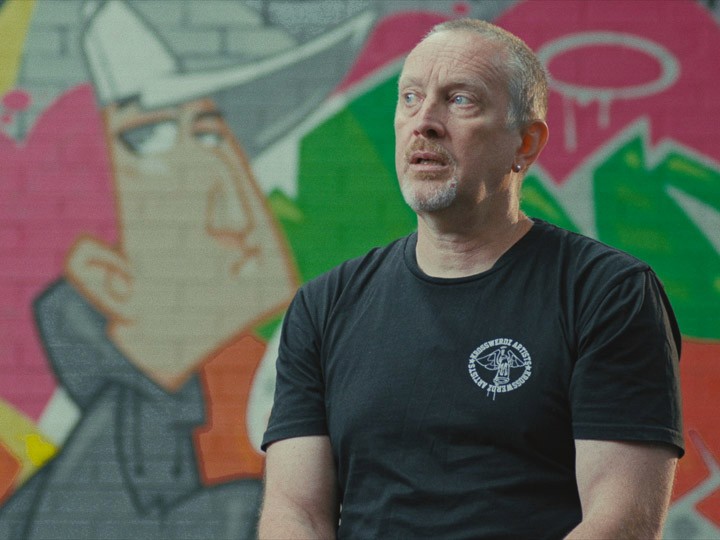
Mistery, being a foundational figure of Sydney's graffiti, naturally became our chronicler through the scene. By contrasting his voice with Oliver Wall's present-time experiences, opinions, and process, we would foreground meaning-making as an active tension.
By giving space to personal stories of both artists, we wanted In Passing to transform an intricate societal matter into something utterly human. Where challenges, empathy, and reflection coexist.
Optics
and Design
Rather than defaulting to the familiar grammar of graffiti docos, we said no to aggressive energy and shaky cam for our own sake. What's the real difference anyway, between a piece of street art and one hung in a gallery, only to be stared at in utter silence? Perhaps slightly grainier and infinitely more raw, but surely not more noise.
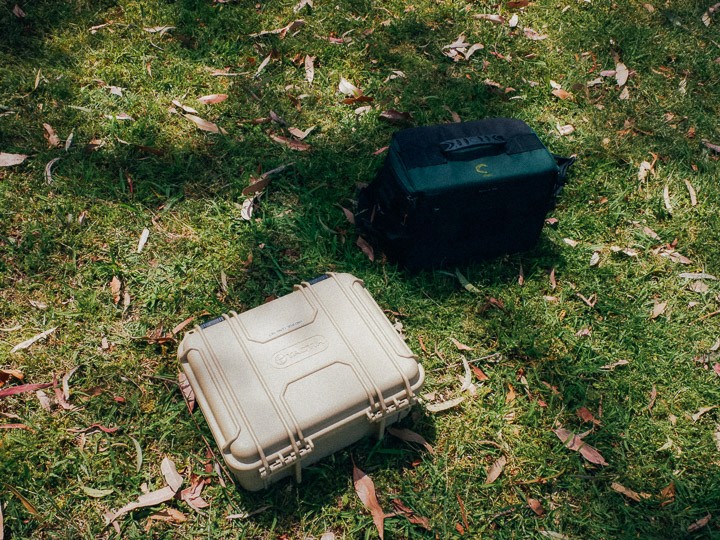
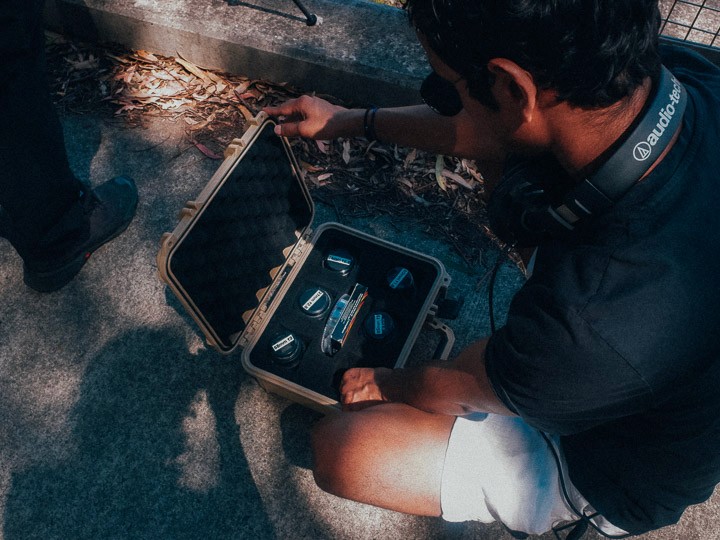
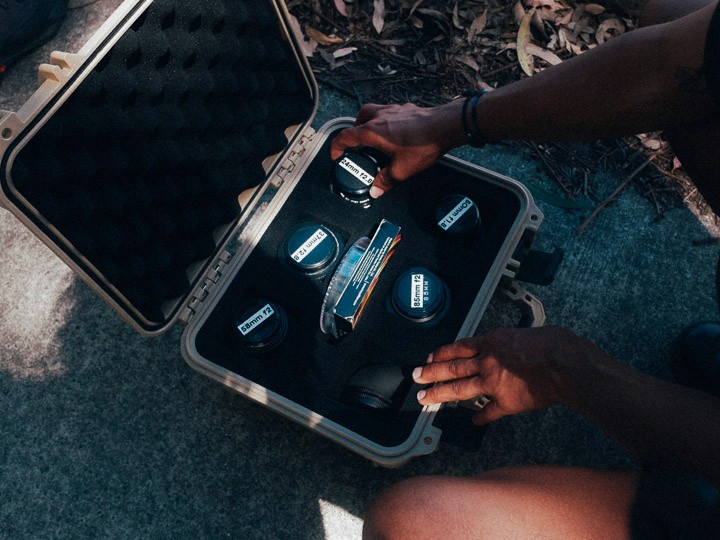
And so: composure, texture, scale, negative space, a mix of static and fluid handheld, classical music, four-by-three, and film-like aesthetics. Instead of using modern lenses, which would've been very fine, we operated a set of vintage lenses ranging from wide (24 mm) to telephoto (135 mm), deliberately for optical imperfections. Either it's a mess, or it's everything. That, I felt, was the more honest way to treat a subculture far too often flattened into spectacle.
Drag any ticker
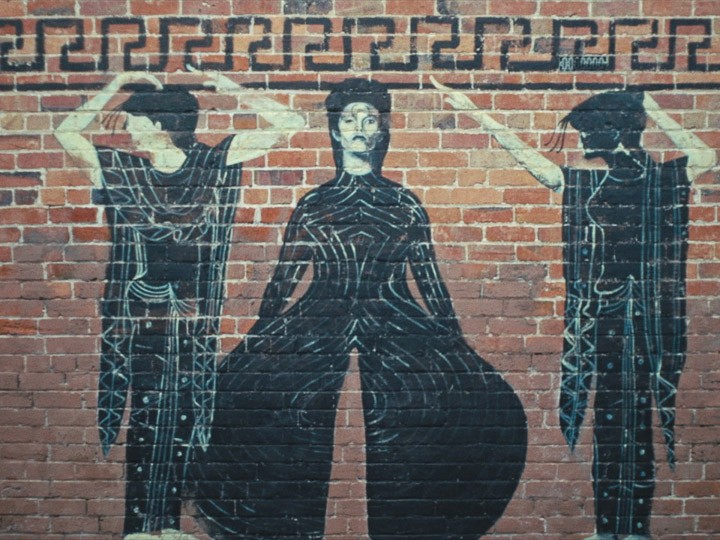
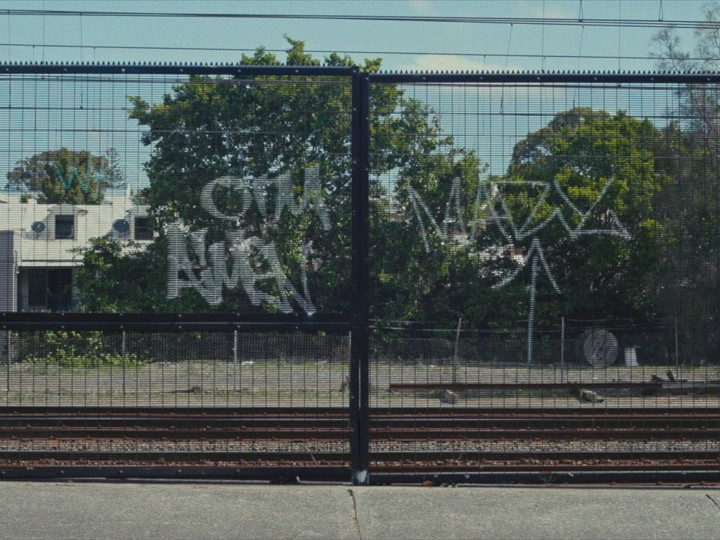
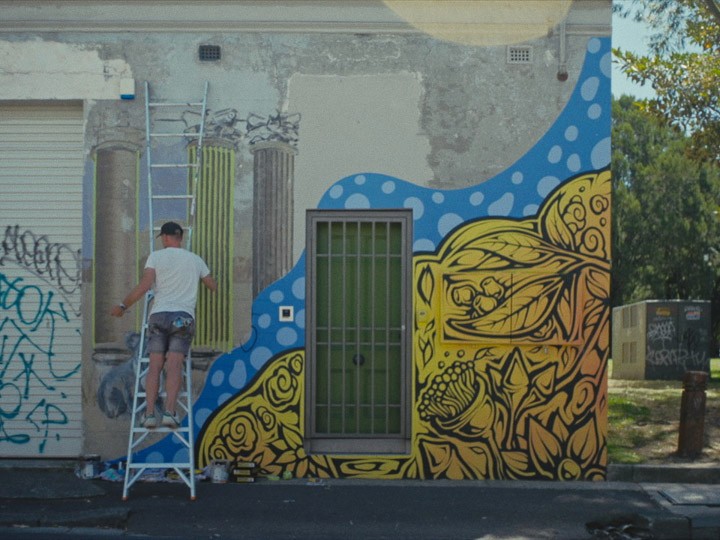
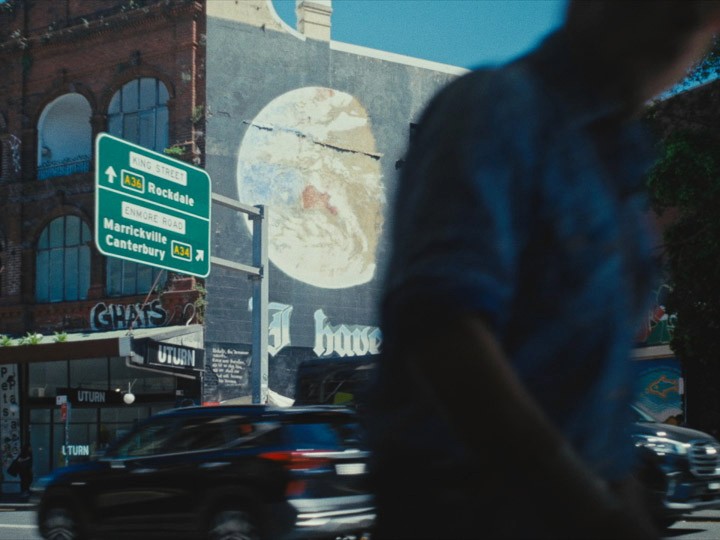
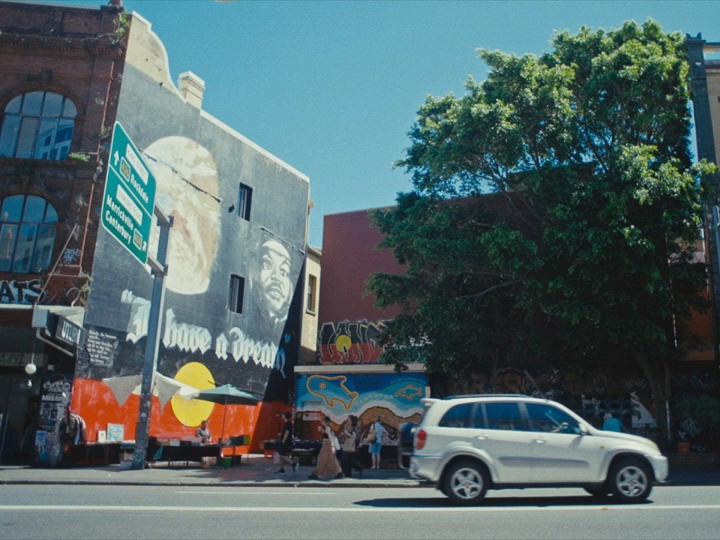
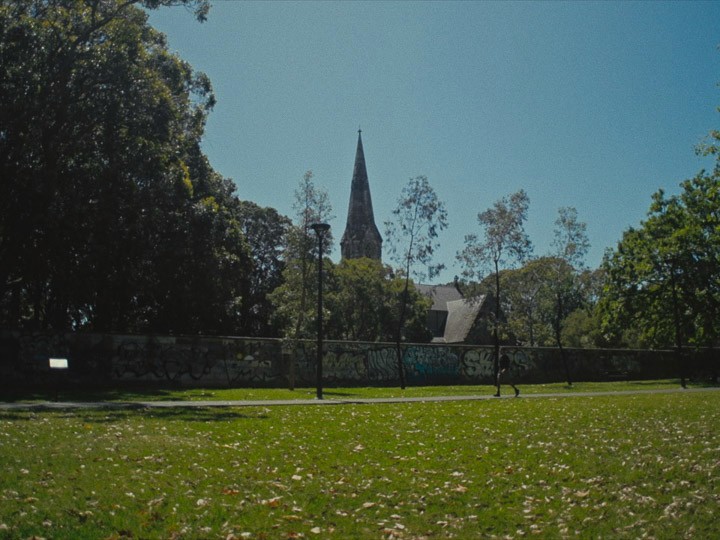
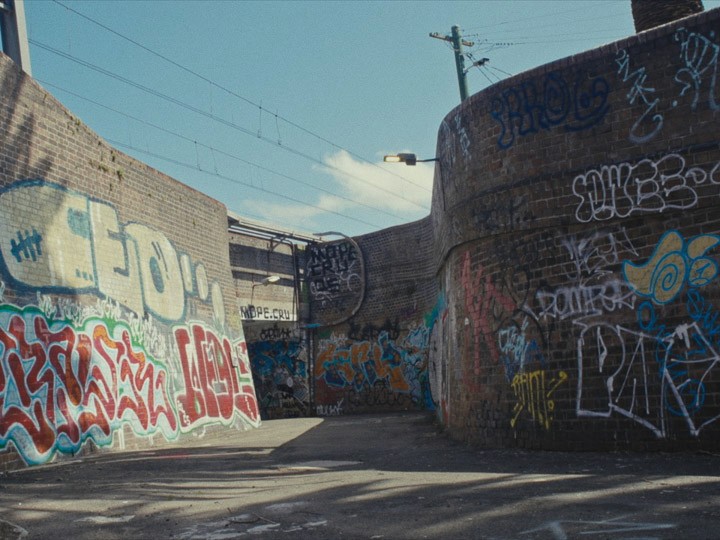
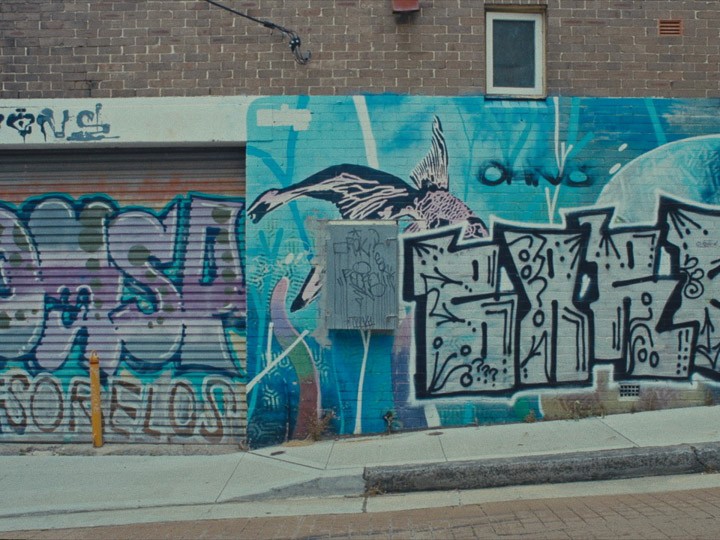
In pushing back against the conventions of its own genre, we also ended up mirroring the philosophies of the very artists it portrays. Graffiti writers push back against who controls public space. Muralists reframe what art on a wall can mean. We refused the expected and insisted on our own terms.
Did that come back to bite us? Yep, but I digress.
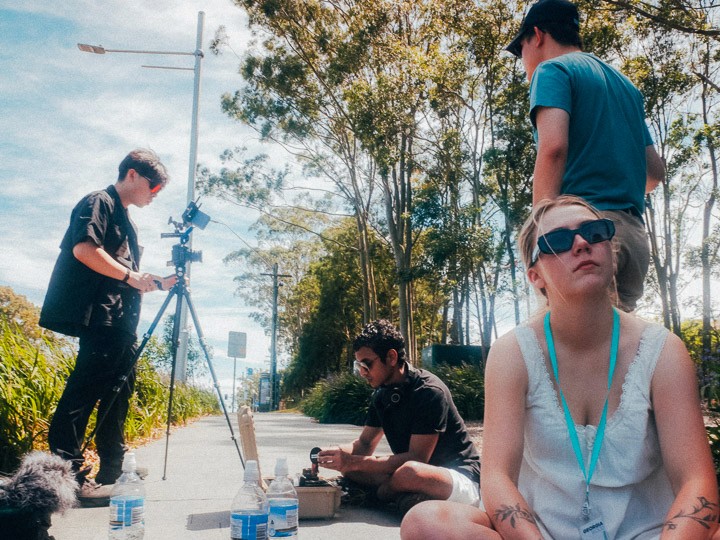
And many of the most crucial shots came from simply going out and sitting back at a spot for an unreasonable while to observe people interact with graffiti and murals. We hit those Inner West alleyways with the instincts of street photographers, treating every frame like it mattered way too much. Because for a film this well-thought-out, it just does.
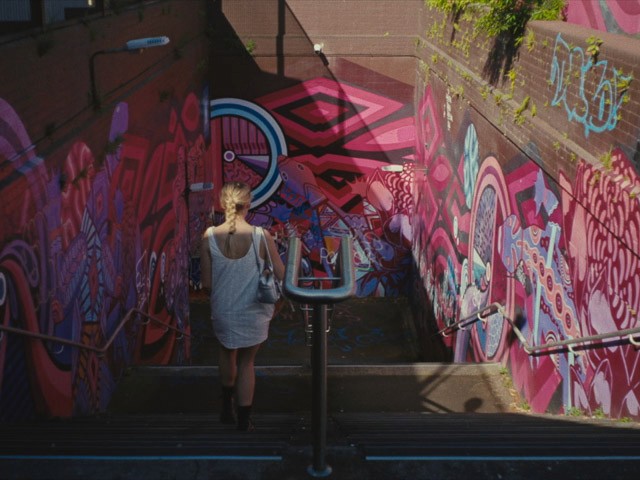
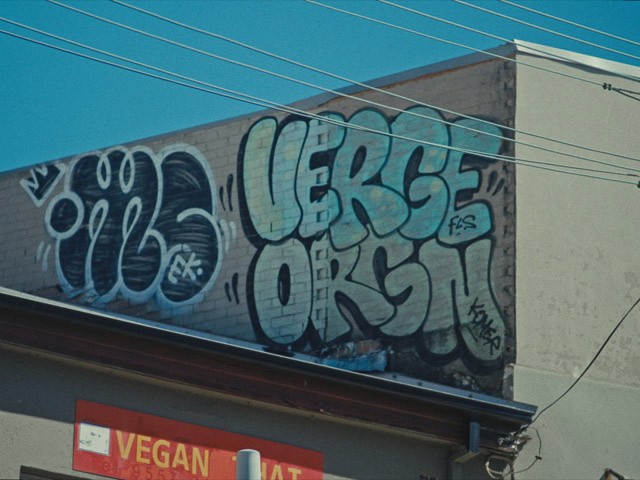
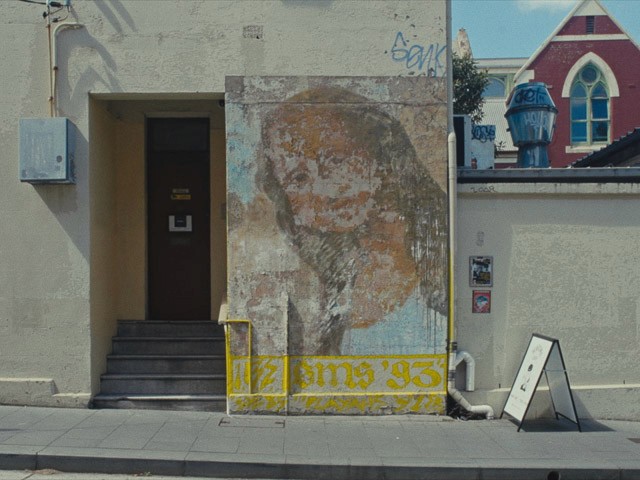
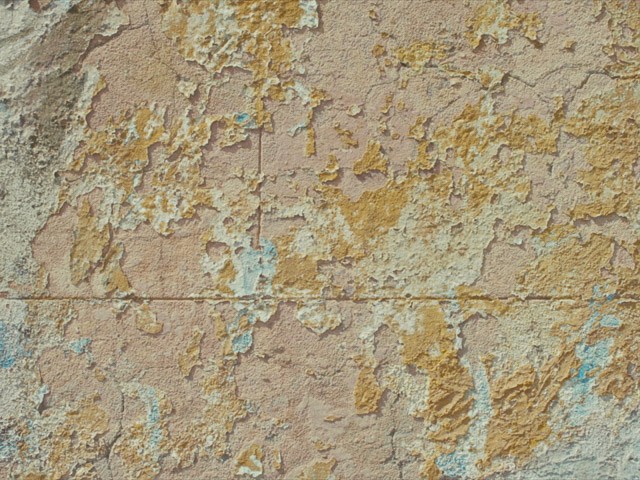
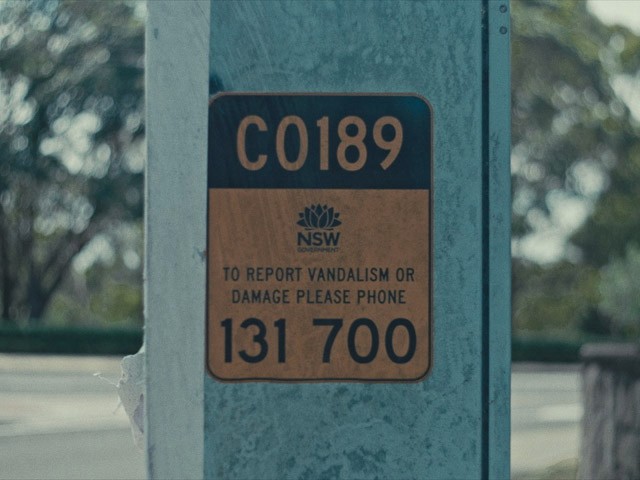
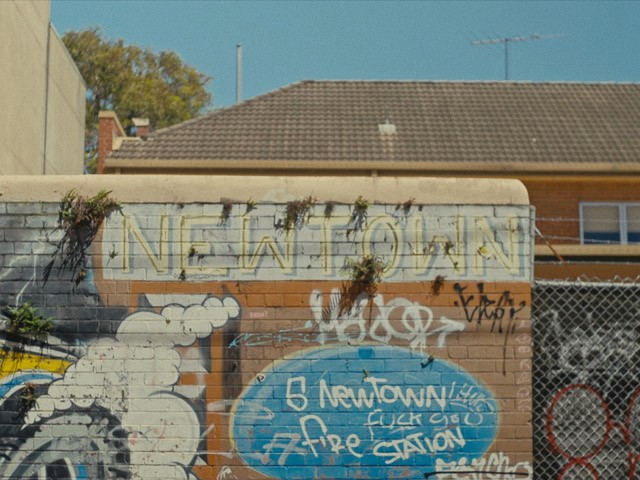
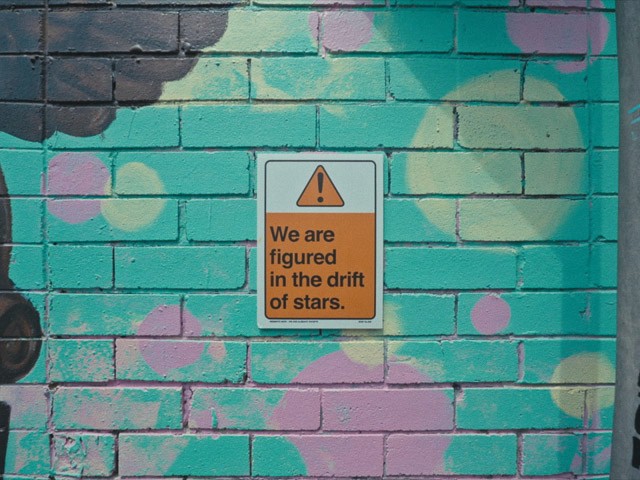
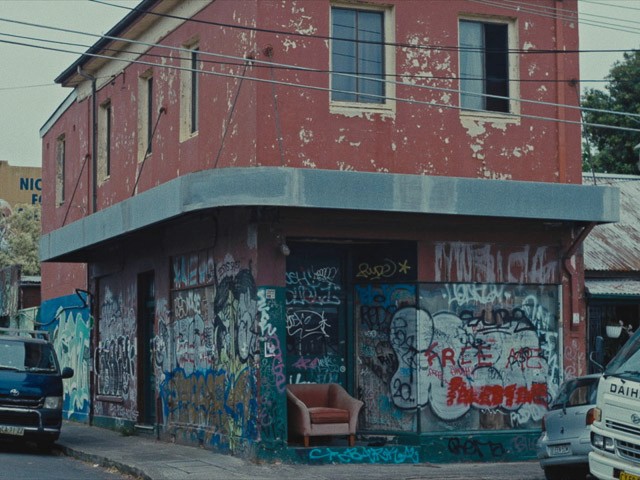
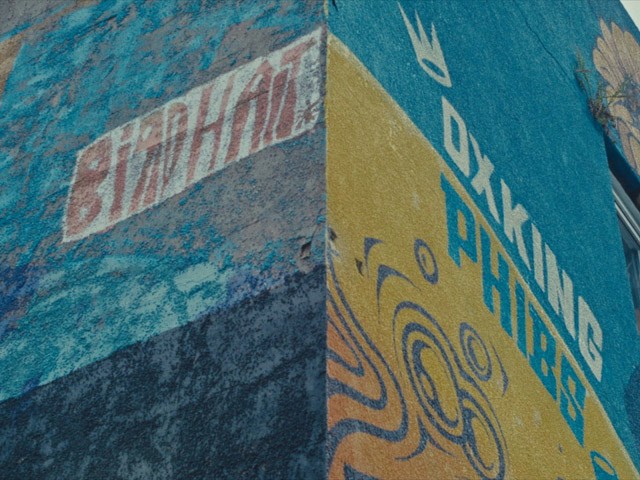
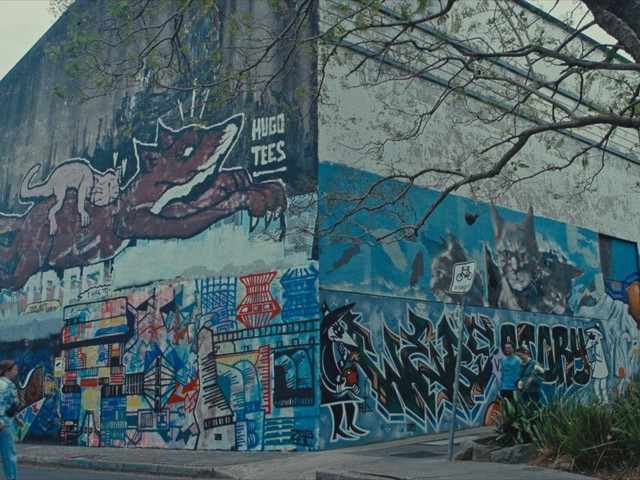
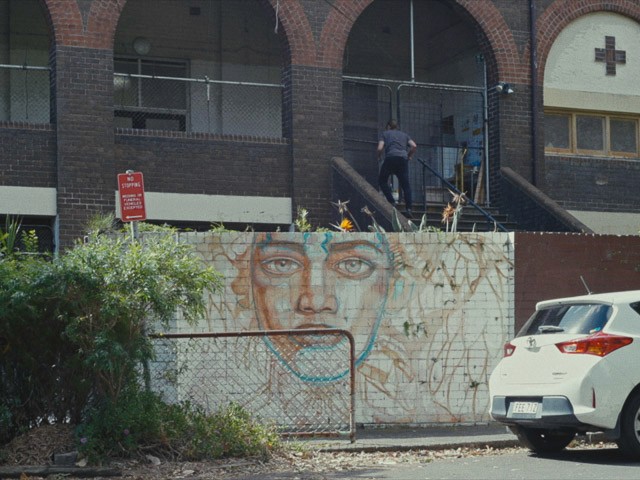
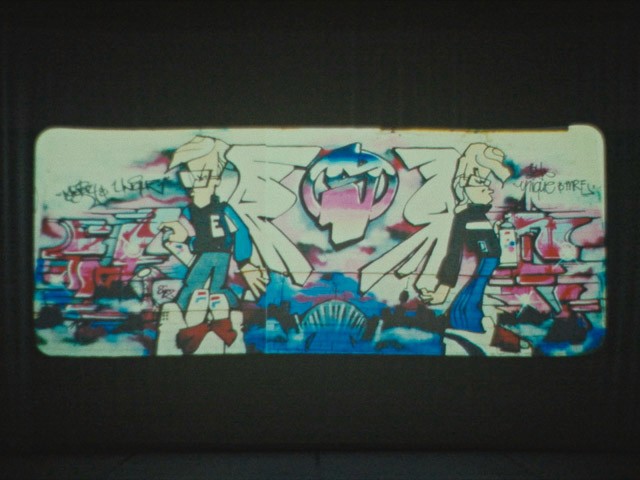
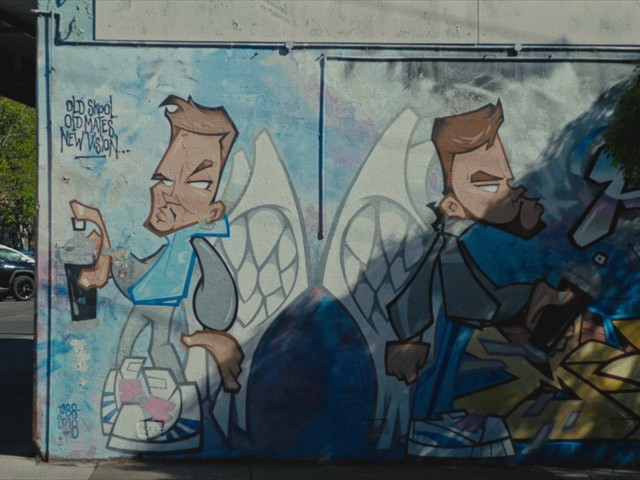
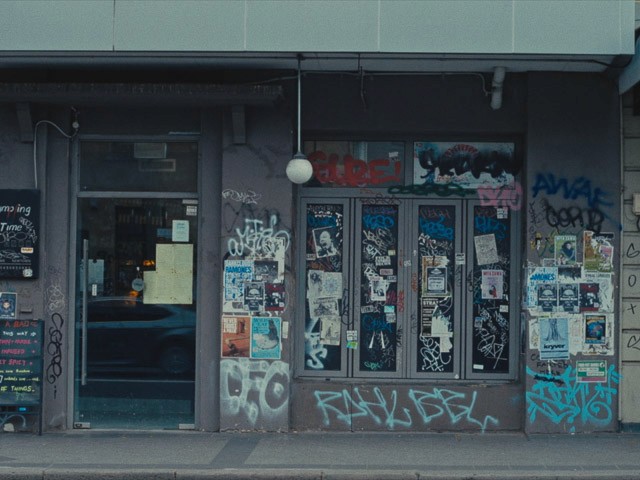
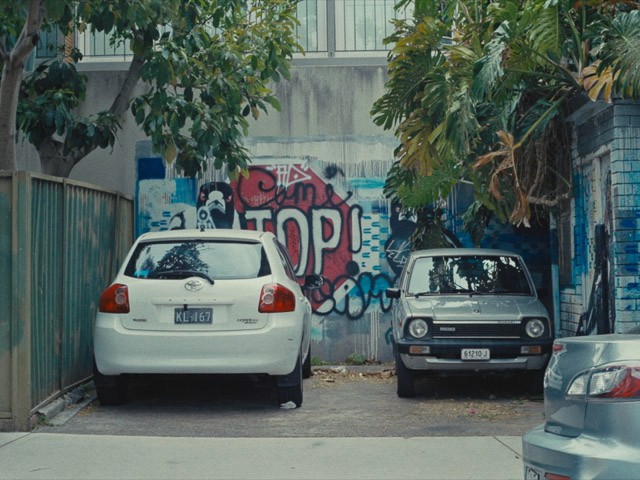
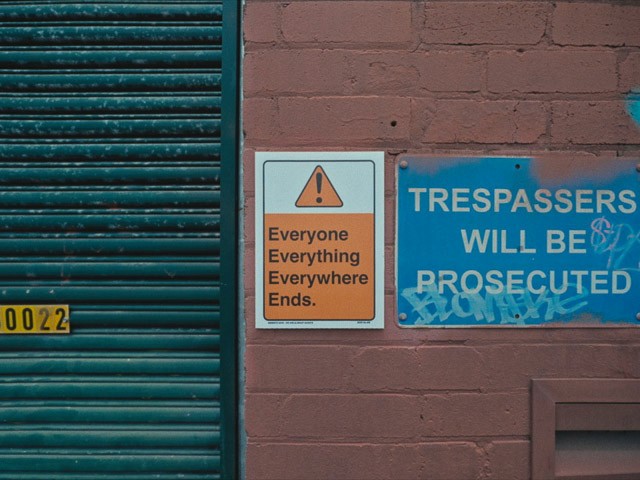
At the end of the day, what we have is a documentary that holds together, narratively and visually, in ways that I know we left nothing to chance.
In Passing is a calm film about a rough subculture, and that contrast is, ultimately, its thesis. It doesn't attempt to sort out the tensions it surfaces, yet it allows the artists to speak with full complexity, trusts the audience to sense the friction between their worldviews, and finds its meaning in the liminal space between.
For a student production built on a tight schedule and tighter resources (and occasionally booze), ours is a piece of work the whole team is genuinely proud of. It's unapologetically us. In a genre that wears its chaos like a badge, and yes, I'm looking at you too, documentary film-making, creating something this considered feels like a statement in itself.
"It looks so good anyway. We could only do so much!"

Georgia Wood
Multimedia Producer
Master of Creative Industries"I love the opening and its soundtrack so much, and the overall texture (or vibe?) is so great. It doesn't look like a uni project. It's such professional work."

Eric Zhang
Graphic Designer
Master of Creative Industries"Excellent work in terms of structure, coherence, creative choices, and construction of meaning, sophisticated in conveying characters, ideas, and story."

Kush Badhwar
Artist and Film-Maker
Lecturer @ Macquarie Uni
"It's so good. The title is also really nice. We always pass the graffiti, but the documentary brings those artists to light, which is great."

Jennifer Devaney
Master of Creative Industries
Master of Management"Honestly, it's such an interesting topic to even think of doing, but also creative. Love the quality!"

Norah Almarshad
Postgrad @ Macquarie Uni
"It's good. I like the edit, the shots, the colour, how it's soft, and the way you've led the narrative for the whole thing."

Anindit Shrestha
Digital Media Specialist
Master of Creative Industries
It's Good We're All Mental
II. Creative Process
But first, let's meet the team:
Director & Editor
Edward Dang
Sound
Nirvan De Zylva

Producer & Writer
Georgia Wood

Production Assistant
Sylvia Ontieri

Cinematographer
Jon-Hin Tan

Assistant Producer
Minh Le
But first, let's meet the team:
Director & Editor
Edward Dang
Producer & Writer
Georgia Wood
Cinematographer
Jon-Hin Tan
Sound
Nirvan De Zylva
Production Assistant
Sylvia Ontieri
Assistant Producer
Minh Le
Watch Our First Documentary
"I did not expect this, but it's good we're all mental." That's what I told Georgia the moment Jon had secured a Netflix-approved cinema camera for our production, the Sony FX6. We weren't pursuing a film degree, so a potato would've been just fine. Still, we weren't there to settle for mediocrity.
As Director, I supposed the weight of it was pretty simple. You've got to make sure it looks right, feels right, and doesn't fall apart. All at once, all the time, with every decision traceable back to you. And all that long-term emotional investment and "trying to change the world, one film at a time" as well. No pressure, really.
Development
& Pre-Production
Eternity
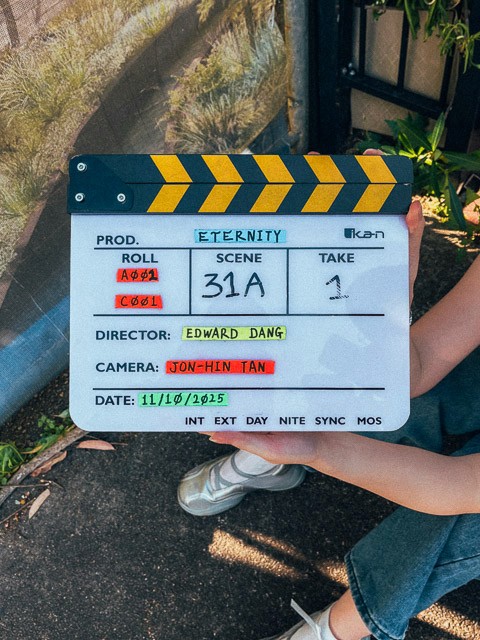
Fun fact: In Passing was actually Eternity up until we finalised our title approximately twelve hours before submission. There's a (good?) reason for that.
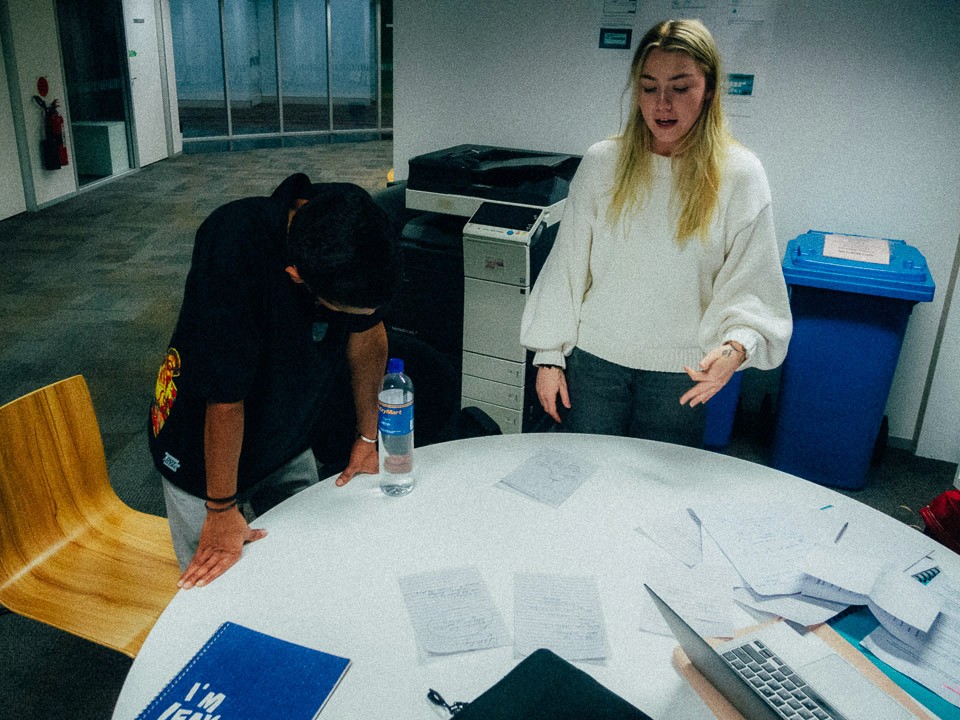
Our project began with an idea we eventually realised was not quite possible. The original plan was to build the documentary around Sydney's very own Arthur Stace and his Eternity graffito. All through a single chalked walk, we would discuss the city's memories, faith, public spaces, and culture. Hence Eternity.
We recognised there was limited access to relevant material and people, no clear narrative pathway, and considerable uncertainty in reliably grounding the film stylistically and ethically. So, rather than forcing a concept that was collapsing, Georgia and I had to make the call to let the subject go while at least keeping the underlying concerns. Earlier ideas are meant to be held lightly anyway. The work was mysterious and important.
In Passing
The concept stabilised with a shift in focus to Newtown and the Inner West, Sydney's heartland of graffiti and street art. In passing way too many pieces pretty much every day, we'd never realised the tension between the two. That was until it became our narrative spine.
During this phase, we, back and forth between Producer and Director, pulled the thread as we structured a conflict over meaning, legality, and cultural value. We researched the history and the people behind the area, especially Newtown, the local Inner West Council and its efforts, as well as corresponding theoretical frameworks and concepts (although we didn't personally agree with every idea).
(01)
Graffiti as
Resistance
(02)
Placemaking
and Gentrification
(03)
Disjunctive
Synthesis
Location Scout
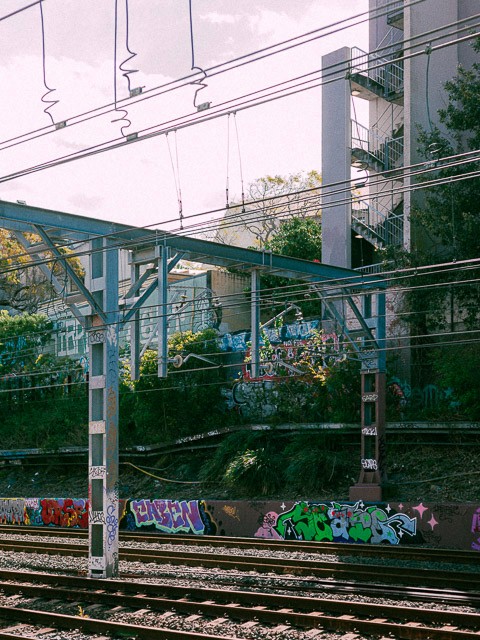
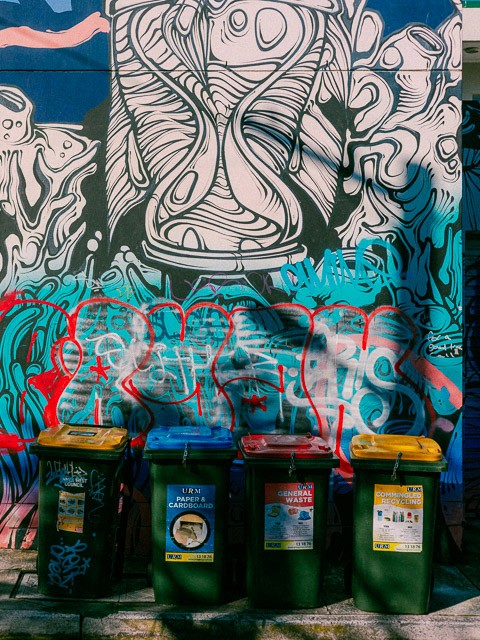
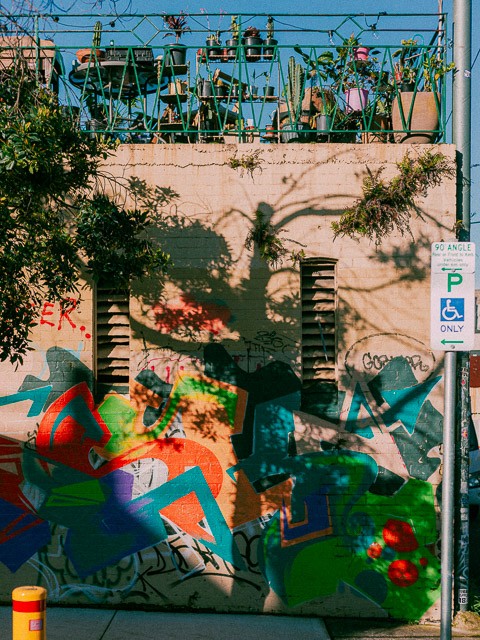
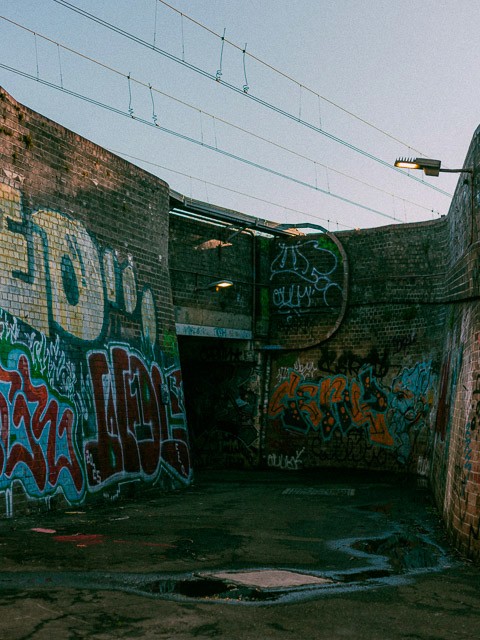
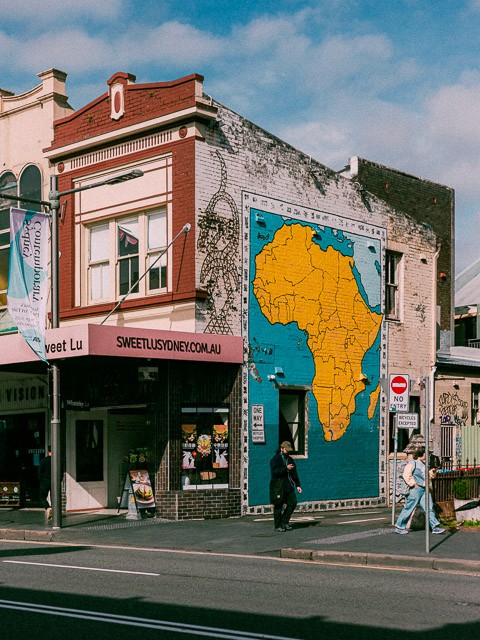
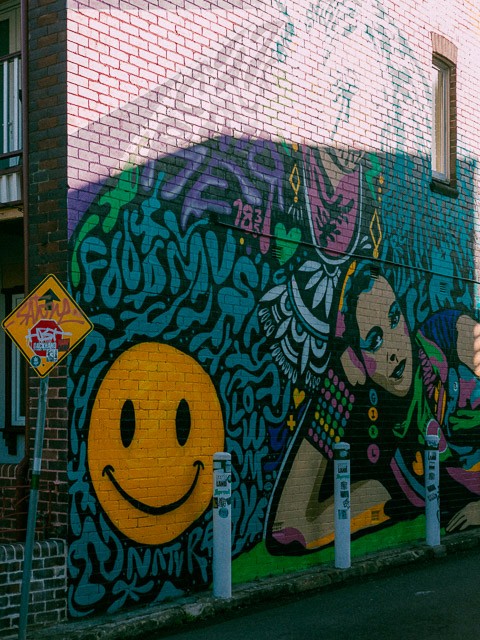
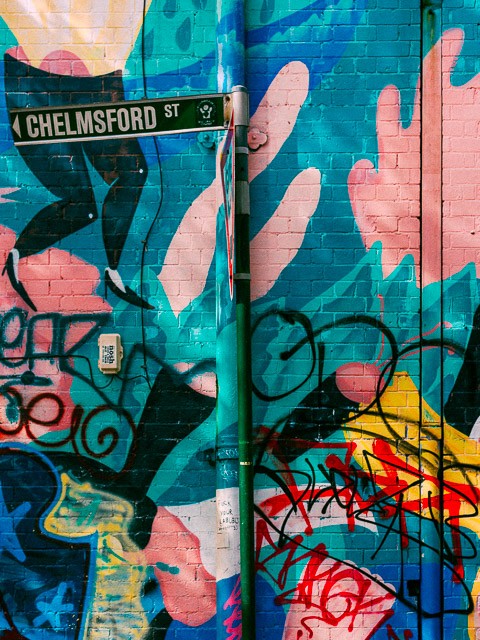
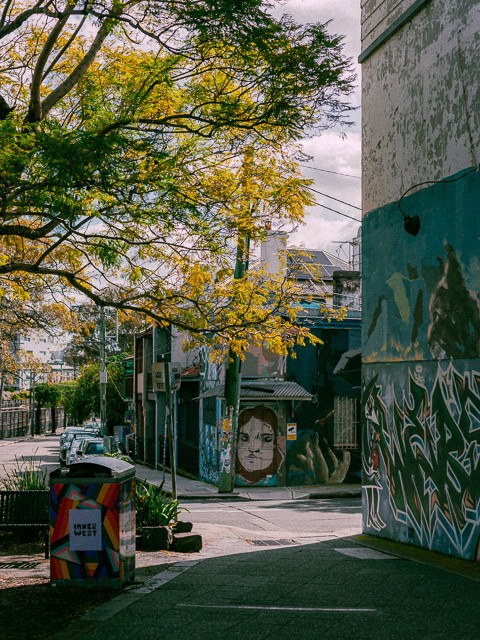
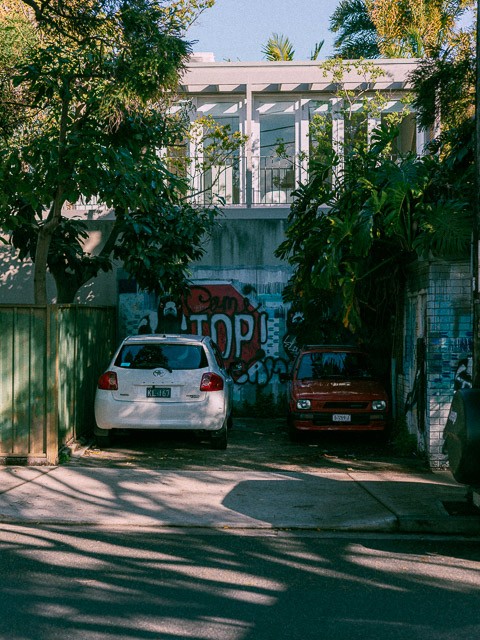
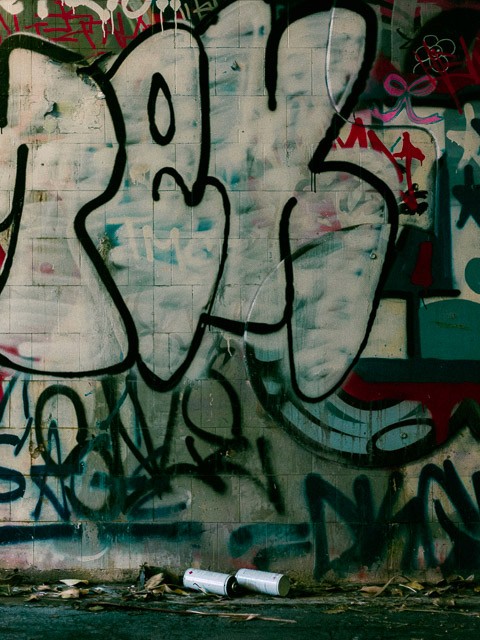
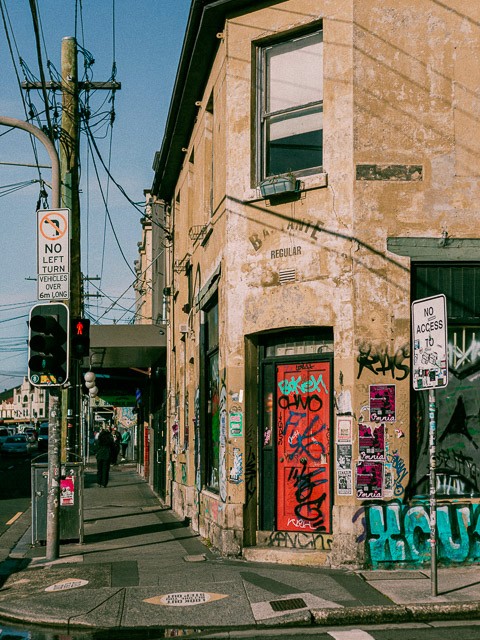
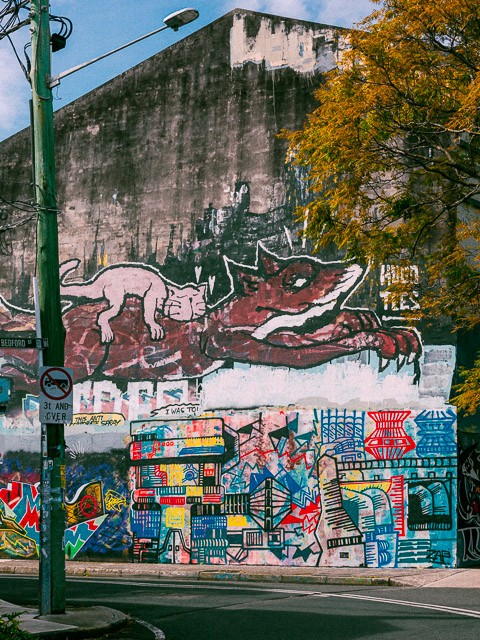
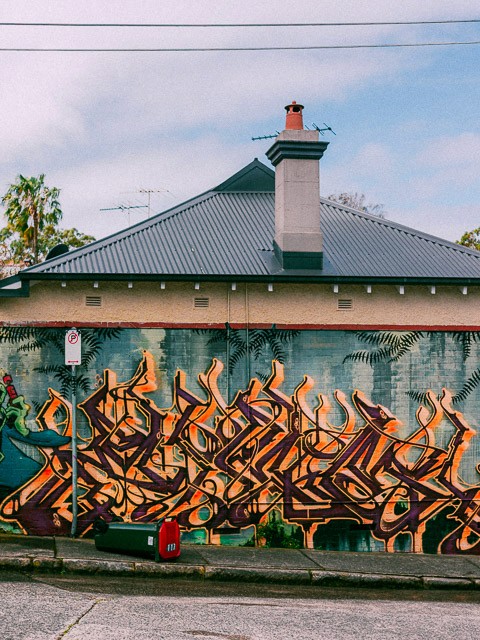
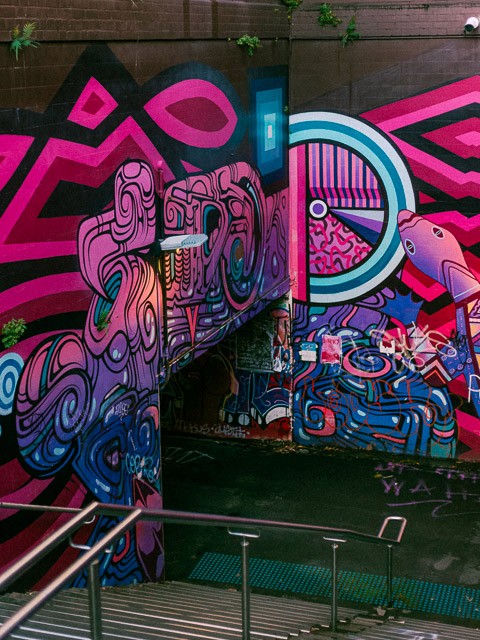
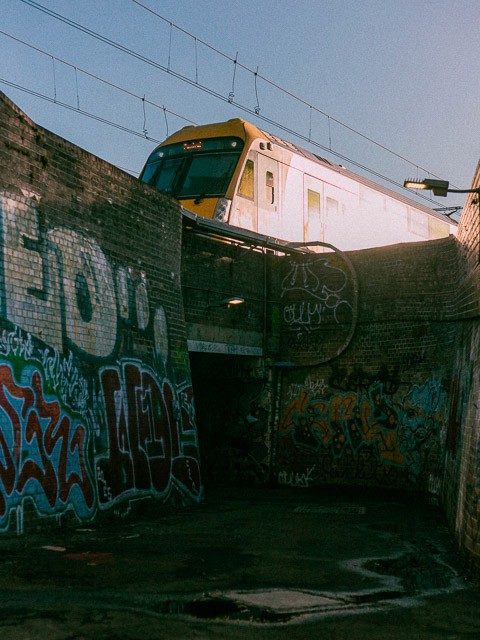
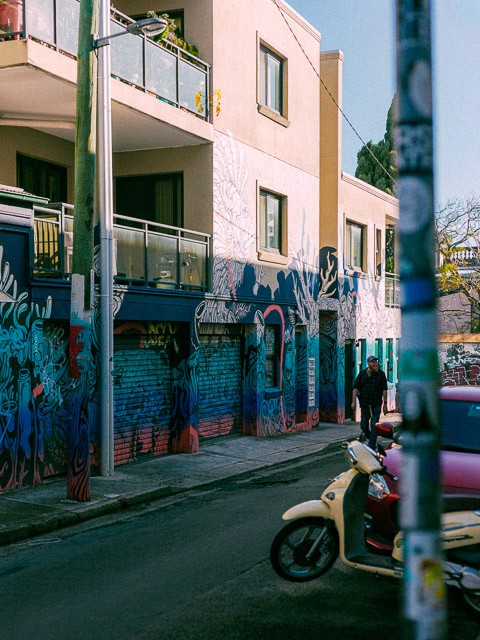
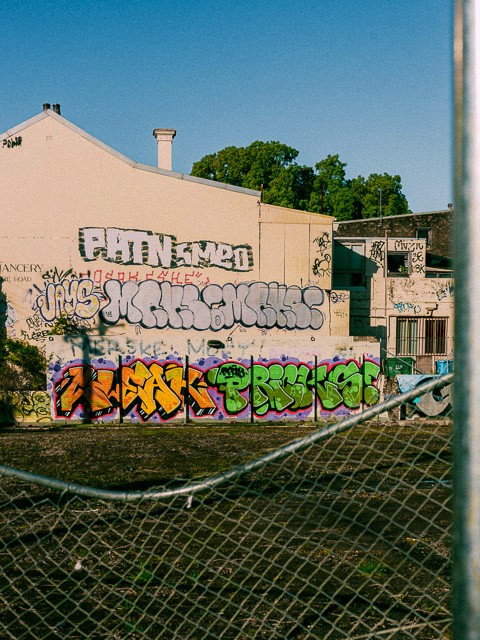
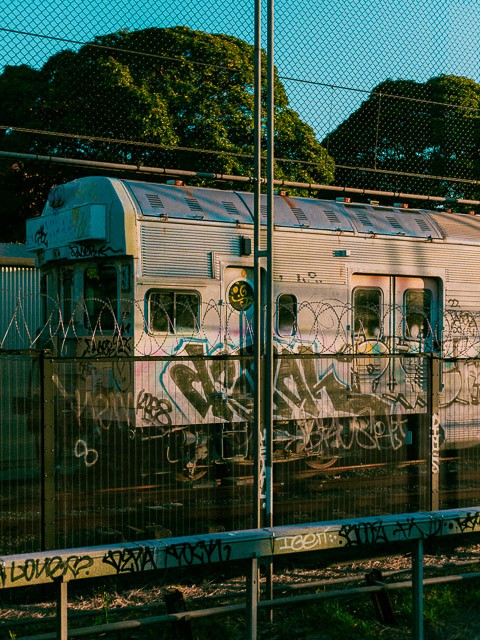
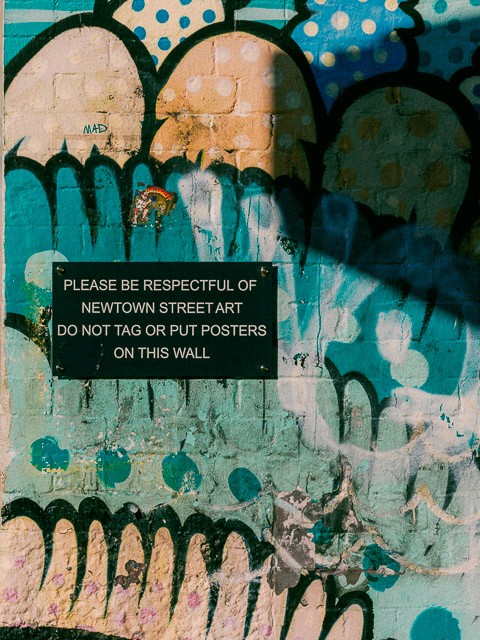
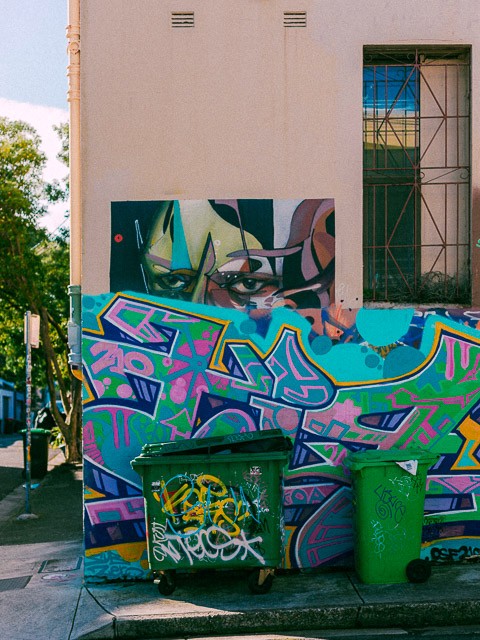
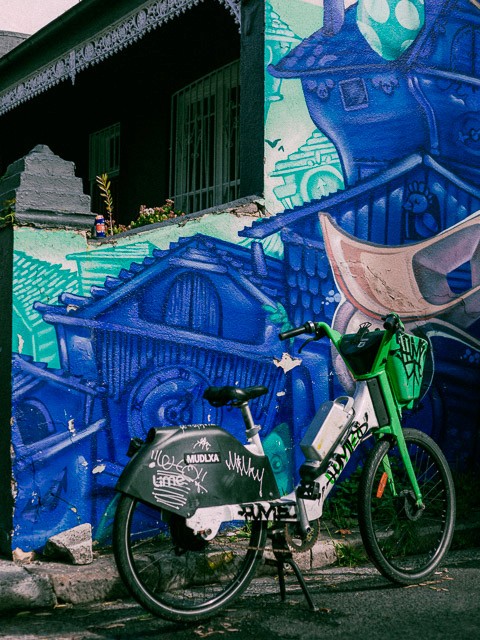
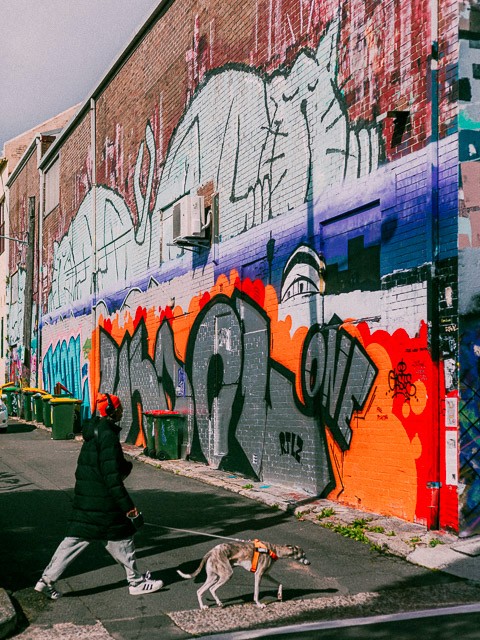
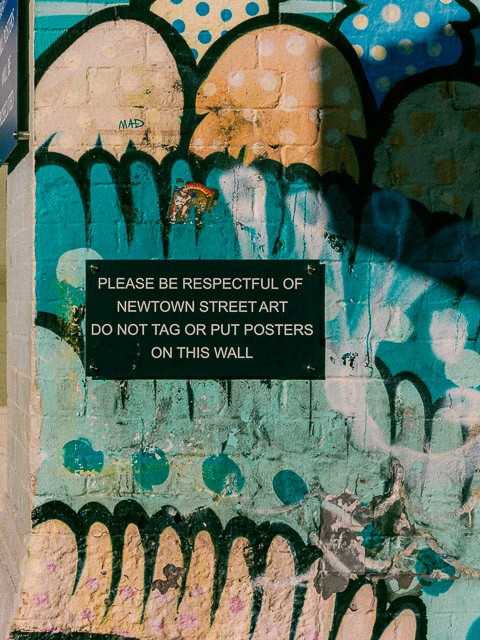
A few weeks before production, once we'd got a clear enough picture of what we were creating, I headed out. Just me and my trusty DSLR, wandering and observing Newtown, all the way through to Enmore and (hopping on a train to) Petersham. Such a perfect excuse to go out and take photos.
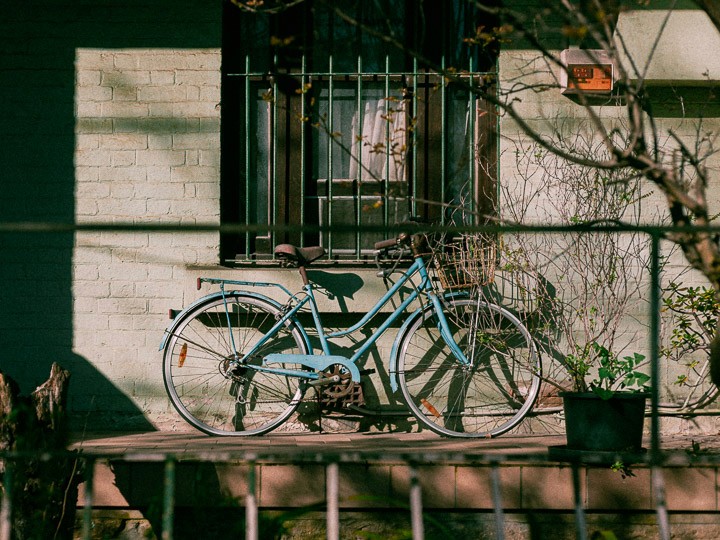
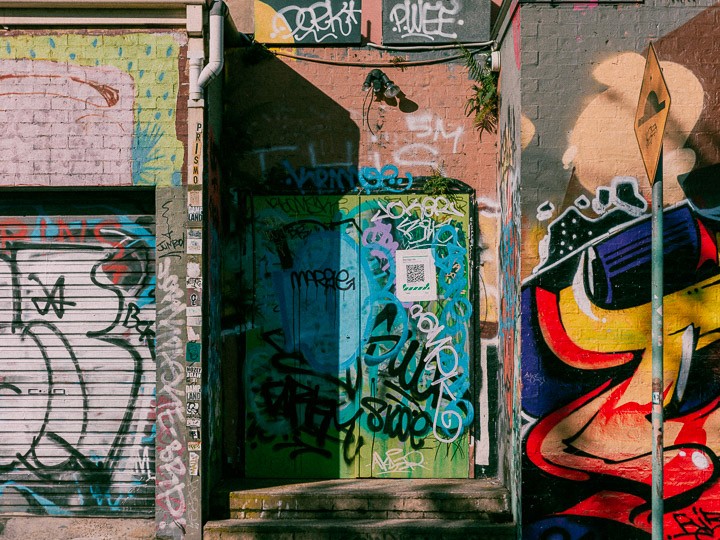
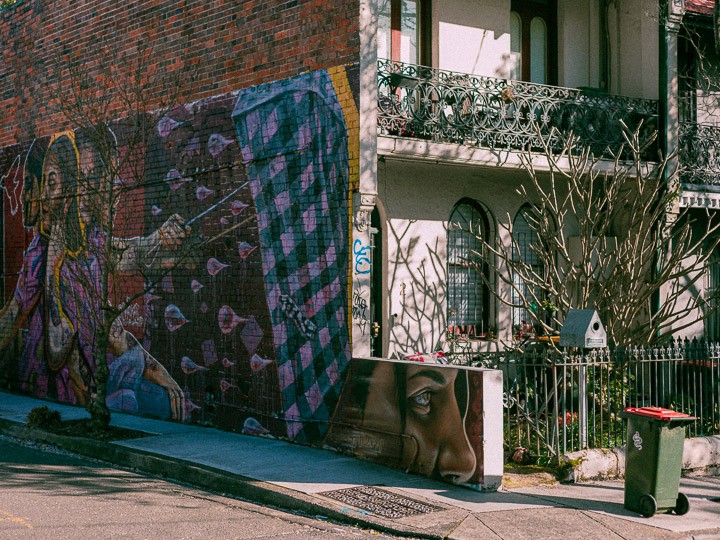
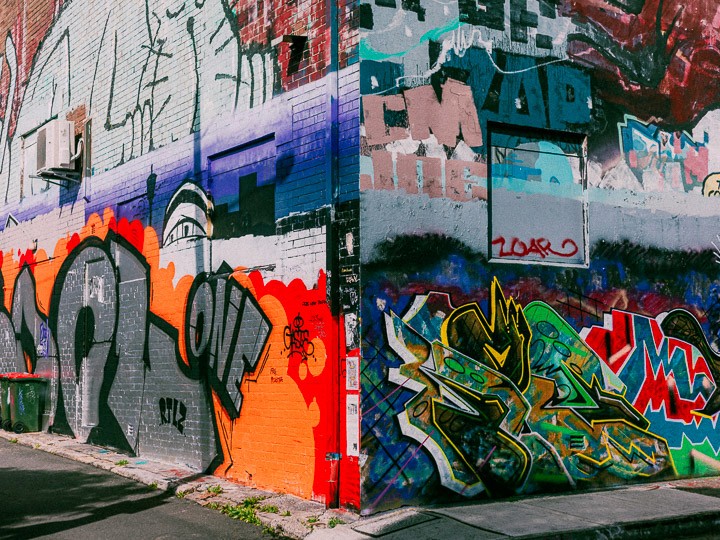
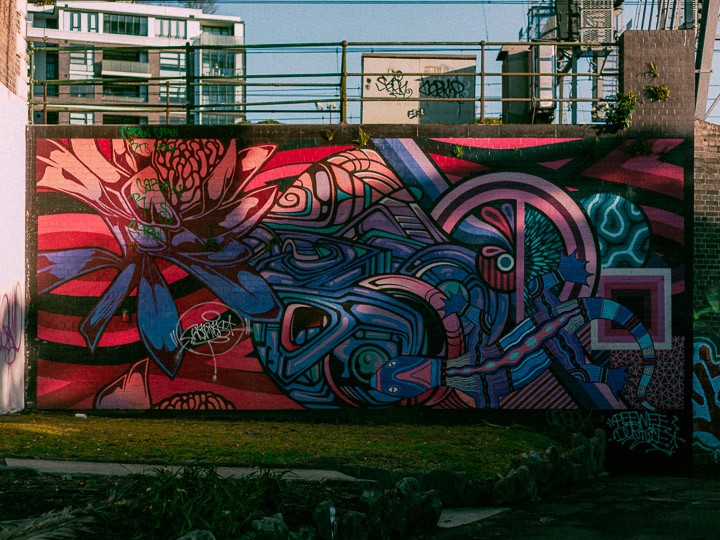
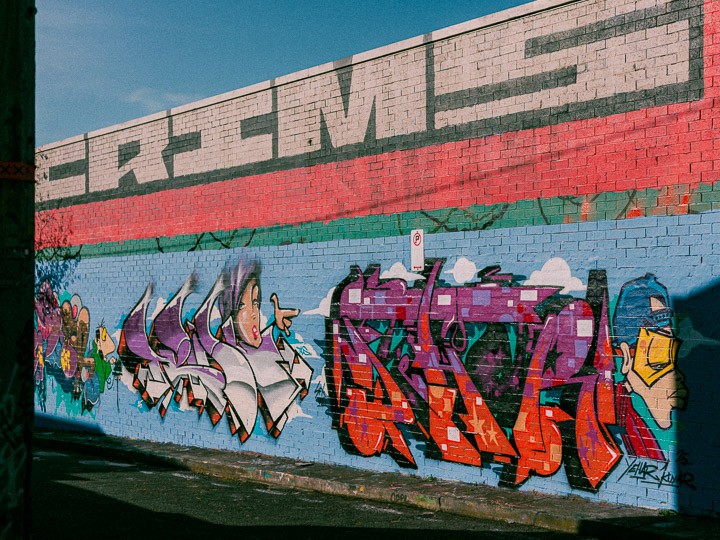
Having lived in Sydney for over a year and a half, I'd actually never been to Newtown, thus I plead guilty. Nevertheless, no amount of online research could have given me what that afternoon did. It was rather fascinating that the area most definitely looked gentrified, especially when compared to archival photographs, yet not quite.
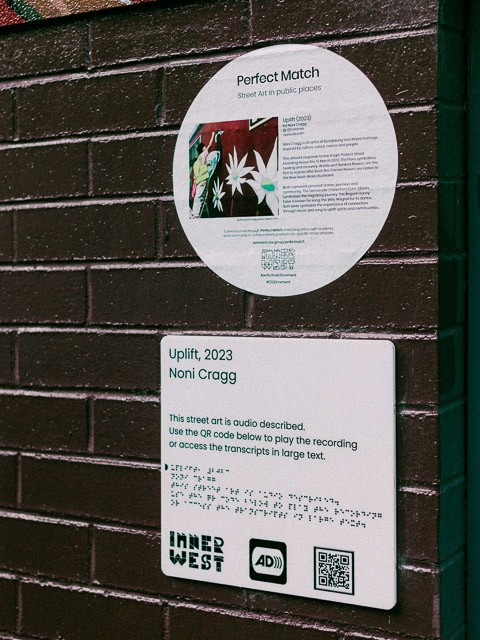
The tension we'd been discussing was just there IRL, with graffiti living right alongside commissioned murals, the subtle interventions of the Council through its Perfect Match programme, and most importantly, the sheer colour, texture, and scale of it all. Being on location gave me, as Director, a physical sense of what our documentary would need to look and feel like.
Someone to
Watch over Me
Working with a producer is decently nice. There's a reason I haven't mentioned much pre-production, how we got in touch with Mistery, Oliver Wall, and, for a while, also Phibs and Spice, two of Sydney's more notable muralists, or the logistics, project timeline, and all those snacks and water on shoot days. That's because it's Georgia's work.
With our creative responsibilities split almost fifty-fifty, and every major decision requiring sign-off from both of us, Georgia also led on research, theory, and development, which conveniently left me with plenty of headspace to overthink art direction. For the longest time, it really did feel like Georgia's world, and I was merely living in it. RESPECTFULLY.
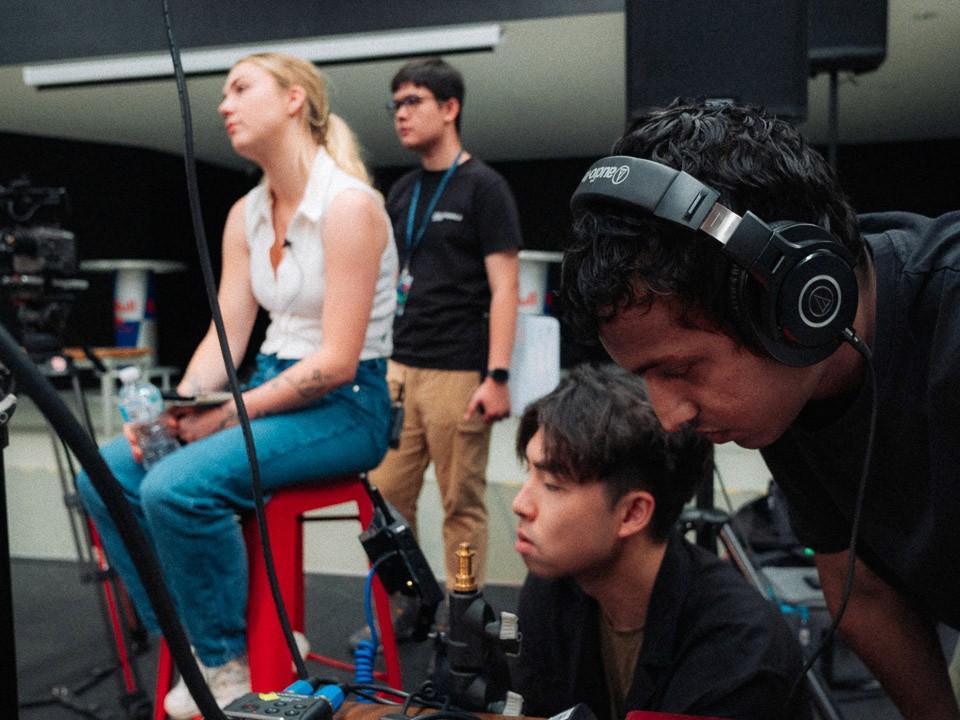
The rest of the team also backed me big time. Jon was more than happy to accommodate my vision and ideas for cinematography, as well as Nirvan for sound, who both have such extremely high technical proficiency. Sylvia and Minh were always there when I needed another pair of eyes or feedback. It still feels a little unreal to co-lead such an amazing crew.
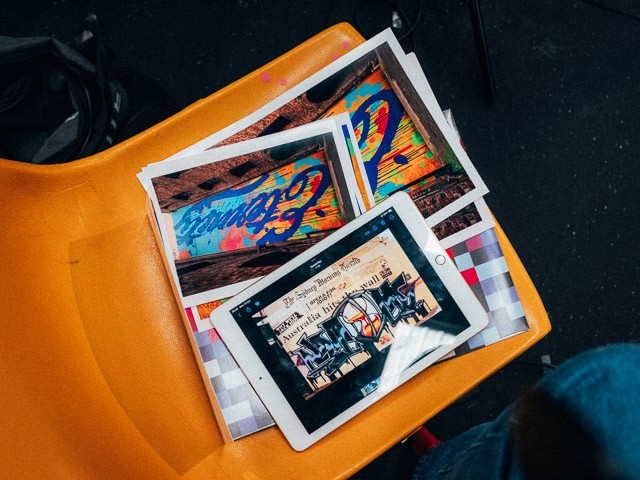
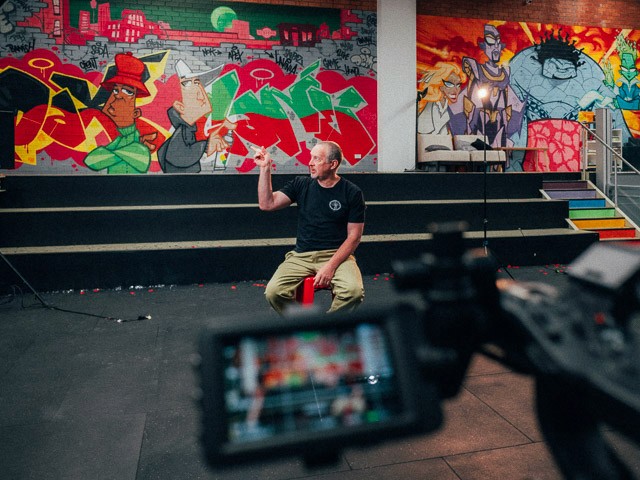
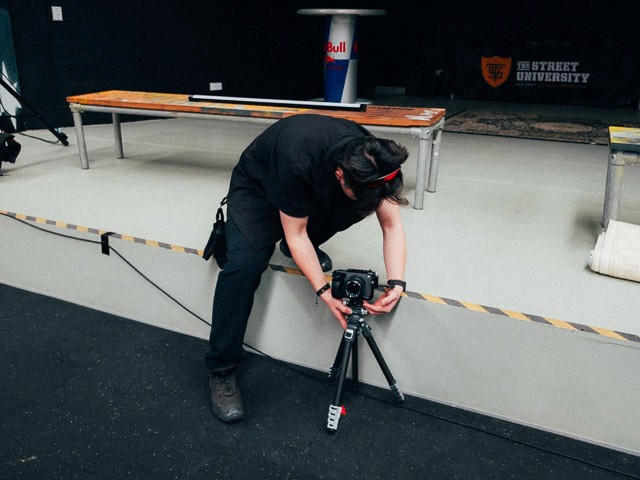
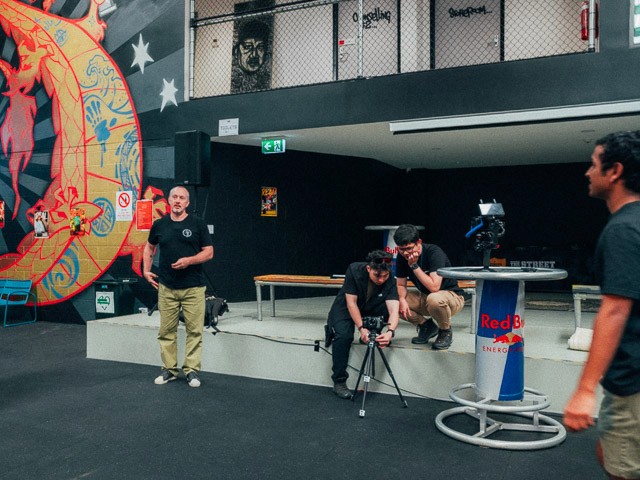
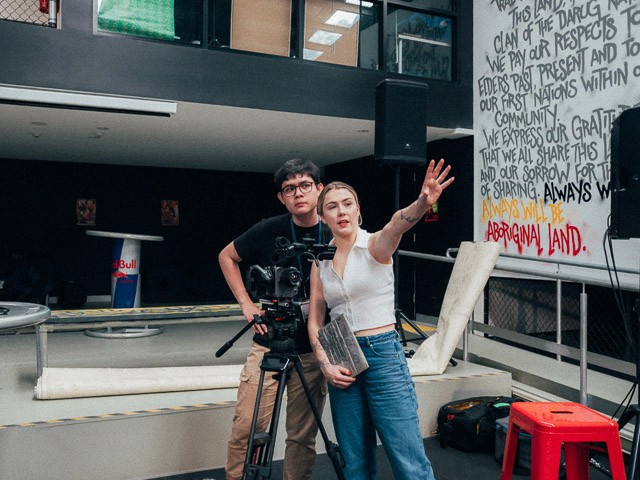
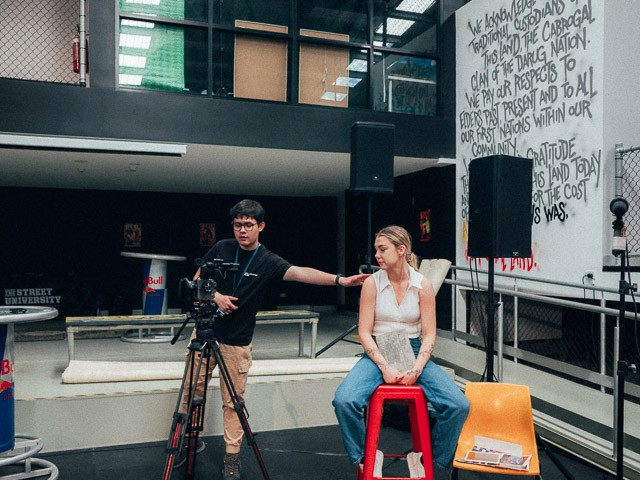
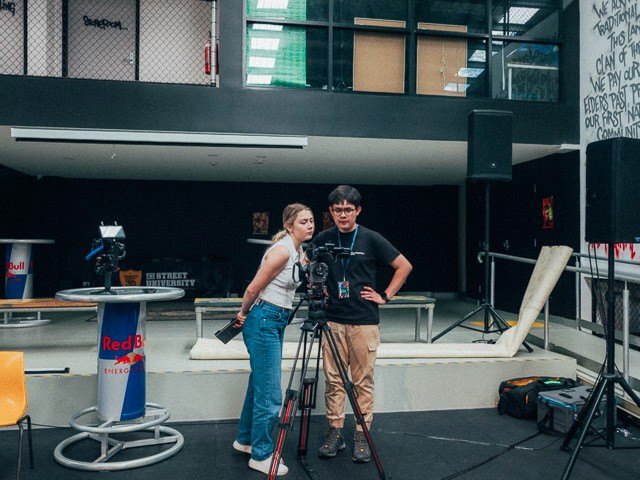
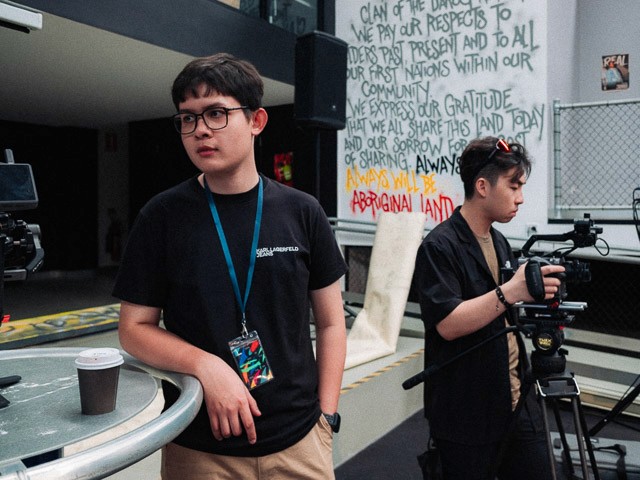
Production
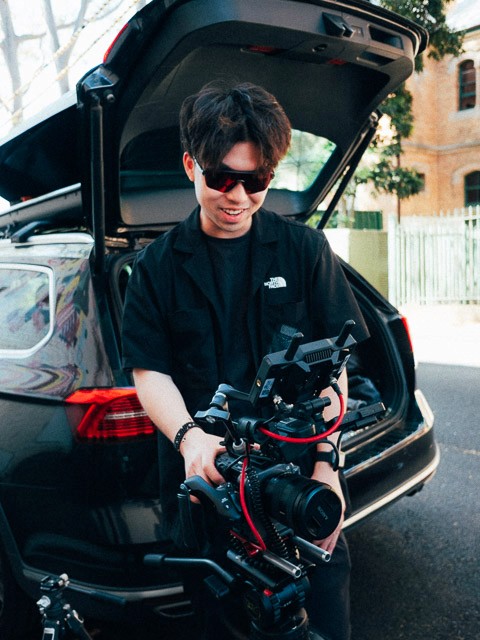
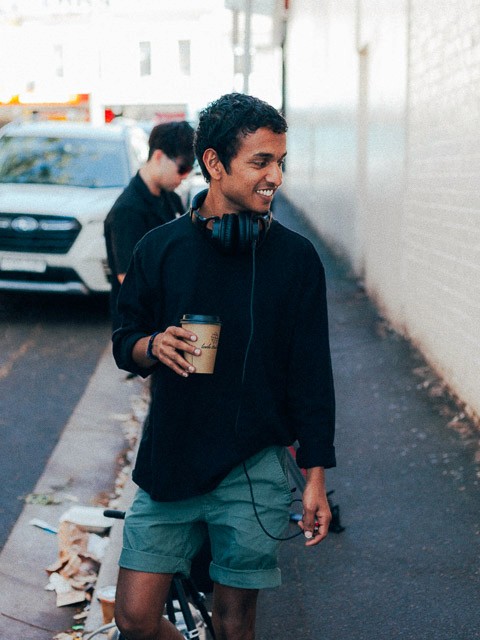
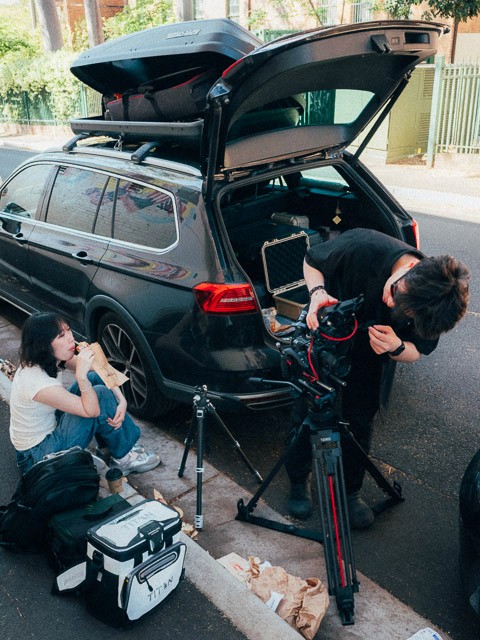
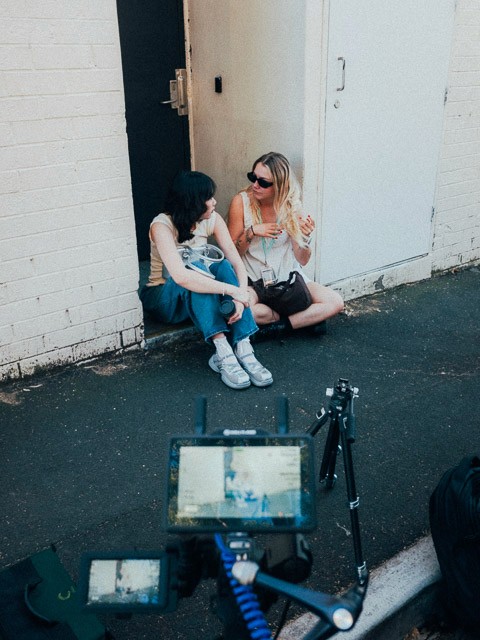
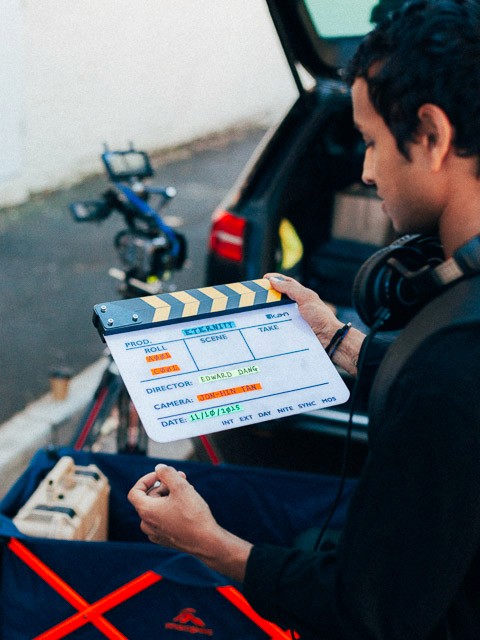
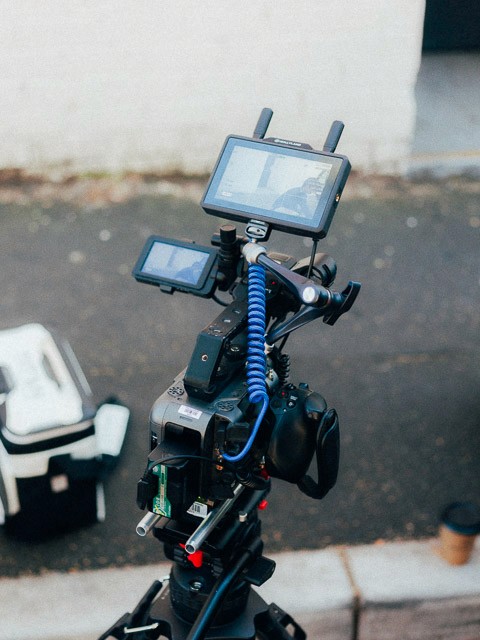
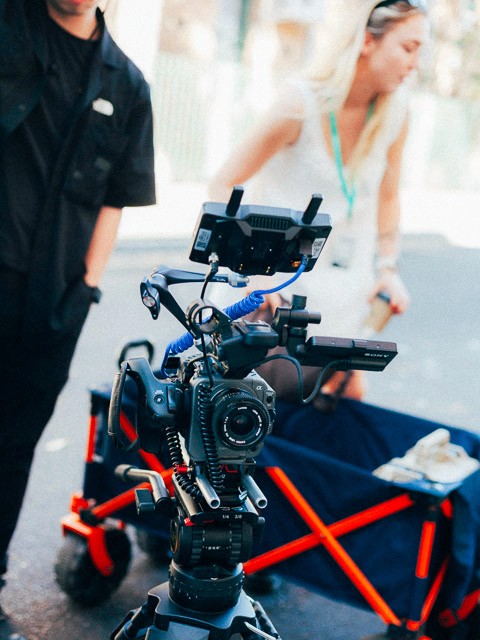
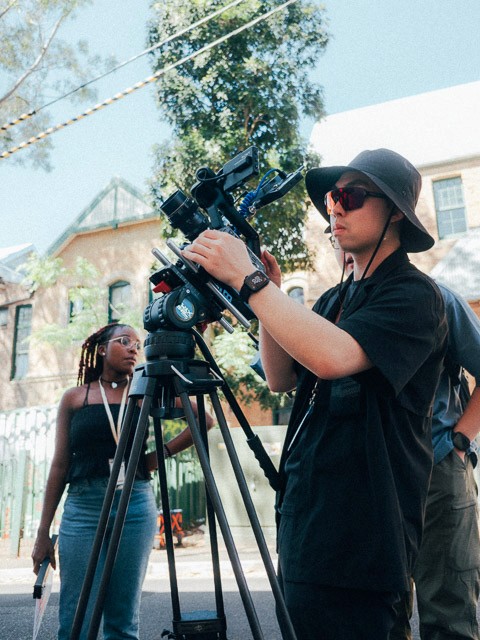
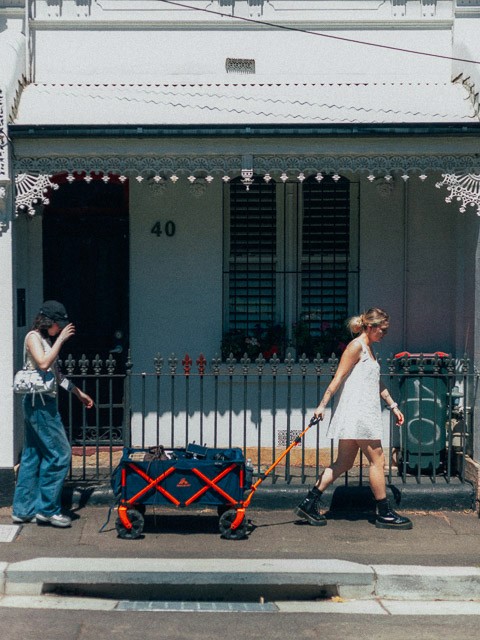
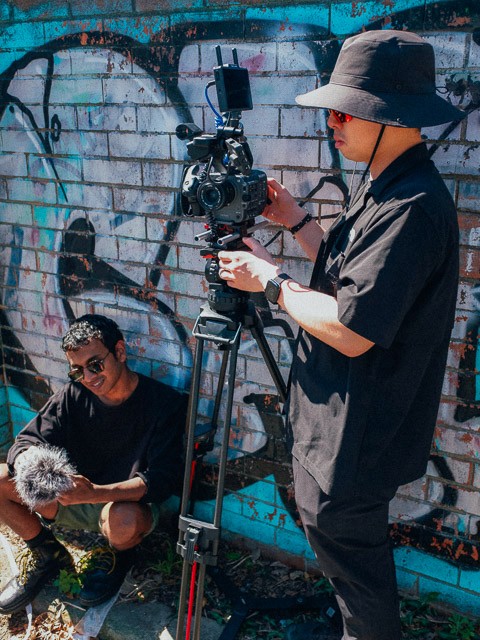
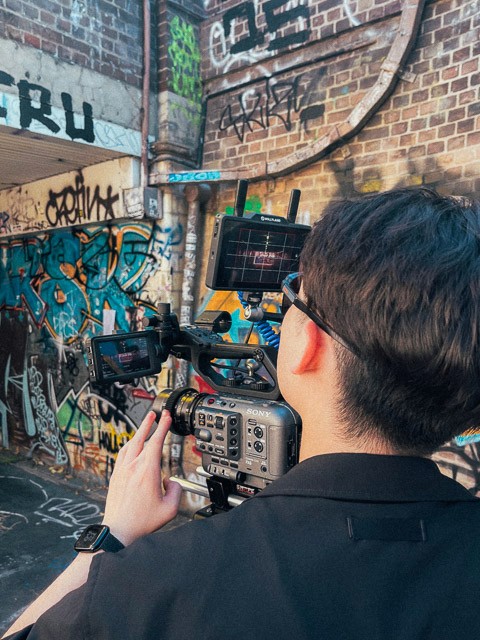
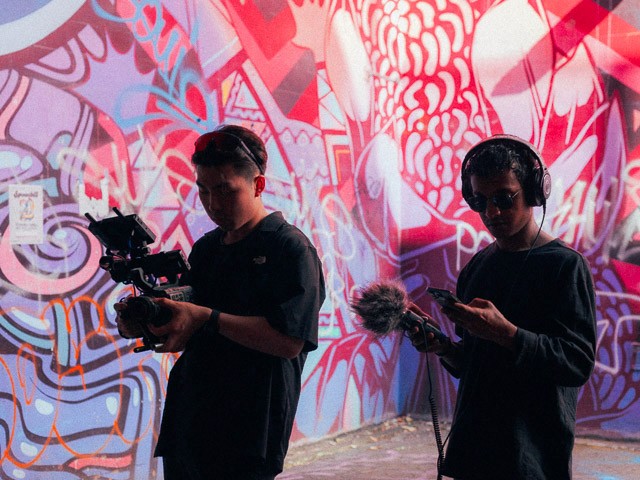
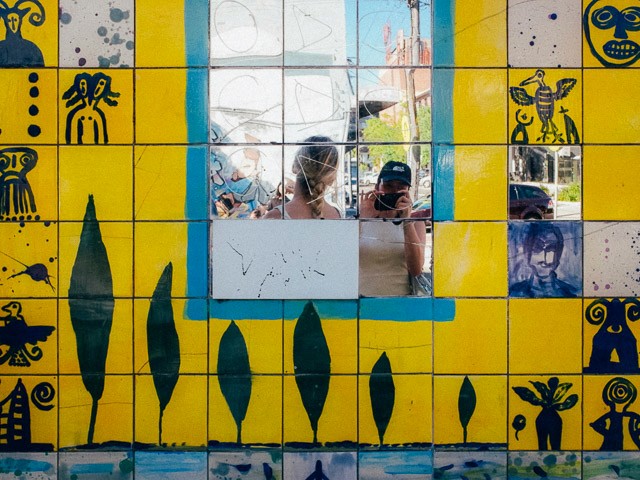
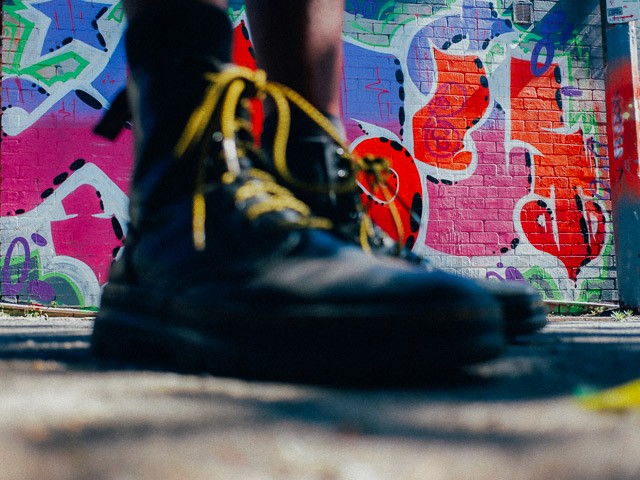
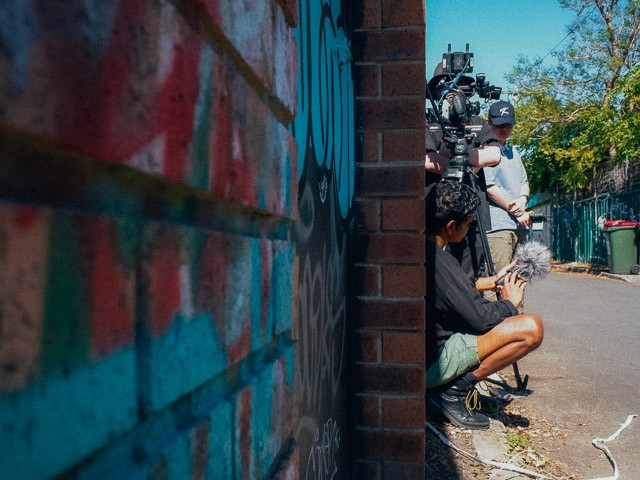
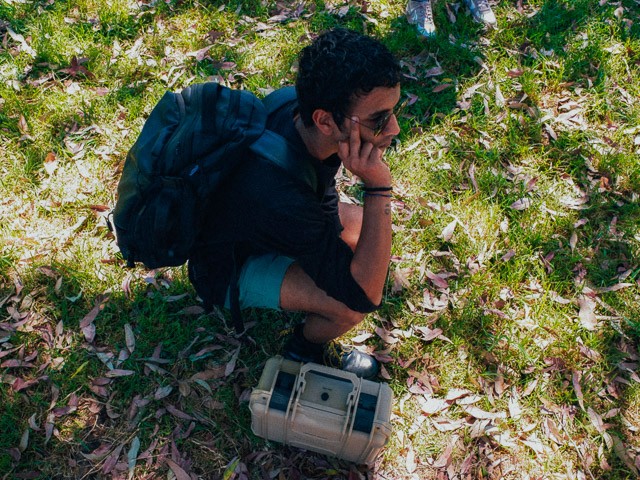
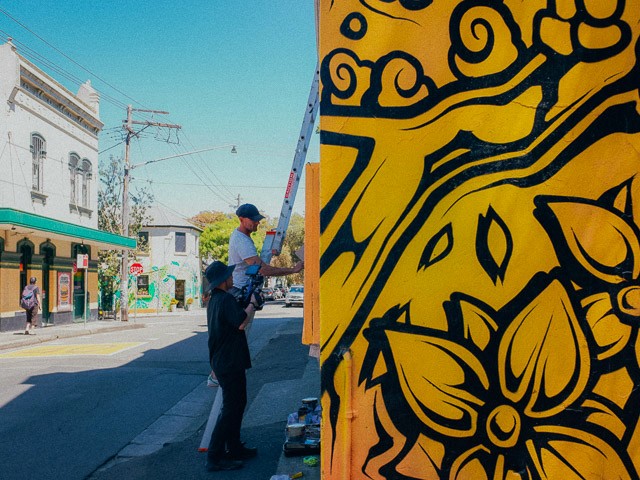
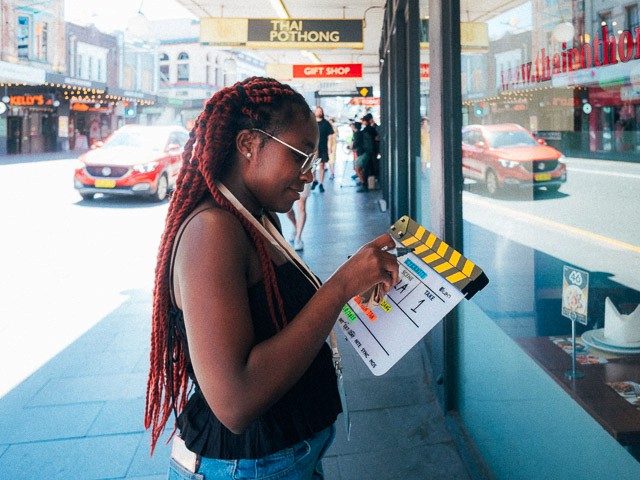
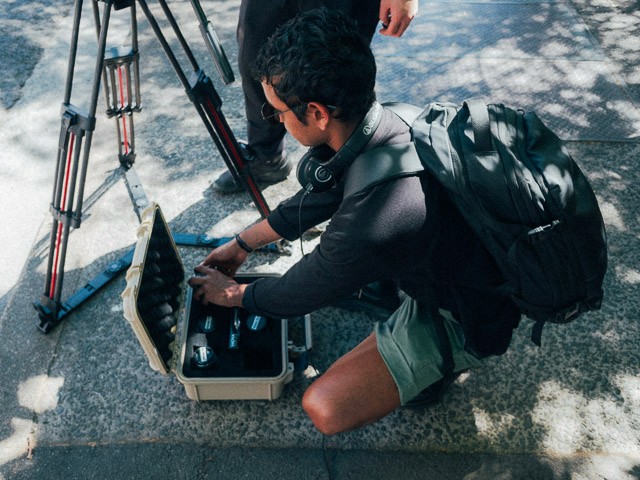
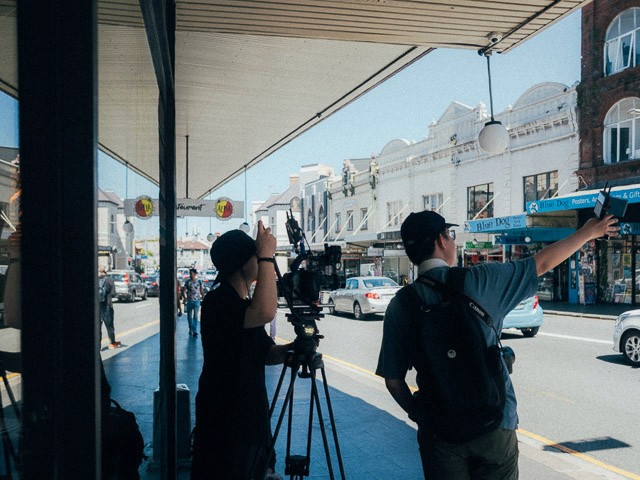
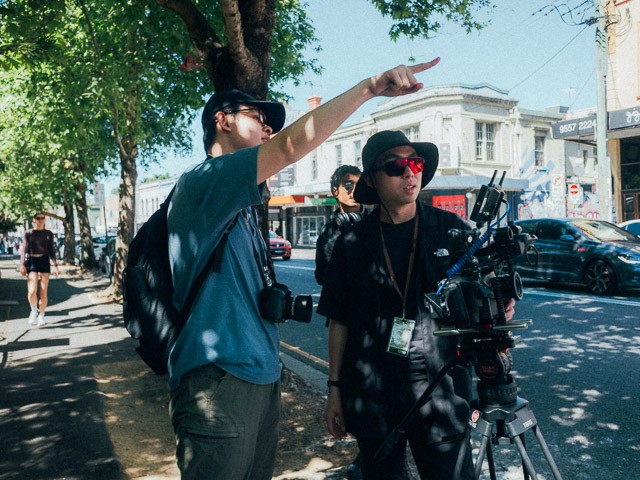
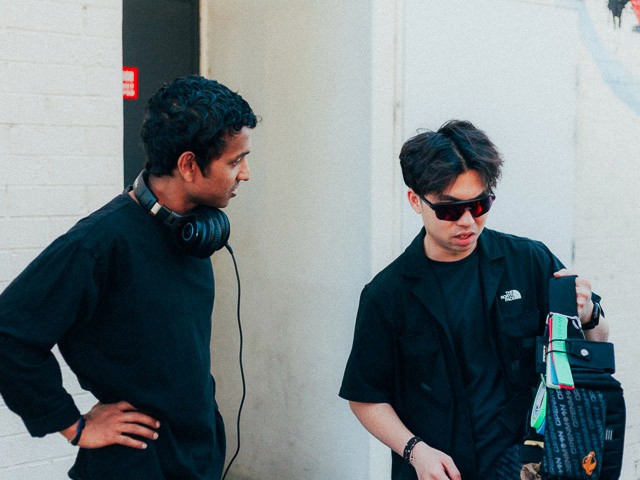
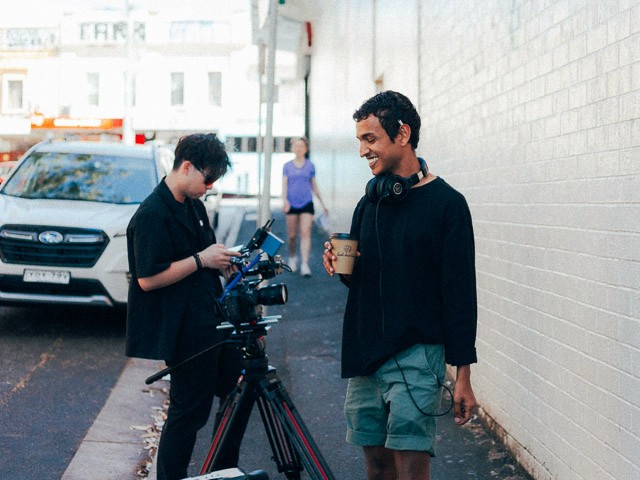
Day (01)
Inner West
Day (02)
North Ryde
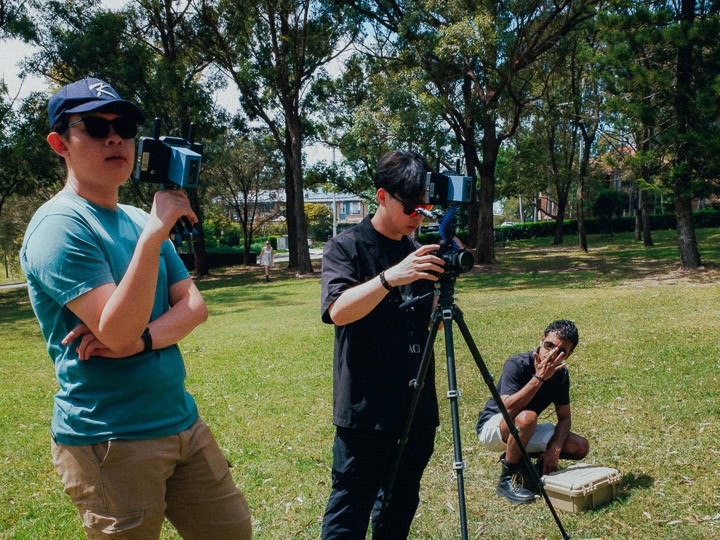
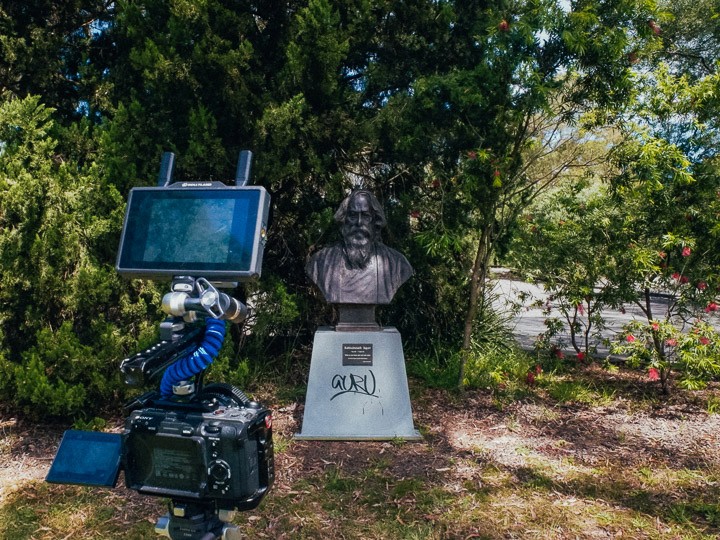
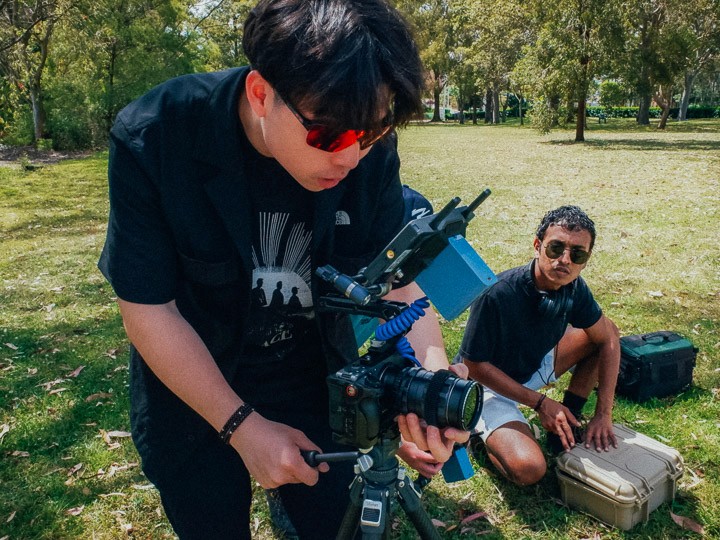
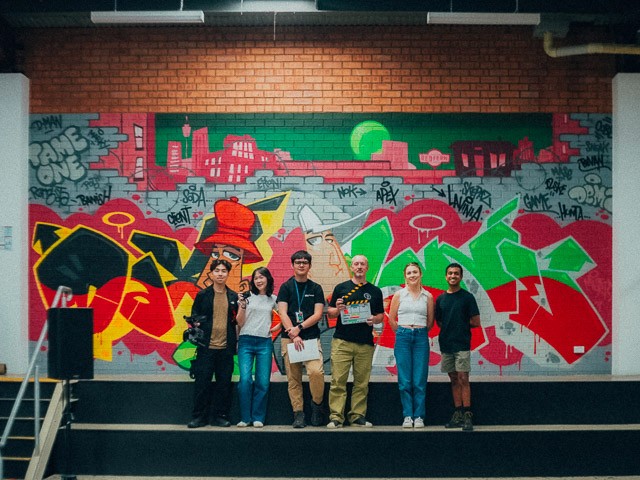
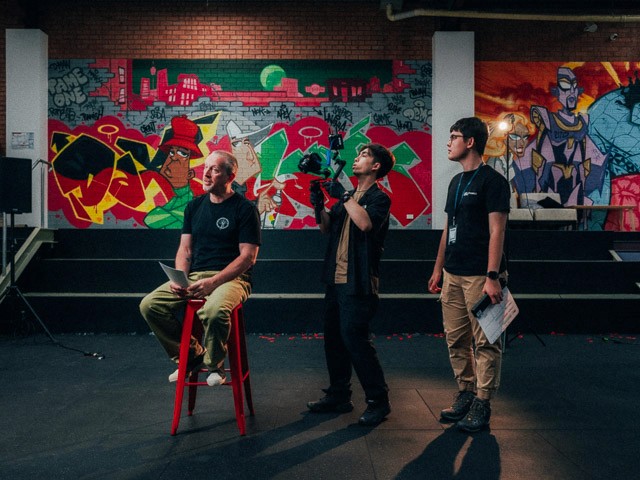
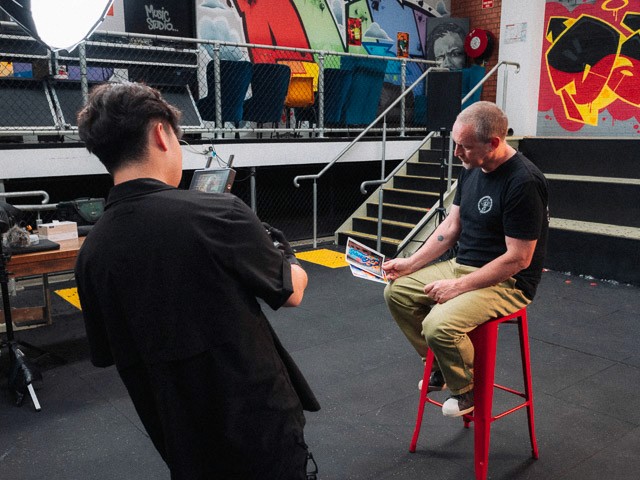
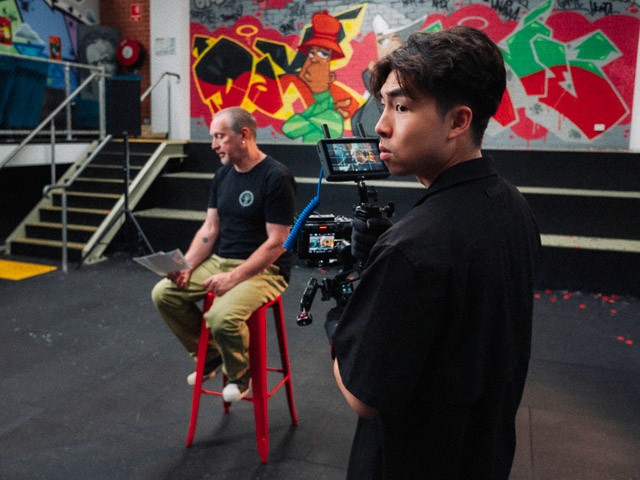
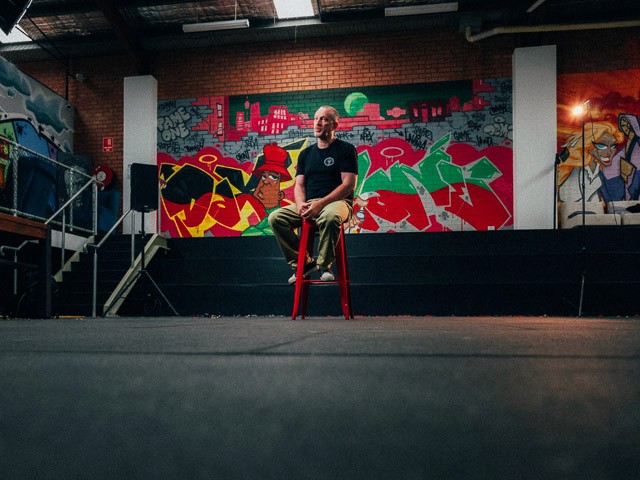
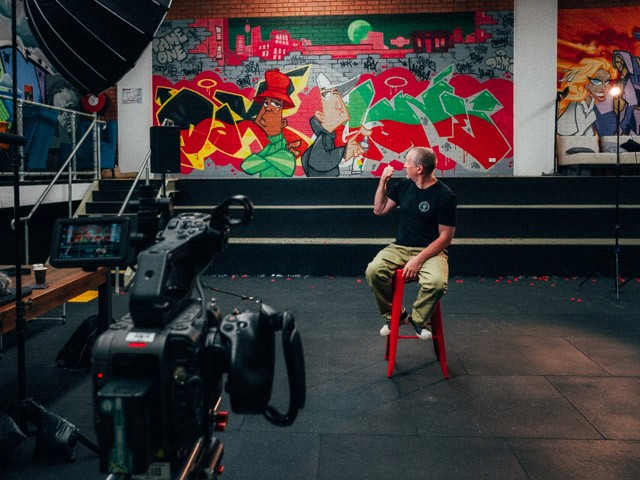
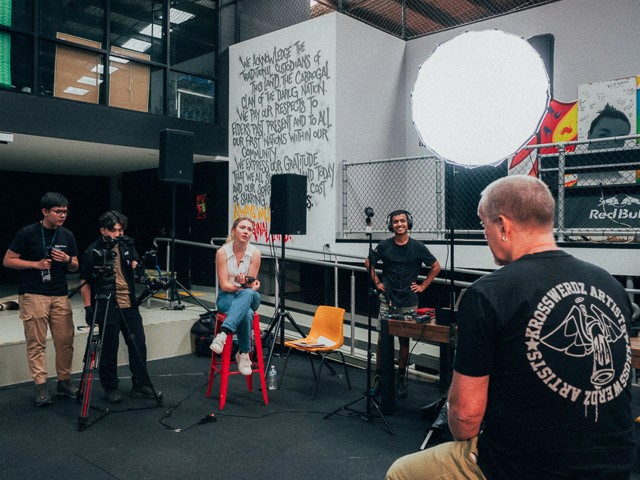
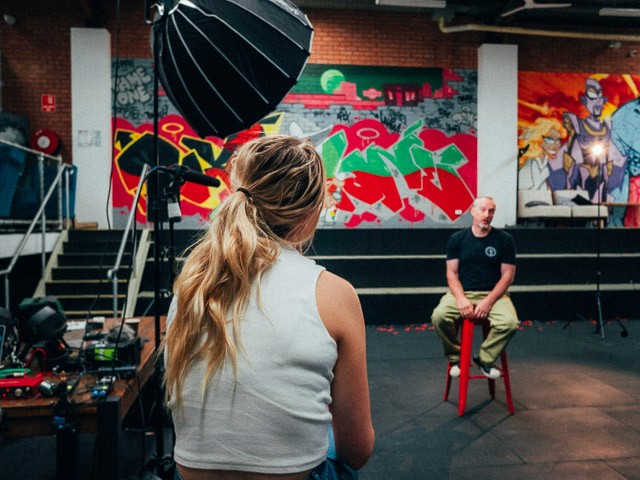
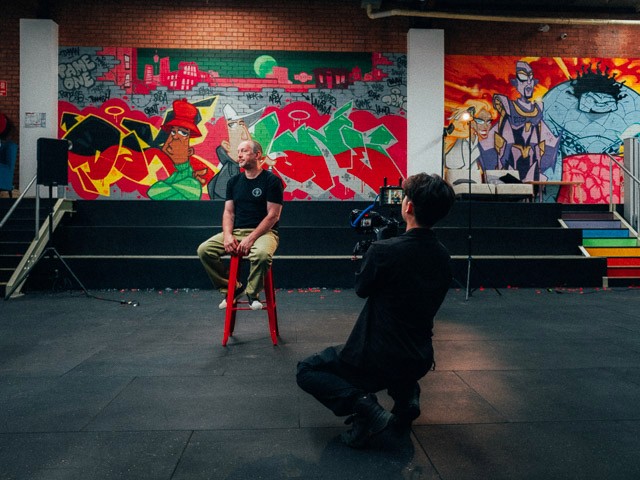
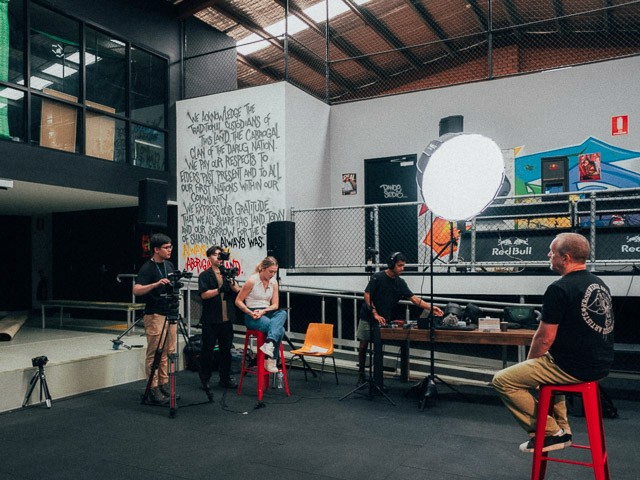
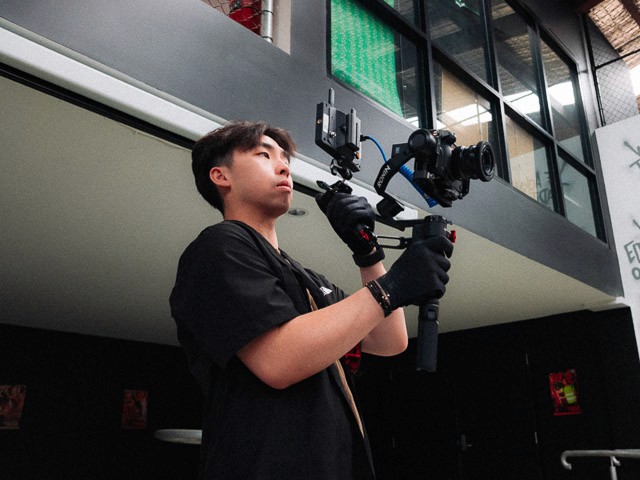
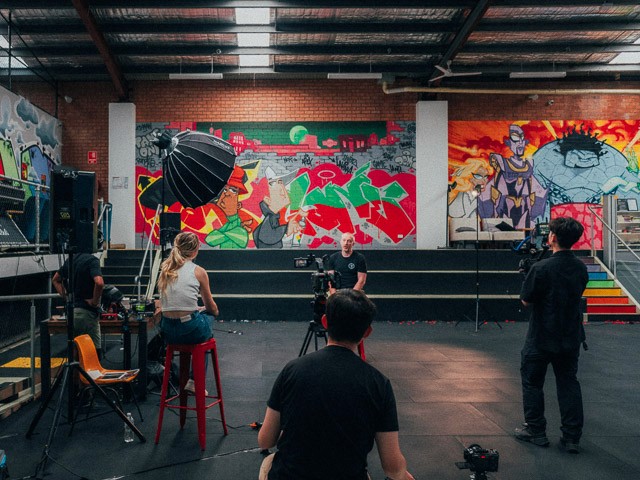
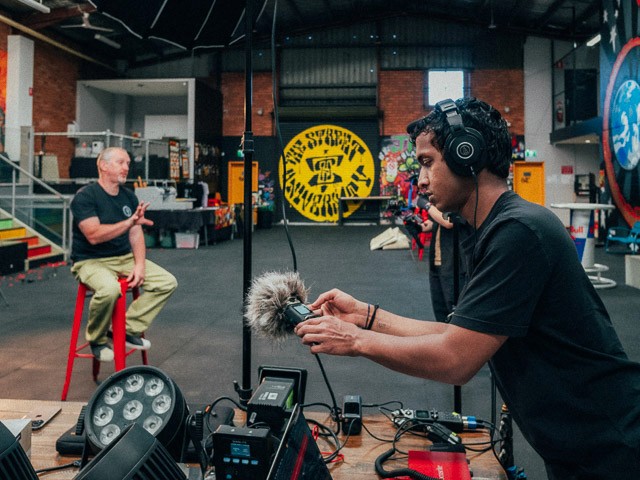
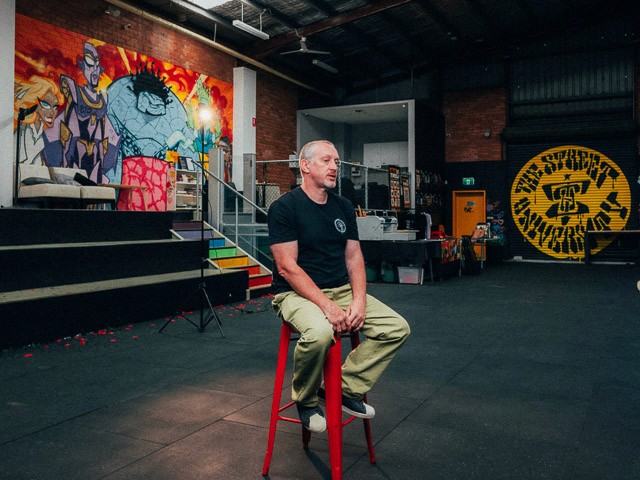
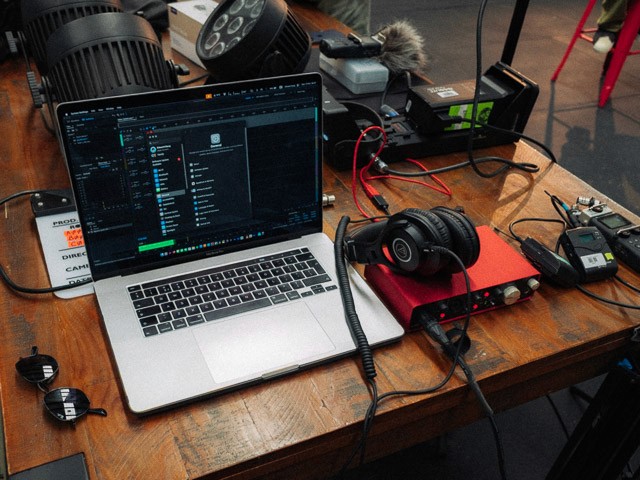
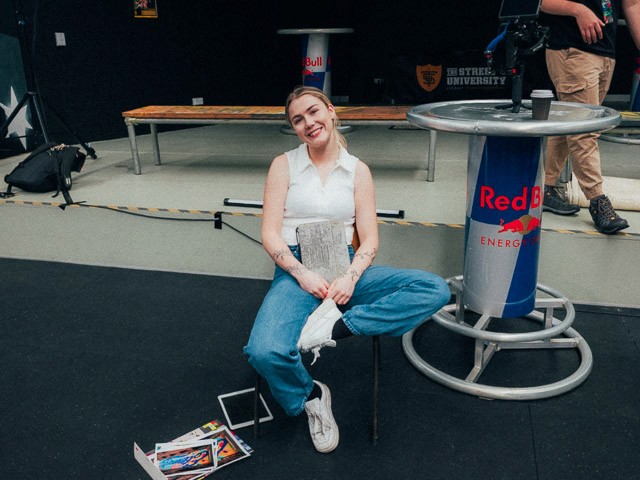
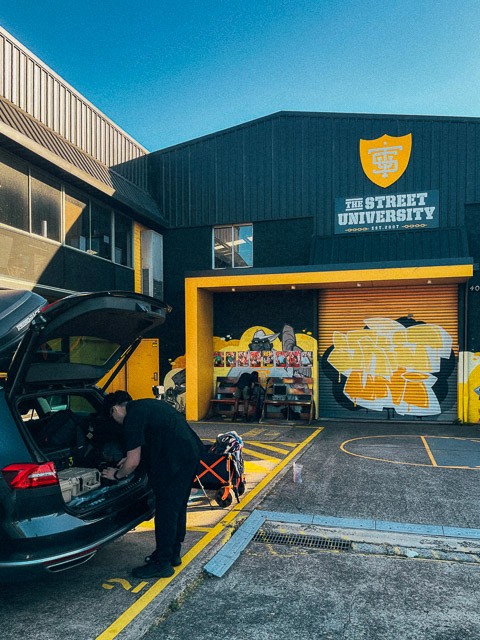
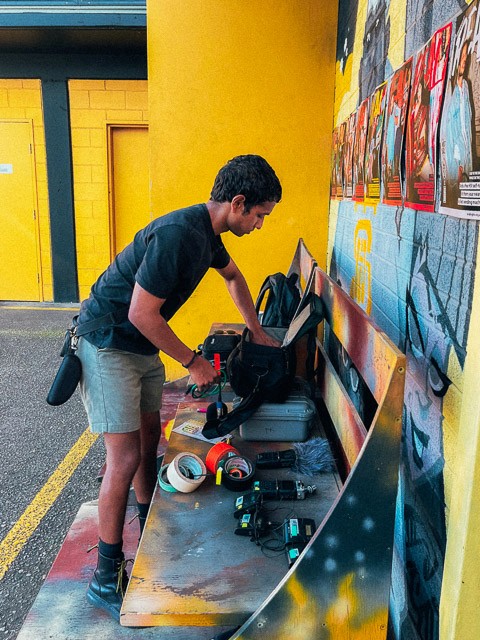
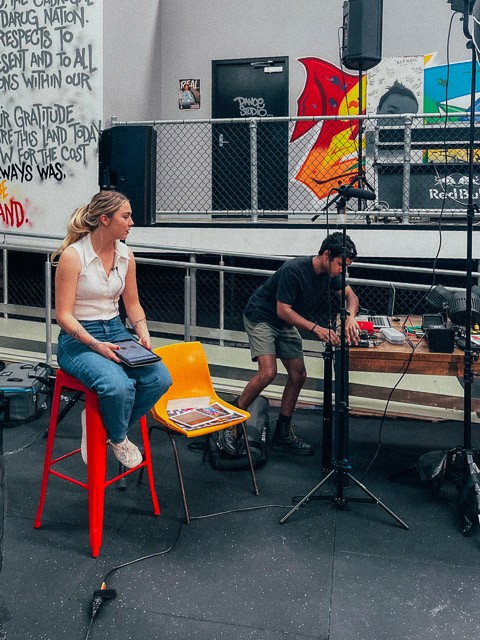
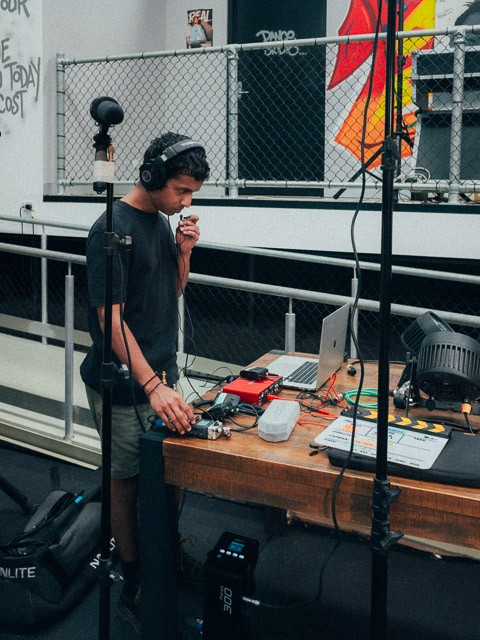
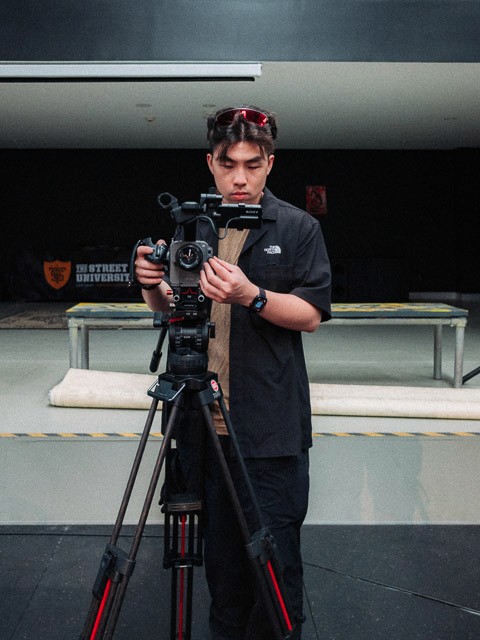
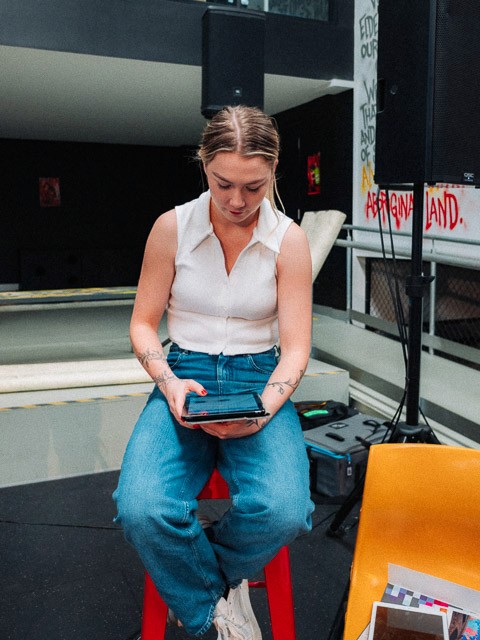
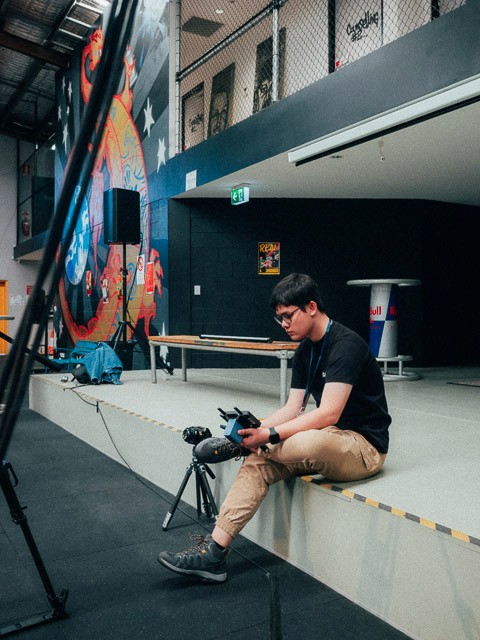
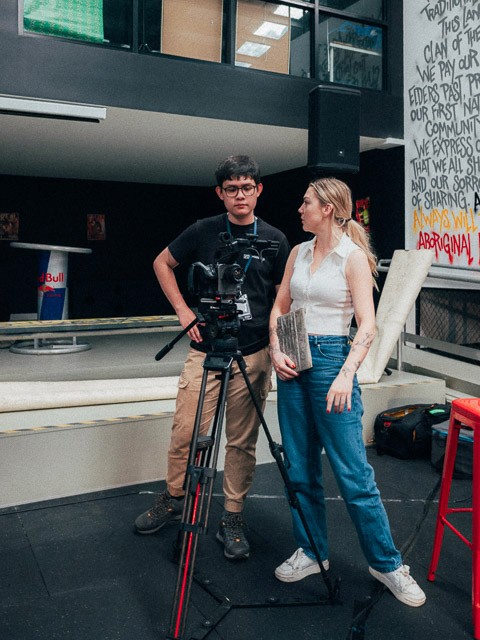
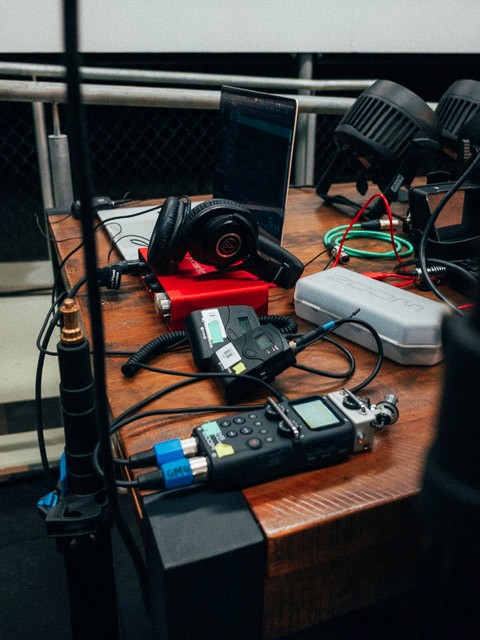
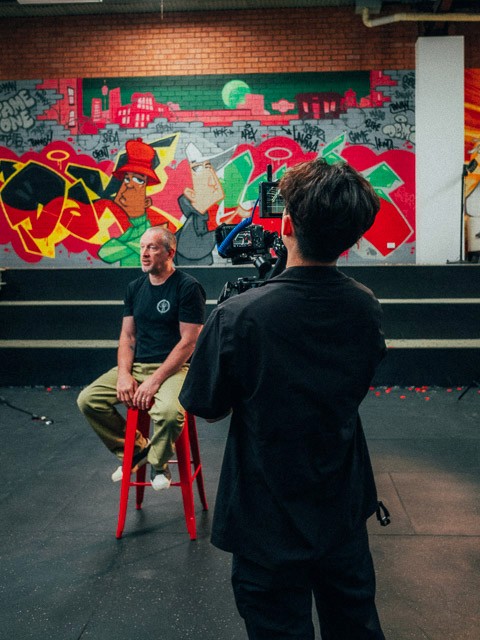
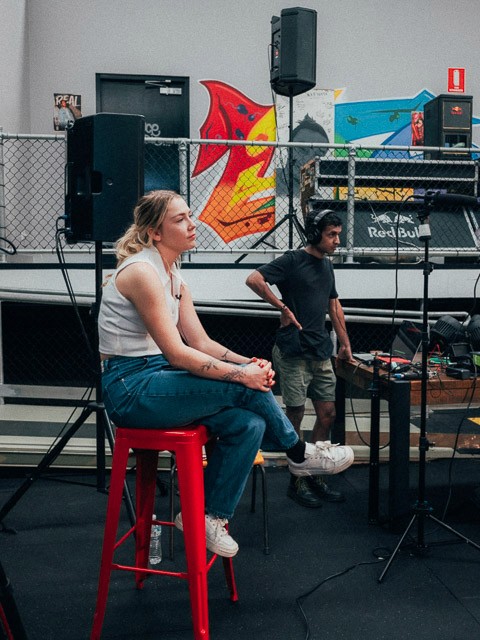
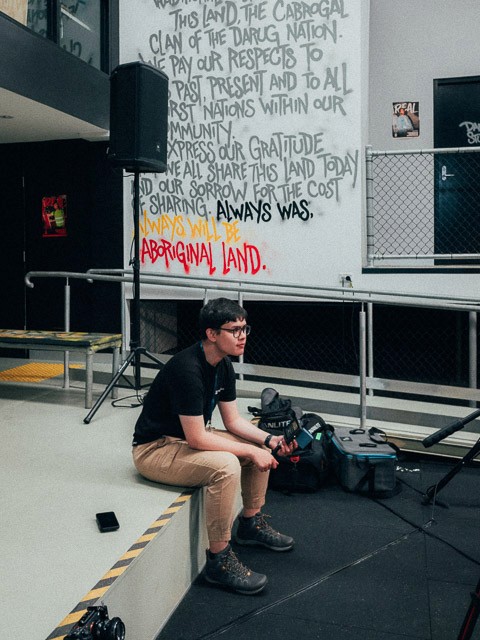
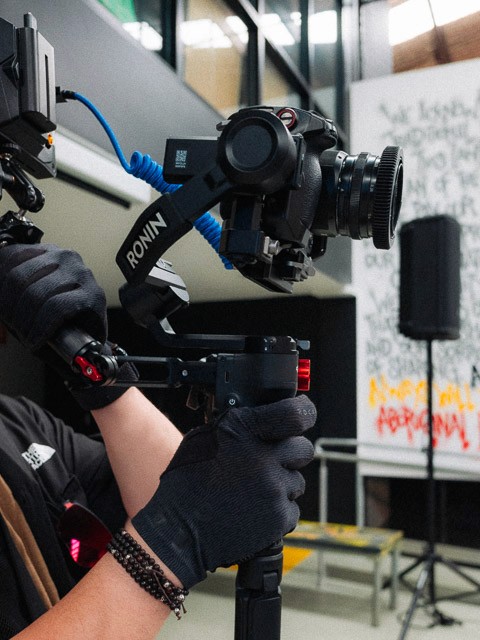
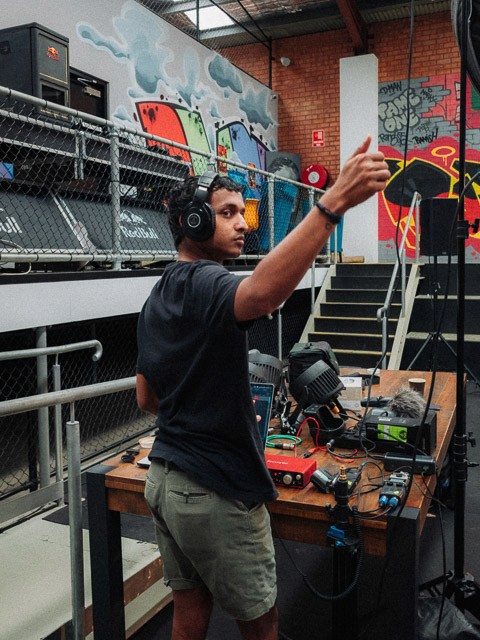
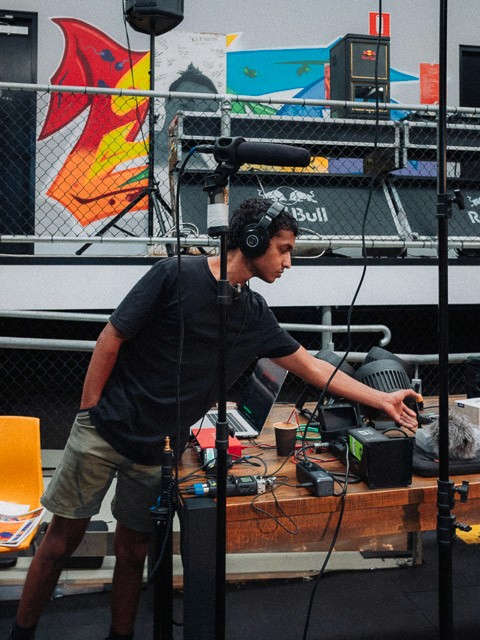
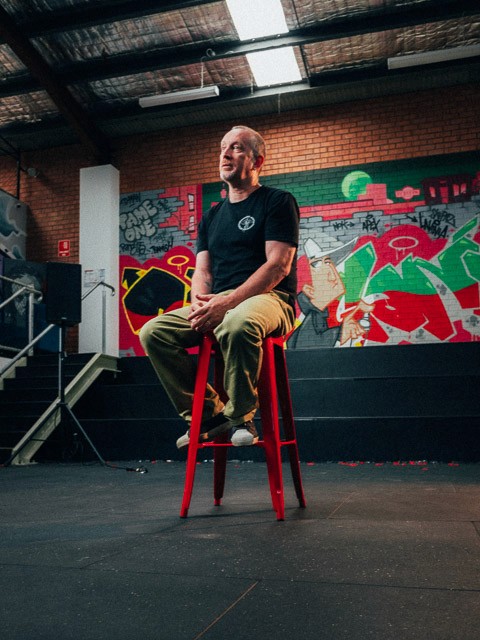
Day (03)
Mistery
Day (04)
Oliver Wall
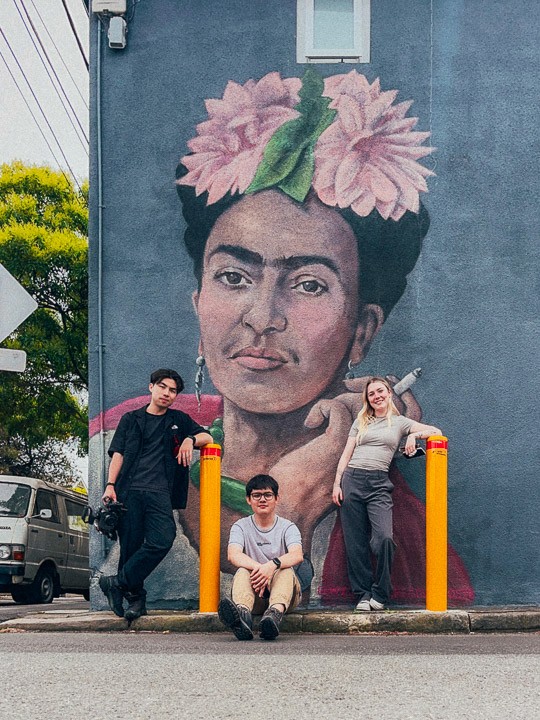
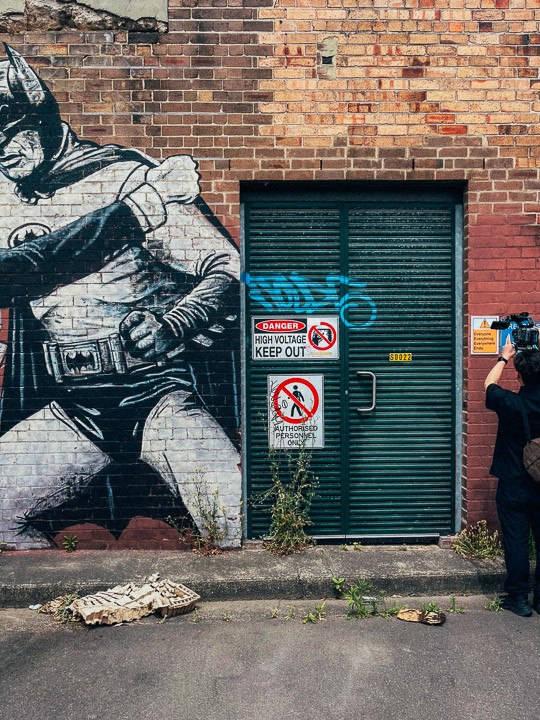
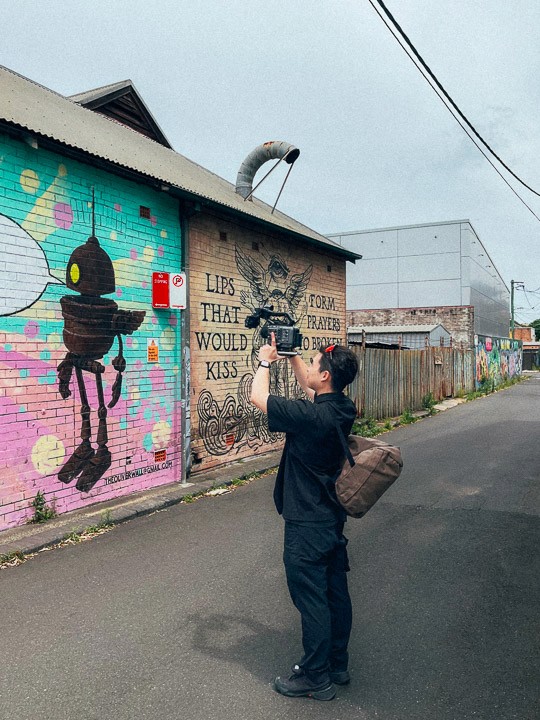
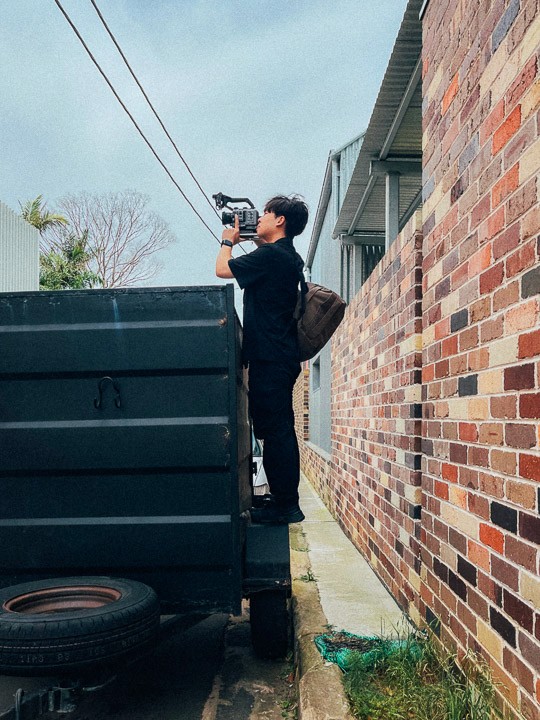
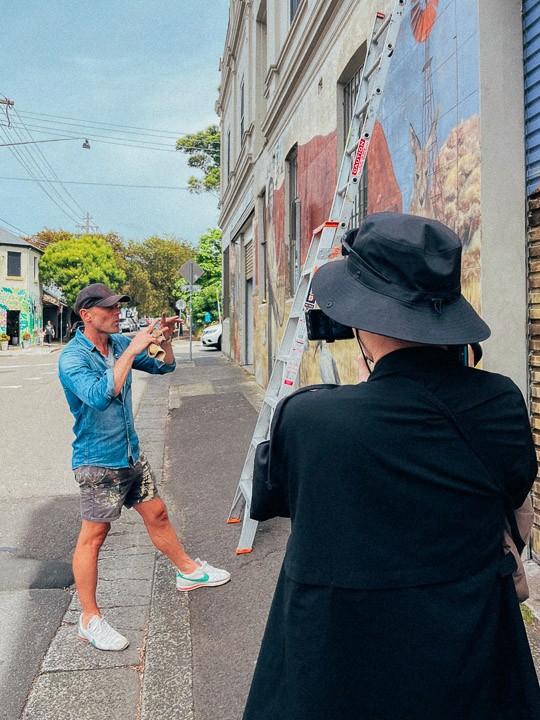
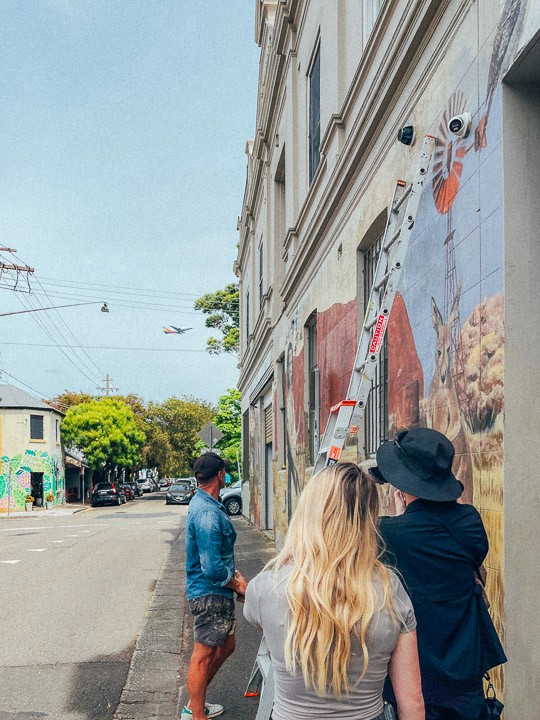
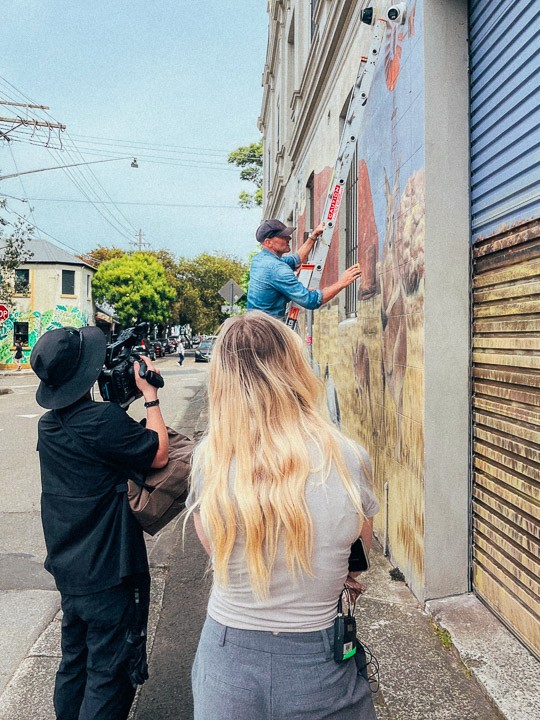
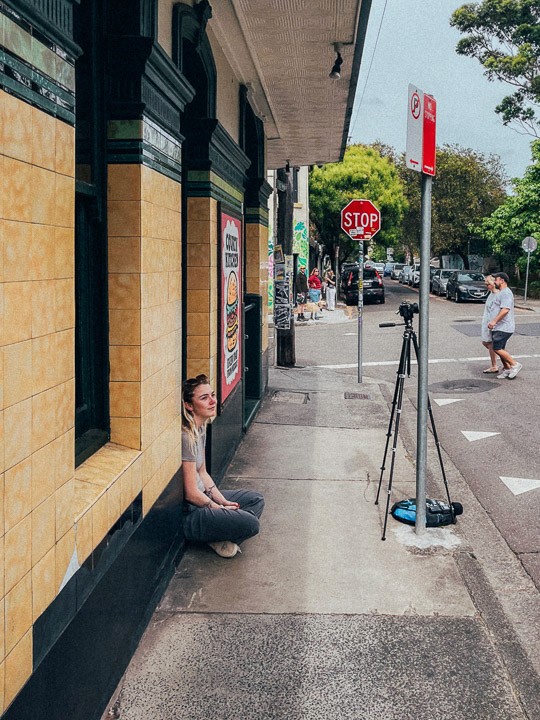
Production
Day (01)
Inner West
Day (02)
North Ryde
Day (03)
Mistery
Day (04)
Oliver Wall
Post-Production
Defiant Jazz
After a few days of touching grass and more alcohol than I'd ever had, it was time to head back to being a basement dweller. As Director and also Editor, taking the editorial lead meant having first-hand and total control over the film's structure, rhythm, and mood, which, as I realised, was essentially both satisfying and terrifying.
Scholars Rabiger and Hermann (available in a library near you) describe post-production as the "extremely creative editing phase" in which material is reshaped so deeply that "it's like a second chance to direct," with the central challenge being "to find a dramatic structure that delivers the story in its most striking form." This is where everything either clicks or falls apart.
Being classic me, I committed well beyond the required hours of the coursework. Thus, I was able to run multiple passes on sequencing, pacing, and sound-image relationships, sit with each version for a while to notice the flaws and hate myself, and then come back fresh rather than immediately settling for the first assembly that worked.
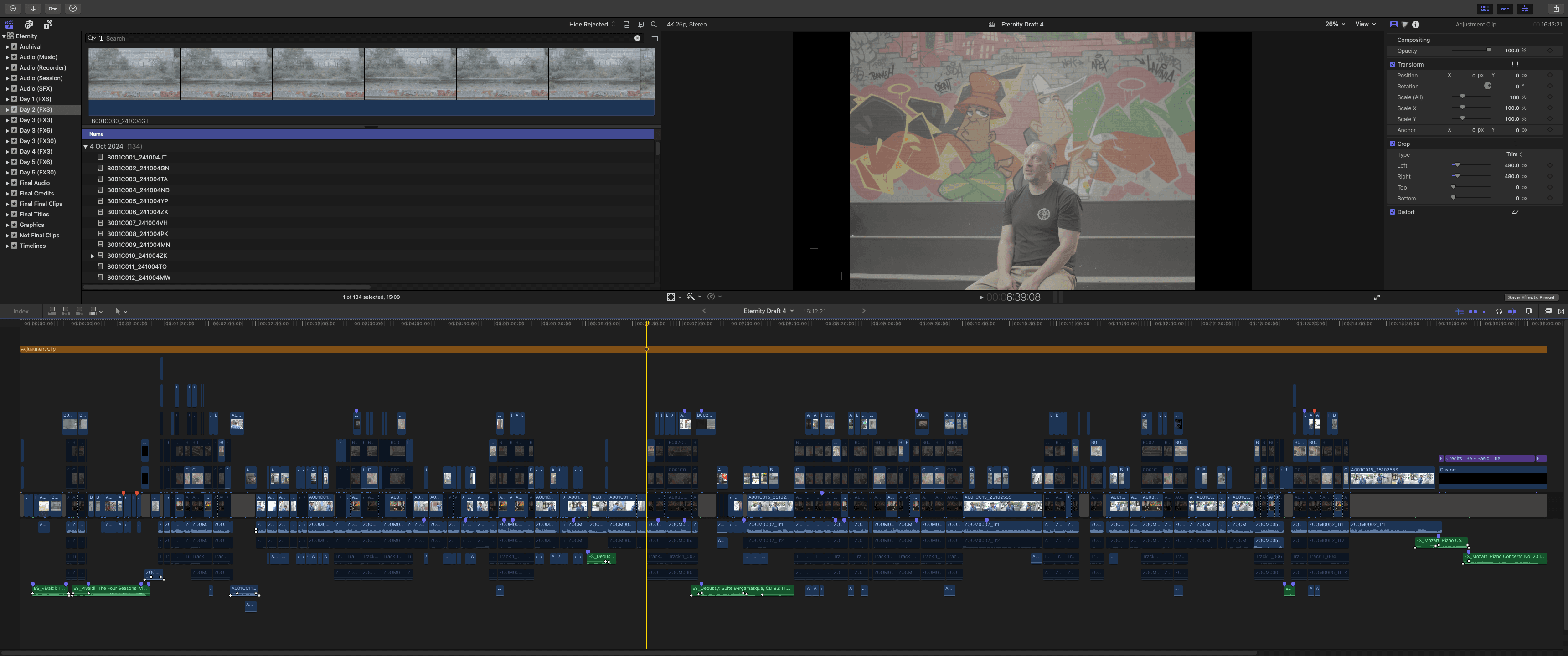
Workflow
There were at least four major drafts, alongside a couple of notes from Georgia about how we both should step away to calm down. We also kept the feedback loop running throughout, much like every other phase of this project.
On the technical side of things, primary editing was done in Final Cut Pro before the full timeline was exported to DaVinci Resolve Studio for colour grading and Pro Tools for Nirvan's sound mixing, which happened simultaneously. Perhaps not the most optimal, but coherent with our tool stack. And it was more than rewarding to see everything come together.
"Hang it in the Louvre," I guess?
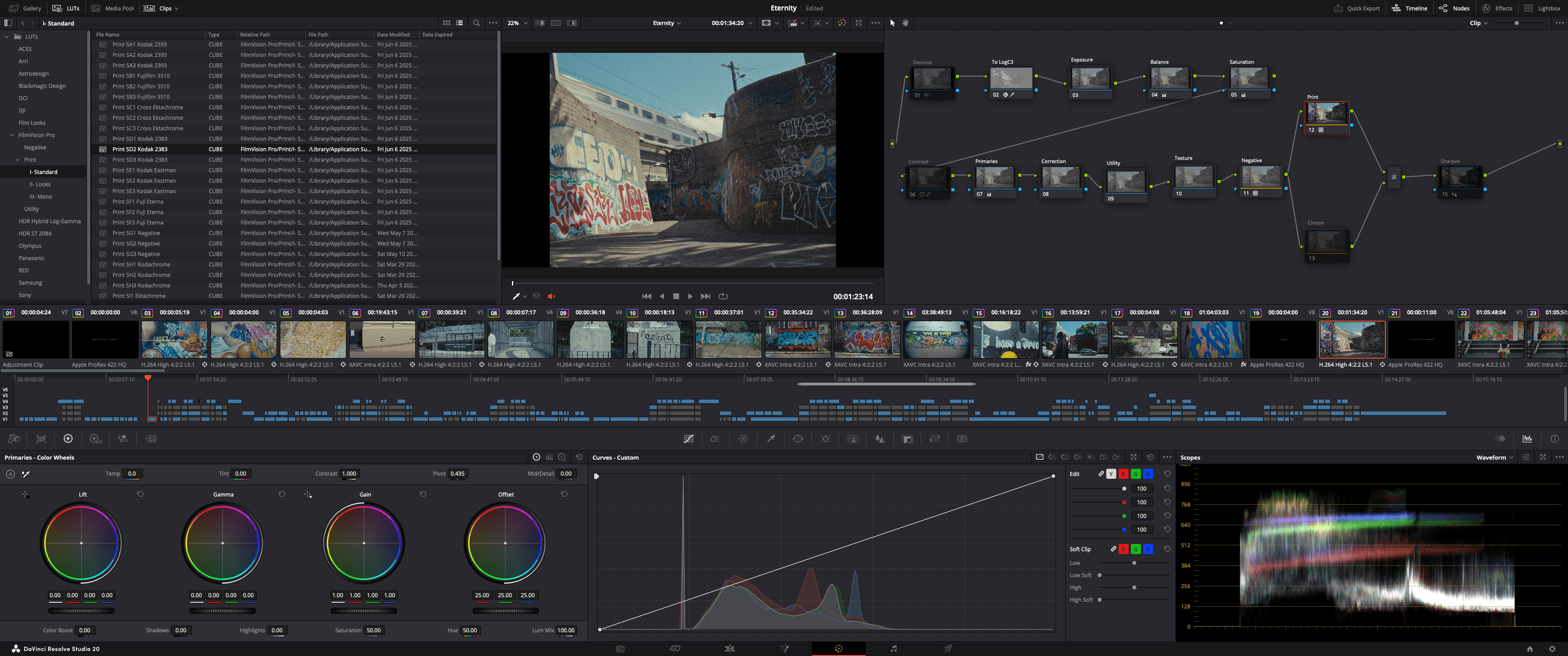
Hang It in the Louvre
Hang It in the Louvre
The After Hours
III. Graphic Design
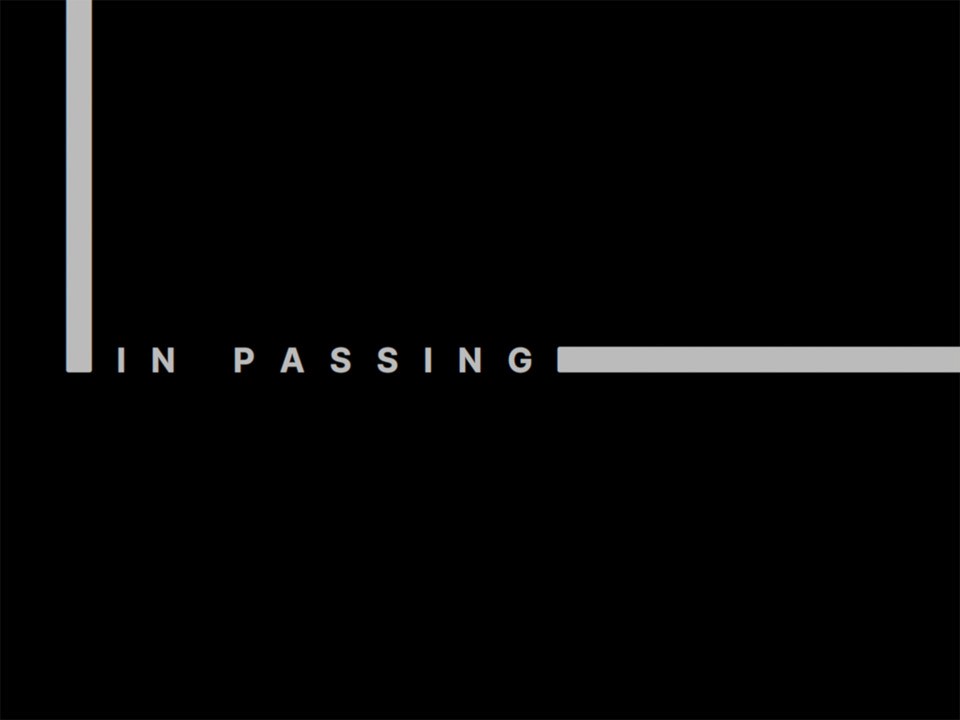
I worked on all graphic design for our production, which included title cards, end credits, and one more (fun) thing. They are not just text-on-a-screen.
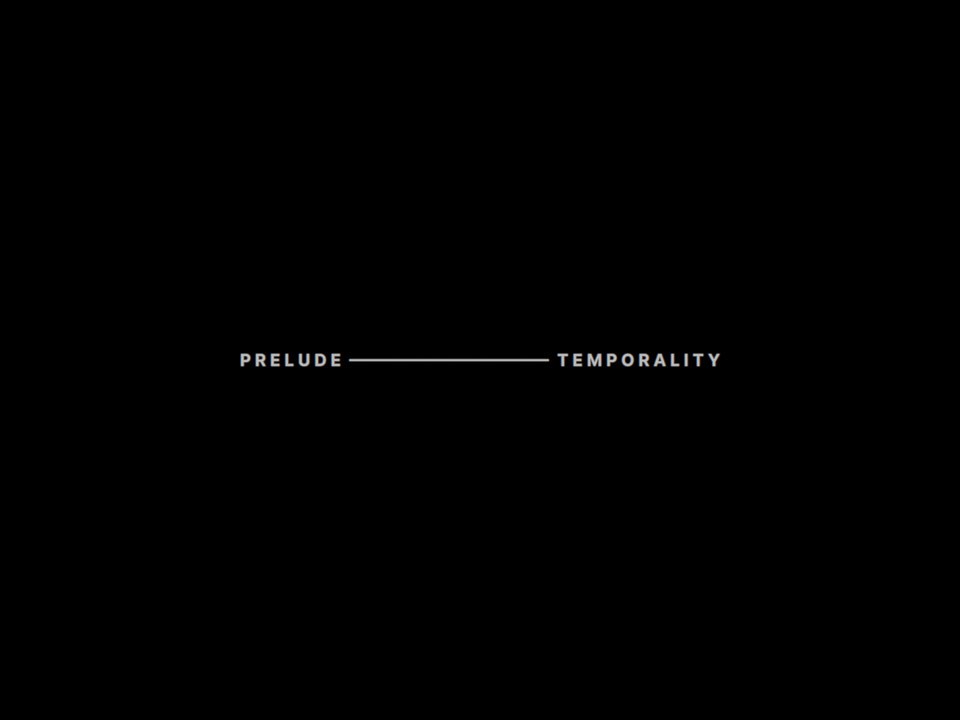
For our end credits and titles, I was inspired by Sebastian Pardo's work on Brady Corbet's The Brutalist to a twisted mix between Swiss design and brutalism. We've got clean lines, efficient layout, minimal colour (none, actually), and lots of negative space. The goal was a liminal and concrete feel that would match the film's energy. If you're noticing it as a bit too clean for a graffiti documentary, I can confirm it was indeed another small way of mine to challenge the norm, as with pretty much everything else we'd been doing visually. We talked about this.
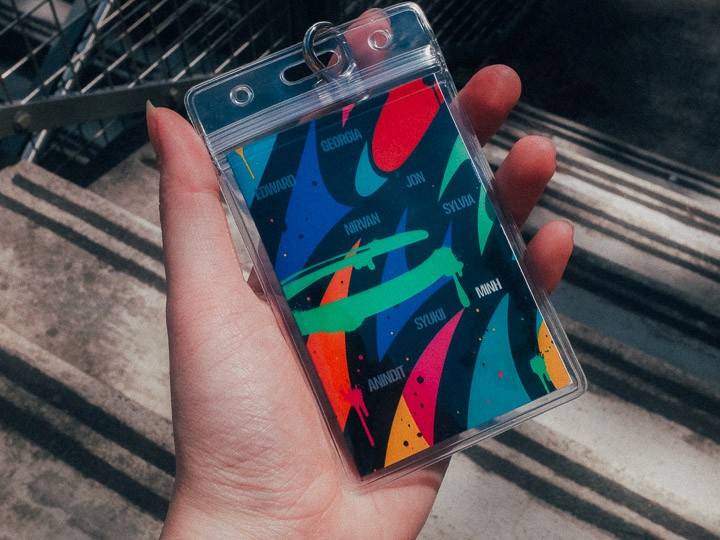
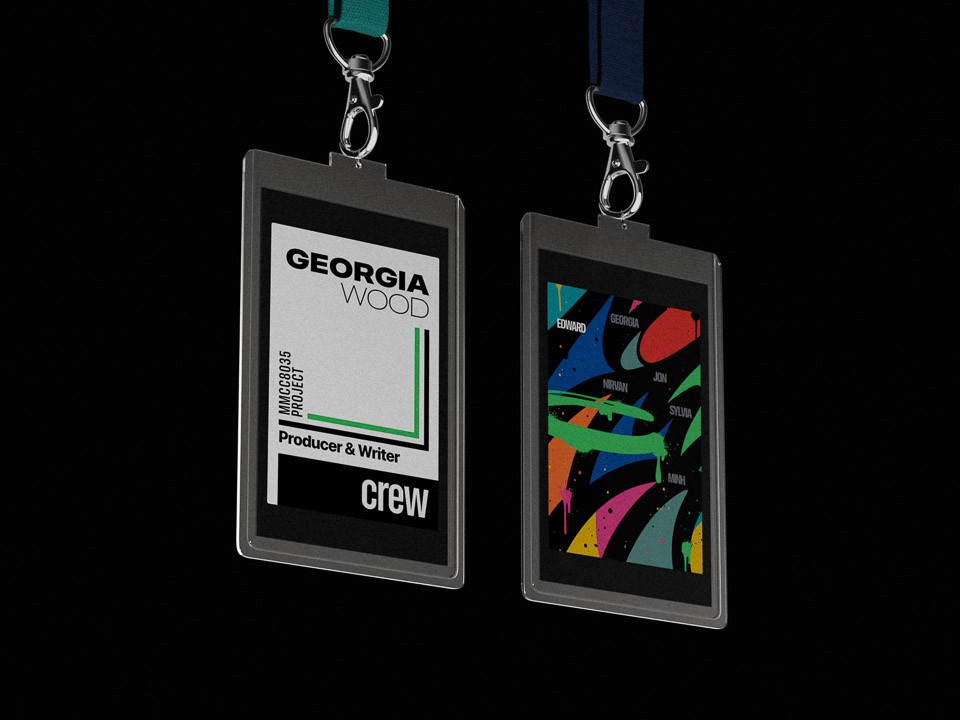
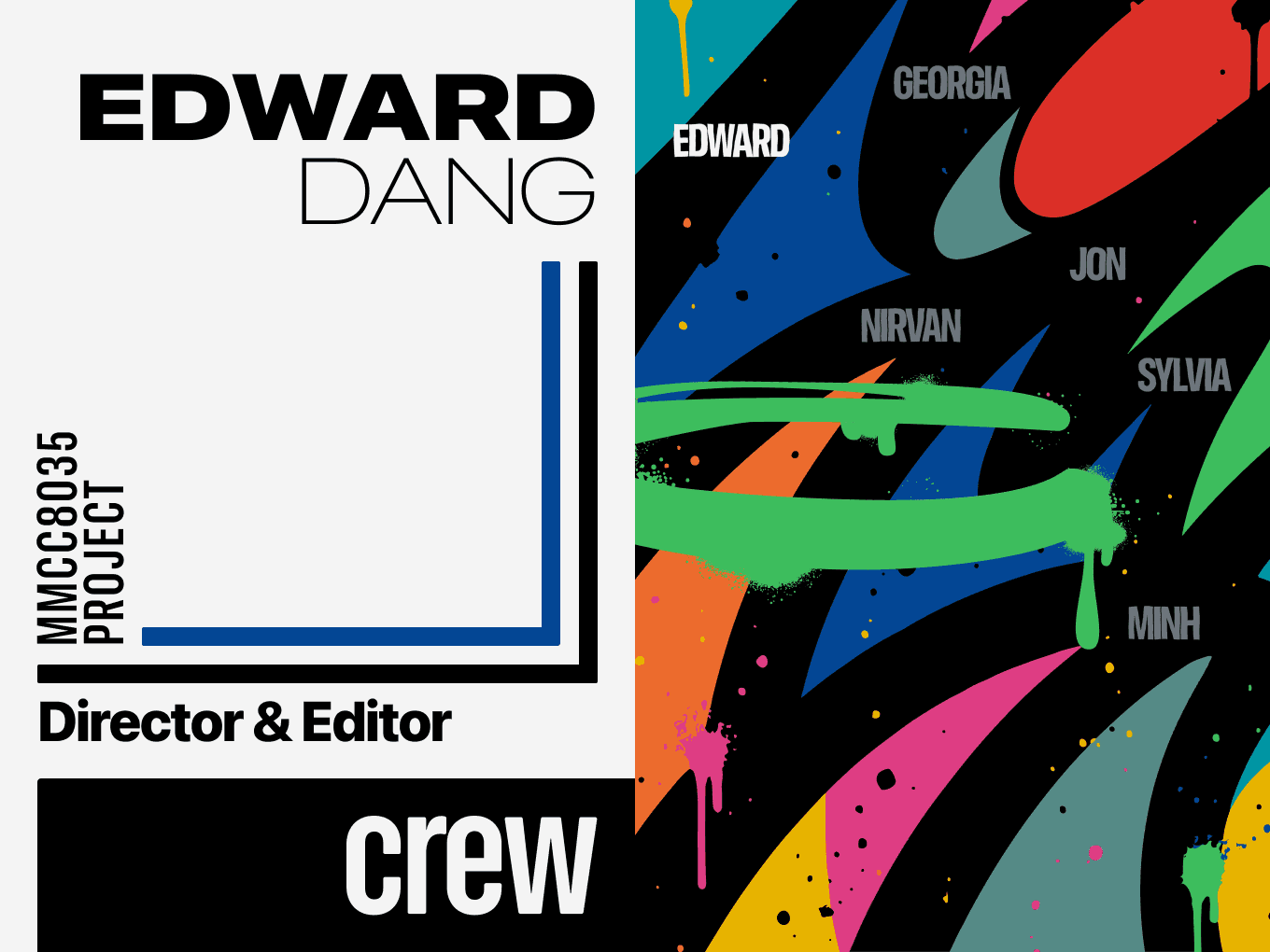
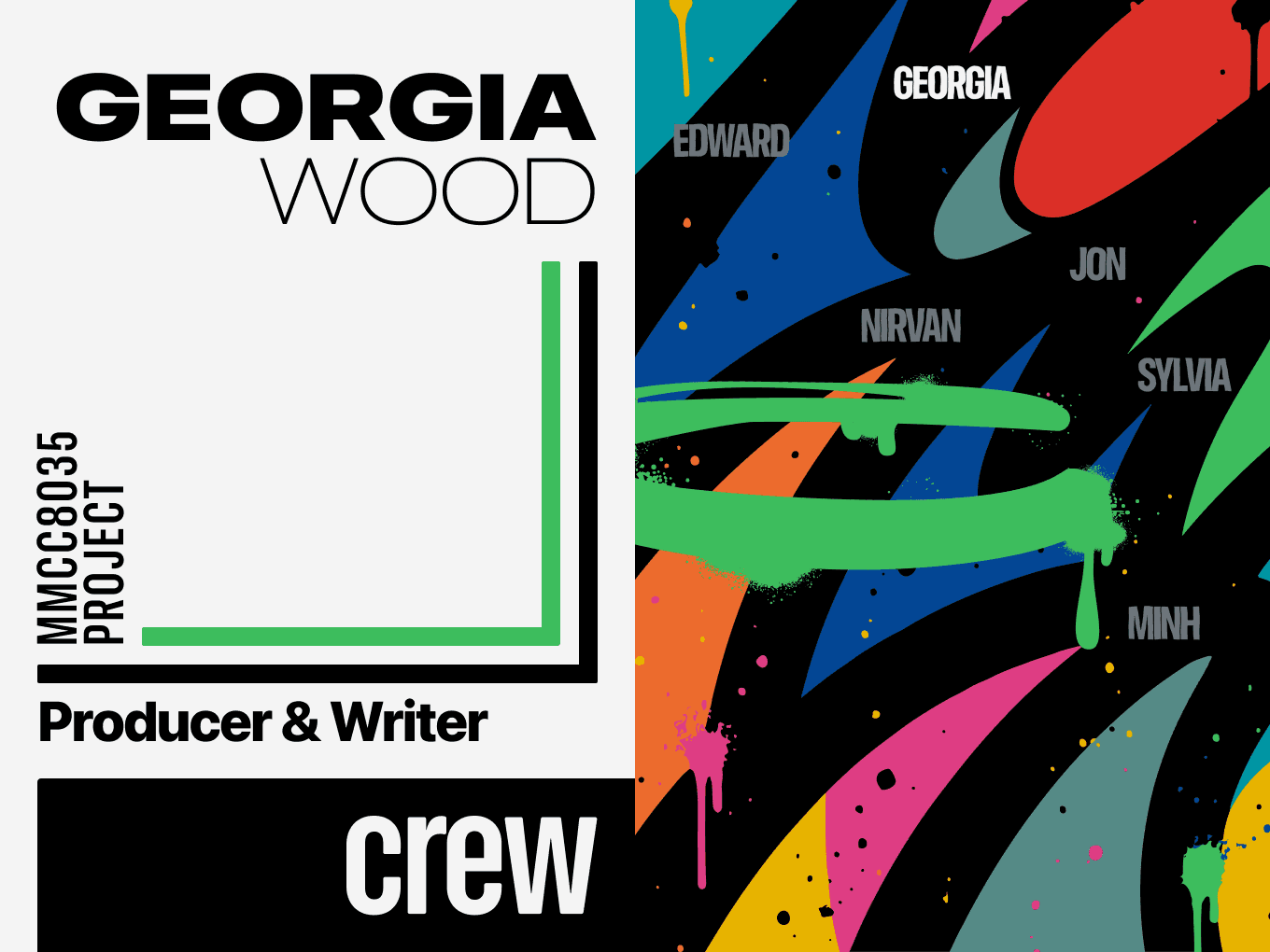
I also designed and printed a set of custom name badges for the crew, the look of which exhaustively aligns with my Swiss-brutalism obsession at the time. I thought it was a groovy way to relieve stress outside of production commitment. (Though I cut my palm with a really sharp knife while trimming the badges and lost an unreasonable amount of blood.)
Totally worth it, by the way.
While staring at Figma, I also received a comment that I would be doing anything but writing my report. I suppose design is effectively my procrastination.
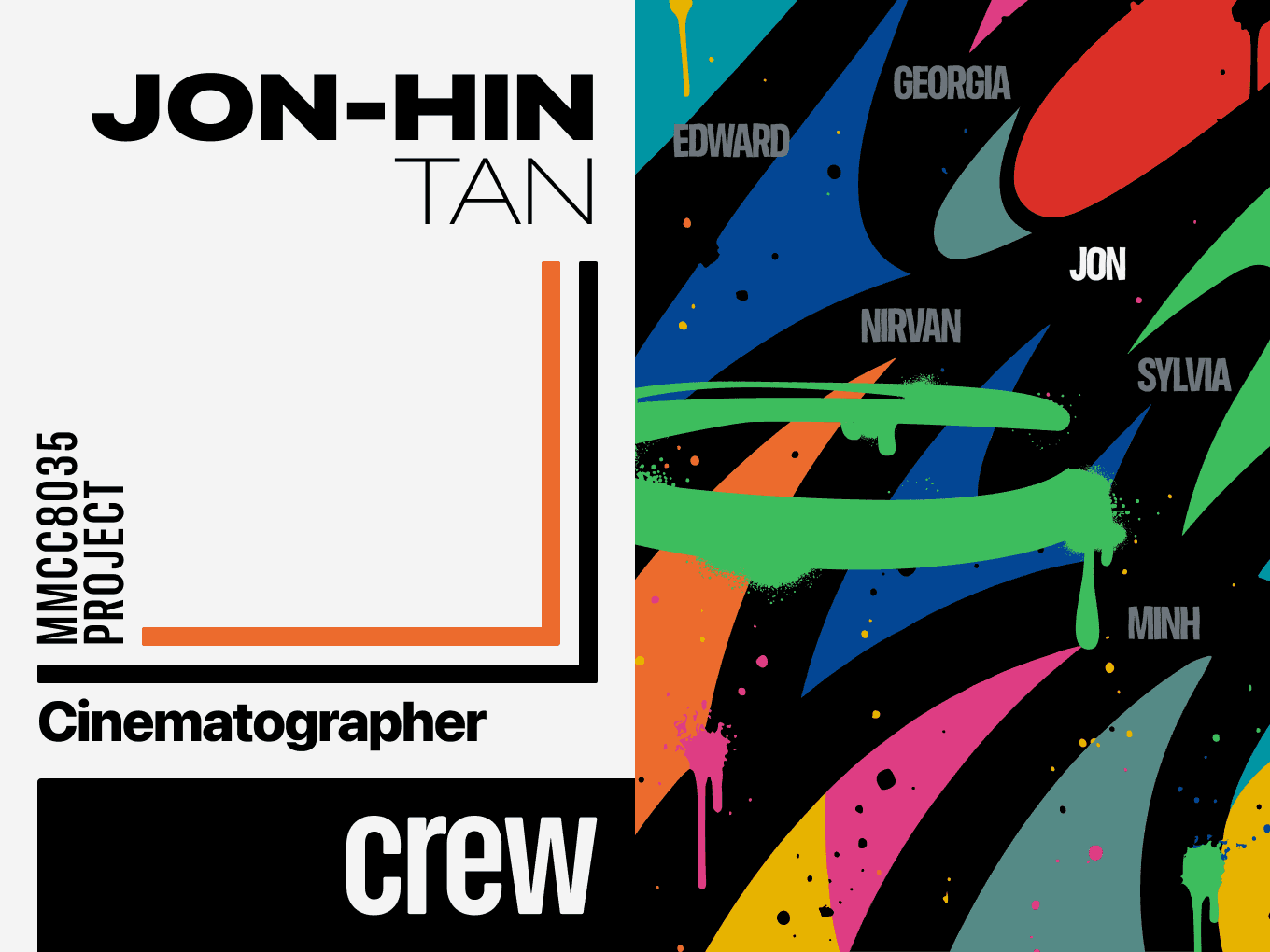
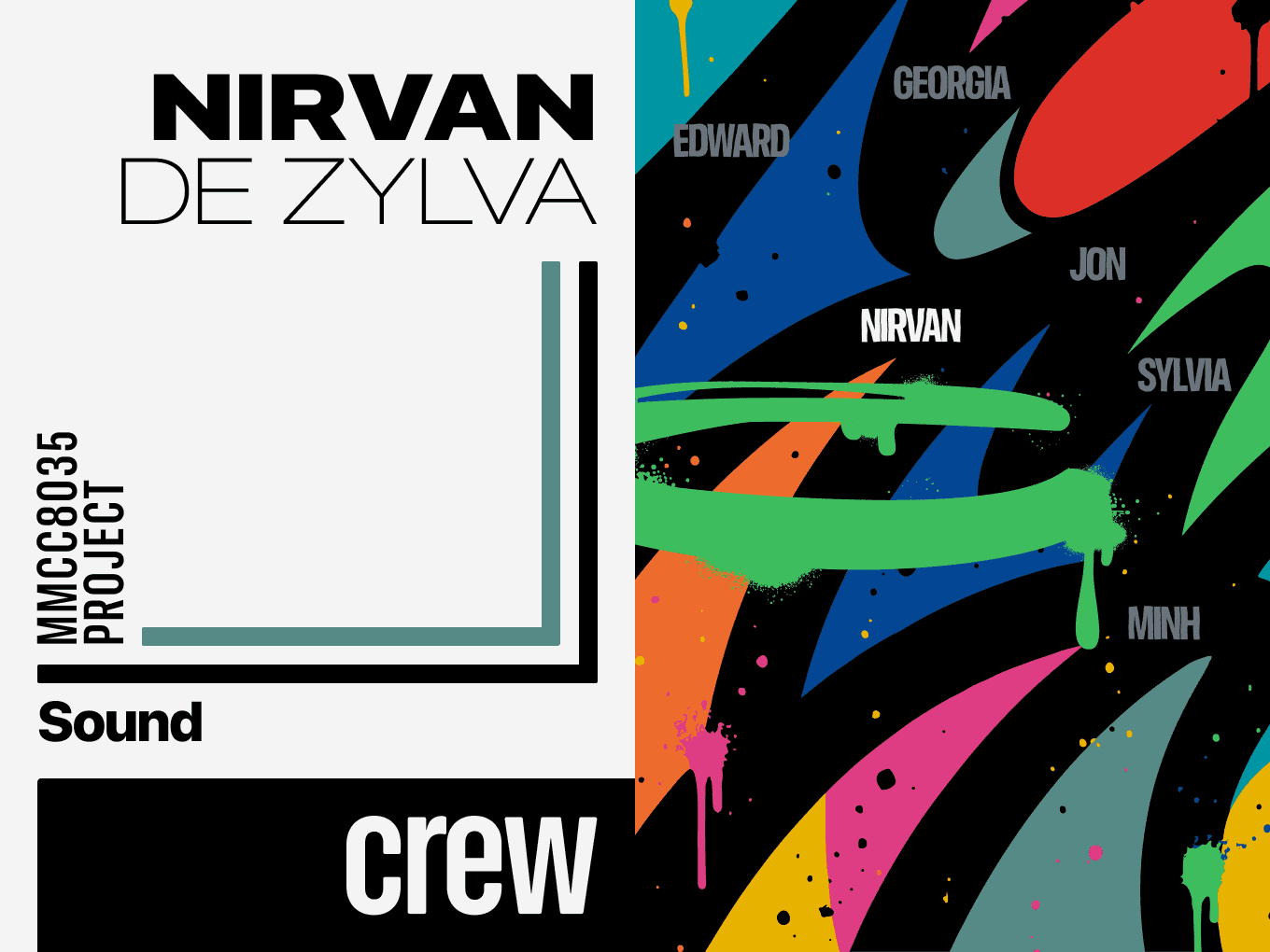
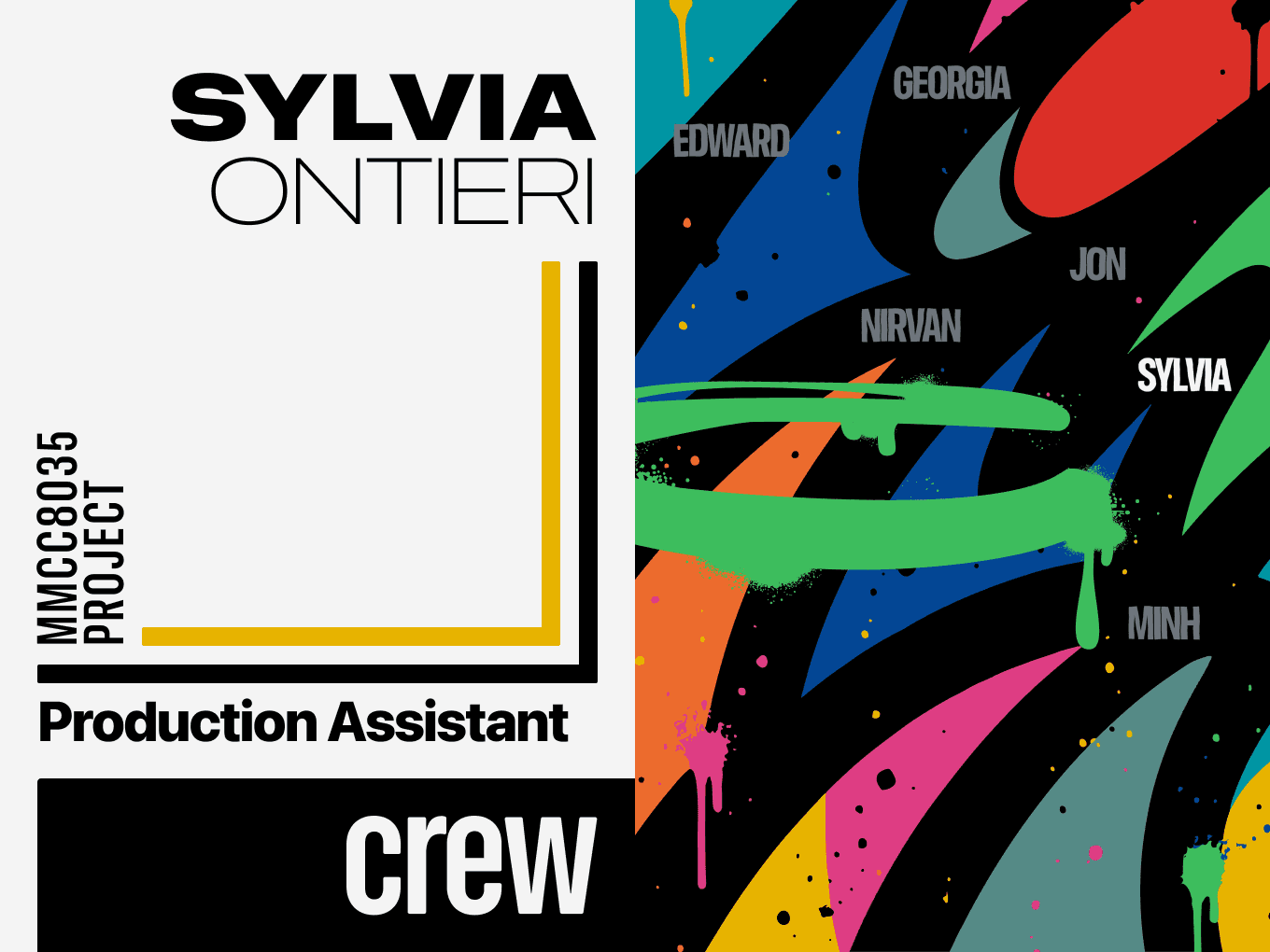
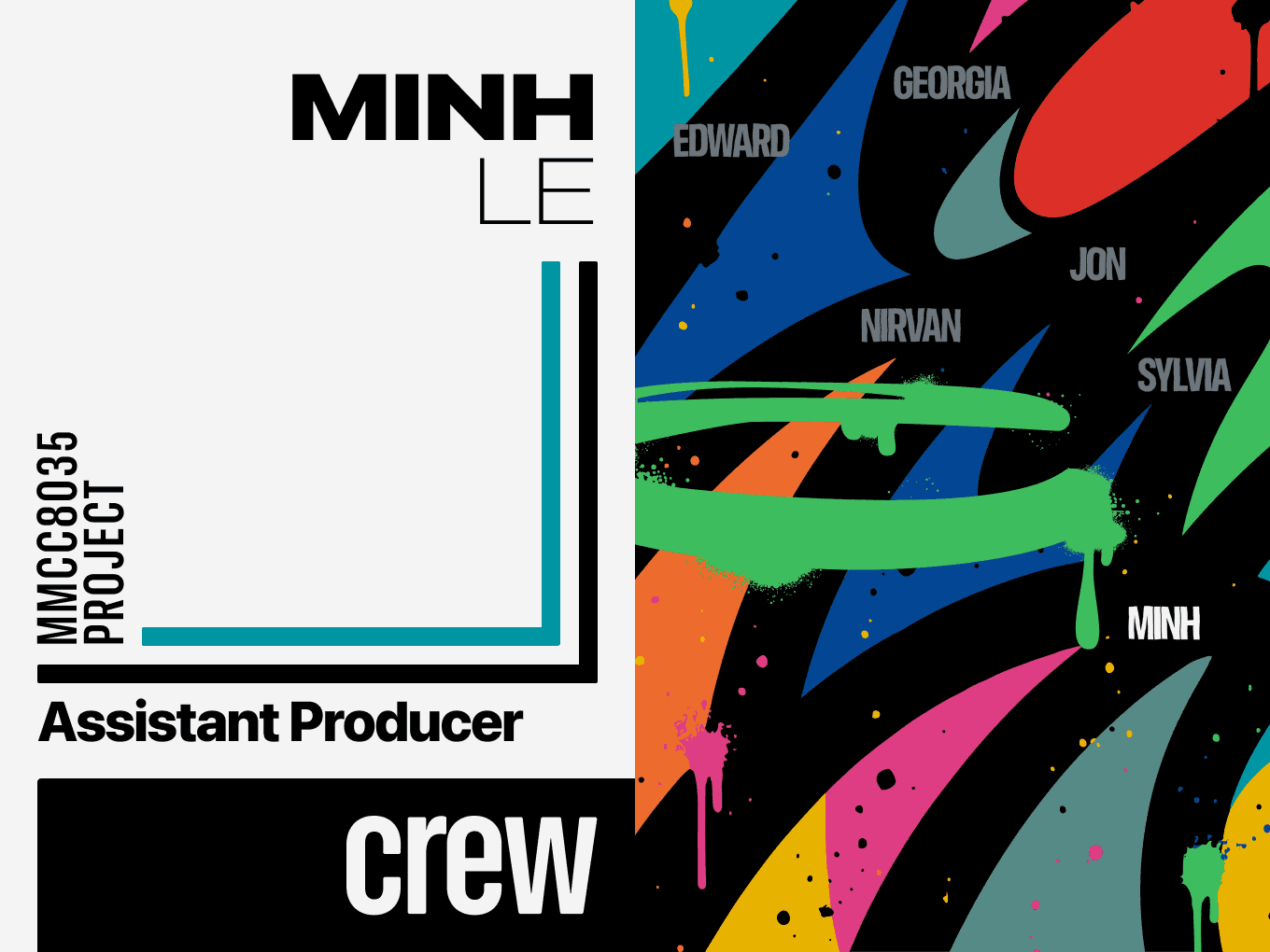
My final piece of design for this project is, well, this very page you're on. This one marks my first time back in non-case study web design since forever, and more importantly, my starting point in a new tool I might just gatekeep (it's Framer). I guess it's a case study still, but hey.
I (accidentally) wrote far too much here, and there are probably way too many photos and memories archived for anyone's reasonable attention span within a one-web-page radius. But if you're reading this because you've scrolled through everything and stayed for what I have to say about our documentary, thank you! Like so, so much.
Here's to the dreamers. Also, thanks, Sydney. That was awesome.
A special thank you to Kush Badhwar for guidance and feedback throughout the process, to Alex Ryan and Chris Halili for completely ruining us with state-of-the-art equipment, to Eric Zhang for design consultation, and to Anindit Shrestha and Syukii Wan for emotional support. Warmest hugs to the team who gave so much to this project, especially Georgia, for enduring me.
Photography by Edward Dang and Minh Le
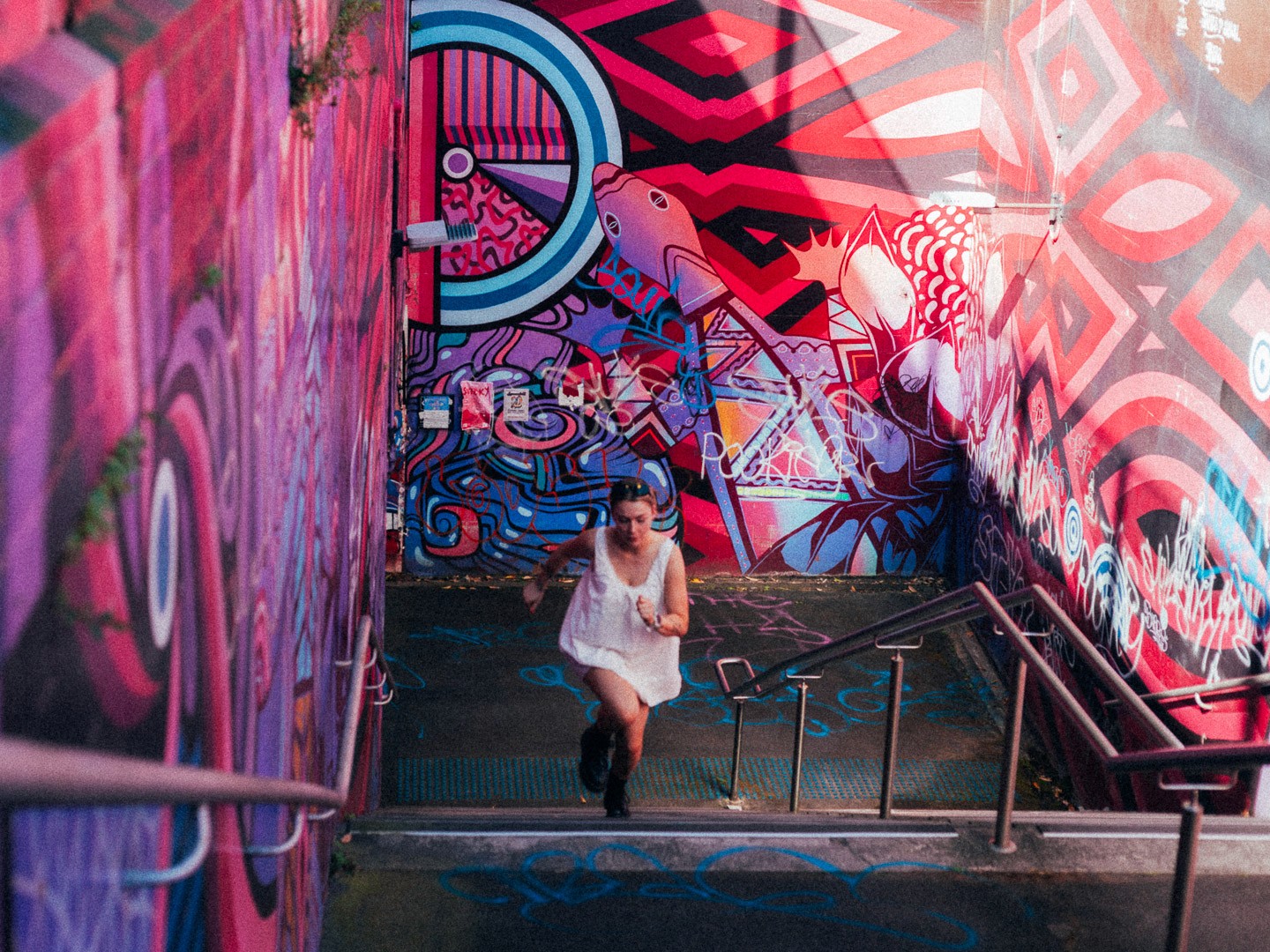
It's only ever been
microscopic details.
t
h
e
w
o
r
k
.
Say hi. Talk something creative.
Copyright © 2026 Edward Dang. All rights reserved.
12:51 PM
Aug 19, 2026
It's only ever been
microscopic details.
t
h
e
w
o
r
k
.
Say hi. Talk something creative.
Copyright © 2026 Edward Dang. All rights reserved.
12:51 PM
Aug 19, 2026
IN
PASSING
Move your cursor, then scroll
/ work / eternity
Role
Director
Editor
Year
2025
Deliverable
Short Documentary
Category
Society
Art
Creative Direction
Media Production
Coursework
A portrait of two Sydney street artists from opposing worlds. We followed their work, the subculture, and where their paths collide to document the textures and tensions ingrained in graffiti and street art, the oh-so local, ephemeral, and perpetual.
/ work / eternity
Deliverable
Short Documentary
Category
Society
Art
Role
Director
Editor
Year
2025
IN
PASSING
A portrait of two Sydney street artists from opposing worlds. We followed their work, the subculture, and where their paths collide to document the textures and tensions ingrained in graffiti and street art, the oh-so local, ephemeral, and perpetual.
Tap anywhere, then scroll
Creative Direction
Creative Direction
Coursework
Watch the Film
Dreamland
I. The Work
The Inner West. A place where, depending on who you ask, the same surface can be either a crime scene or a cultural landmark. Or both. Such tension, so messy, so unsettled, yet so alive, is precisely what we wanted In Passing to sit well within and to explore.
Our short documentary centres on two street artists who couldn't be any more different. Mistery, one of Sydney's foundational graffiti writers, contrasted with Oliver Wall, an emerging muralist with a formal fine arts background. In conversation with them, we painted a portrait of an overlooked subculture in constant negotiation with itself, over legality, authorship, meaning, and who gets to decide what belongs on a wall. Below: heritage-listed I Have a Dream mural, King St, Newtown.
Hover to reveal
Historical photograph (1991) by Juilee Pryor, City of Sydney Archives
Contemporary photograph (2025) by Minh Le for In Passing
Narrative
To achieve our artistic ambitions, we landed on a hybrid documentary approach. Structurally, the film leans towards the expository mode as it's dialogue-driven, though we borrowed just enough from essayistic and observational, and even poetic, to keep it from hardening into a lecture.
And there's the conversation. Or rather, two conversations to the fantasy of one. Despite never having met each other, the "dialogue" between Mistery and Oliver Wall is the heart of our film. The intention was always to let the juxtaposition do the heavy lifting, with voices cut against each other so precisely that it plays like an ongoing exchange.
Storytelling is non-linear by design. Each perspective from each artist recontextualises the other as the film unfolds, two separate threads quietly building toward a convergence neither subject ever knew they were part of. Conversing past and around each other, yet every so often, they'd land in the same place without realising it. Fine, I'll rewatch Oppenheimer.
Mistery, being a foundational figure of Sydney's graffiti, naturally became our chronicler through the scene. By contrasting his voice with Oliver Wall's present-time experiences, opinions, and process, we would foreground meaning-making as an active tension.
By giving space to personal stories of both artists, we wanted In Passing to transform an intricate societal matter into something utterly human. Where challenges, empathy, and reflection coexist.
Optics
and Design
Rather than defaulting to the familiar grammar of graffiti docos, we said no to aggressive energy and shaky cam for our own sake. What's the real difference anyway, between a piece of street art and one hung in a gallery, only to be stared at in utter silence? Perhaps slightly grainier and infinitely more raw, but surely not more noise.
And so: composure, texture, scale, negative space, a mix of static and fluid handheld, classical music, four-by-three, and film-like aesthetics. Instead of using modern lenses, which would've been very fine, we operated a set of vintage lenses ranging from wide (24 mm) to telephoto (135 mm), deliberately for optical imperfections. Either it's a mess, or it's everything. That, I felt, was the more honest way to treat a subculture far too often flattened into spectacle.
Drag any ticker
In pushing back against the conventions of its own genre, we also ended up mirroring the philosophies of the very artists it portrays. Graffiti writers push back against who controls public space. Muralists reframe what art on a wall can mean. We refused the expected and insisted on our own terms.
Did that come back to bite us? Yep, but I digress.
And many of the most crucial shots came from simply going out and sitting back at a spot for an unreasonable while to observe people interact with graffiti and murals. We hit those Inner West alleyways with the instincts of street photographers, treating every frame like it mattered way too much. Because for a film this well-thought-out, it just does.
At the end of the day, what we have is a documentary that holds together, narratively and visually, in ways that I know we left nothing to chance.
In Passing is a calm film about a rough subculture, and that contrast is, ultimately, its thesis. It doesn't attempt to sort out the tensions it surfaces, yet it allows the artists to speak with full complexity, trusts the audience to sense the friction between their worldviews, and finds its meaning in the liminal space between.
For a student production built on a tight schedule and tighter resources (and occasionally booze), ours is a piece of work the whole team is genuinely proud of. It's unapologetically us. In a genre that wears its chaos like a badge, and yes, I'm looking at you too, documentary film-making, creating something this considered feels like a statement in itself.
"It looks so good anyway. We could only do so much!"
Georgia Wood
Multimedia Producer
Master of Creative Industries"I love the opening and its soundtrack so much, and the overall texture (or vibe?) is so great. It doesn't look like a uni project. It's such professional work."
Eric Zhang
Graphic Designer
Master of Creative Industries"Excellent work in terms of structure, coherence, creative choices, and construction of meaning, sophisticated in conveying characters, ideas, and story."
Kush Badhwar
Artist and Film-Maker
Lecturer @ Macquarie Uni
"It's so good. The title is also really nice. We always pass the graffiti, but the documentary brings those artists to light, which is great."
Jennifer Devaney
Master of Creative Industries
Master of Management"Honestly, it's such an interesting topic to even think of doing, but also creative. Love the quality!"
Norah Almarshad
Postgrad @ Macquarie Uni
"It's good. I like the edit, the shots, the colour, how it's soft, and the way you've led the narrative for the whole thing."
Anindit Shrestha
Digital Media Specialist
Master of Creative Industries
It's Good We're All Mental
II. Creative Process
But first, let's meet the team:
Director & Editor
Edward Dang
Sound
Nirvan De Zylva
Producer & Writer
Georgia Wood
Production Assistant
Sylvia Ontieri
Cinematographer
Jon-Hin Tan
Assistant Producer
Minh Le
But first, let's meet the team:
Director & Editor
Edward Dang
Producer & Writer
Georgia Wood
Cinematographer
Jon-Hin Tan
Sound
Nirvan De Zylva
Production Assistant
Sylvia Ontieri
Assistant Producer
Minh Le
Watch Our First Documentary
"I did not expect this, but it's good we're all mental." That's what I told Georgia the moment Jon had secured a Netflix-approved cinema camera for our production, the Sony FX6. We weren't pursuing a film degree, so a potato would've been just fine. Still, we weren't there to settle for mediocrity.
As Director, I supposed the weight of it was pretty simple. You've got to make sure it looks right, feels right, and doesn't fall apart. All at once, all the time, with every decision traceable back to you. And all that long-term emotional investment and "trying to change the world, one film at a time" as well. No pressure, really.
Development
& Pre-Production
Eternity
Fun fact: In Passing was actually Eternity up until we finalised our title approximately twelve hours before submission. There's a (good?) reason for that.
Our project began with an idea we eventually realised was not quite possible. The original plan was to build the documentary around Sydney's very own Arthur Stace and his Eternity graffito. All through a single chalked walk, we would discuss the city's memories, faith, public spaces, and culture. Hence Eternity.
We recognised there was limited access to relevant material and people, no clear narrative pathway, and considerable uncertainty in reliably grounding the film stylistically and ethically. So, rather than forcing a concept that was collapsing, Georgia and I had to make the call to let the subject go while at least keeping the underlying concerns. Earlier ideas are meant to be held lightly anyway. The work was mysterious and important.
In Passing
The concept stabilised with a shift in focus to Newtown and the Inner West, Sydney's heartland of graffiti and street art. In passing way too many pieces pretty much every day, we'd never realised the tension between the two. That was until it became our narrative spine.
During this phase, we, back and forth between Producer and Director, pulled the thread as we structured a conflict over meaning, legality, and cultural value. We researched the history and the people behind the area, especially Newtown, the local Inner West Council and its efforts, as well as corresponding theoretical frameworks and concepts (although we didn't personally agree with every idea).
(01)
Graffiti as
Resistance
(02)
Placemaking
and Gentrification
(03)
Disjunctive
Synthesis
Location Scout
A few weeks before production, once we'd got a clear enough picture of what we were creating, I headed out. Just me and my trusty DSLR, wandering and observing Newtown, all the way through to Enmore and (hopping on a train to) Petersham. Such a perfect excuse to go out and take photos.
Having lived in Sydney for over a year and a half, I'd actually never been to Newtown, thus I plead guilty. Nevertheless, no amount of online research could have given me what that afternoon did. It was rather fascinating that the area most definitely looked gentrified, especially when compared to archival photographs, yet not quite.
The tension we'd been discussing was just there IRL, with graffiti living right alongside commissioned murals, the subtle interventions of the Council through its Perfect Match programme, and most importantly, the sheer colour, texture, and scale of it all. Being on location gave me, as Director, a physical sense of what our documentary would need to look and feel like.
Someone to
Watch over Me
Working with a producer is decently nice. There's a reason I haven't mentioned much pre-production, how we got in touch with Mistery, Oliver Wall, and, for a while, also Phibs and Spice, two of Sydney's more notable muralists, or the logistics, project timeline, and all those snacks and water on shoot days. That's because it's Georgia's work.
With our creative responsibilities split almost fifty-fifty, and every major decision requiring sign-off from both of us, Georgia also led on research, theory, and development, which conveniently left me with plenty of headspace to overthink art direction. For the longest time, it really did feel like Georgia's world, and I was merely living in it. RESPECTFULLY.
The rest of the team also backed me big time. Jon was more than happy to accommodate my vision and ideas for cinematography, as well as Nirvan for sound, who both have such extremely high technical proficiency. Sylvia and Minh were always there when I needed another pair of eyes or feedback. It still feels a little unreal to co-lead such an amazing crew.
Production
Day (01)
Inner West
Day (02)
North Ryde
Day (03)
Mistery
Day (04)
Oliver Wall
Production
Day (01)
Inner West
Day (02)
North Ryde
Day (03)
Mistery
Day (04)
Oliver Wall
Post-Production
Defiant Jazz
After a few days of touching grass and more alcohol than I'd ever had, it was time to head back to being a basement dweller. As Director and also Editor, taking the editorial lead meant having first-hand and total control over the film's structure, rhythm, and mood, which, as I realised, was essentially both satisfying and terrifying.
Scholars Rabiger and Hermann (available in a library near you) describe post-production as the "extremely creative editing phase" in which material is reshaped so deeply that "it's like a second chance to direct," with the central challenge being "to find a dramatic structure that delivers the story in its most striking form." This is where everything either clicks or falls apart.
Being classic me, I committed well beyond the required hours of the coursework. Thus, I was able to run multiple passes on sequencing, pacing, and sound-image relationships, sit with each version for a while to notice the flaws and hate myself, and then come back fresh rather than immediately settling for the first assembly that worked.
Workflow
There were at least four major drafts, alongside a couple of notes from Georgia about how we both should step away to calm down. We also kept the feedback loop running throughout, much like every other phase of this project.
On the technical side of things, primary editing was done in Final Cut Pro before the full timeline was exported to DaVinci Resolve Studio for colour grading and Pro Tools for Nirvan's sound mixing, which happened simultaneously. Perhaps not the most optimal, but coherent with our tool stack. And it was more than rewarding to see everything come together.
"Hang it in the Louvre," I guess?
Hang It in the Louvre
Hang It in the Louvre
The After Hours
III. Graphic Design
I worked on all graphic design for our production, which included title cards, end credits, and one more (fun) thing. They are not just text-on-a-screen.
For our end credits and titles, I was inspired by Sebastian Pardo's work on Brady Corbet's The Brutalist to a twisted mix between Swiss design and brutalism. We've got clean lines, efficient layout, minimal colour (none, actually), and lots of negative space. The goal was a liminal and concrete feel that would match the film's energy. If you're noticing it as a bit too clean for a graffiti documentary, I can confirm it was indeed another small way of mine to challenge the norm, as with pretty much everything else we'd been doing visually. We talked about this.
I also designed and printed a set of custom name badges for the crew, the look of which exhaustively aligns with my Swiss-brutalism obsession at the time. I thought it was a groovy way to relieve stress outside of production commitment. (Though I cut my palm with a really sharp knife while trimming the badges and lost an unreasonable amount of blood.)
Totally worth it, by the way.
While staring at Figma, I also received a comment that I would be doing anything but writing my report. I suppose design is effectively my procrastination.
My final piece of design for this project is, well, this very page you're on. This one marks my first time back in non-case study web design since forever, and more importantly, my starting point in a new tool I might just gatekeep (it's Framer). I guess it's a case study still, but hey.
I (accidentally) wrote far too much here, and there are probably way too many photos and memories archived for anyone's reasonable attention span within a one-web-page radius. But if you're reading this because you've scrolled through everything and stayed for what I have to say about our documentary, thank you! Like so, so much.
Here's to the dreamers. Also, thanks, Sydney. That was awesome.
A special thank you to Kush Badhwar for guidance and feedback throughout the process, to Alex Ryan and Chris Halili for completely ruining us with state-of-the-art equipment, to Eric Zhang for design consultation, and to Anindit Shrestha and Syukii Wan for emotional support. Warmest hugs to the team who gave so much to this project, especially Georgia, for enduring me.
Photography by Edward Dang and Minh Le
It's only ever been
microscopic details.
t
h
e
w
o
r
k
.
© 2026 Edward Dang.
12:51 PM
Aug 19, 2026
IN
PASSING
Tap anywhere, then scroll
/ work / eternity
Role
Director
Editor
Year
2025
Deliverable
Short Documentary
Category
Society
Art
Creative Direction
Media Production
Coursework
A portrait of two Sydney street artists from opposing worlds. We followed their work, the subculture, and where their paths collide to document the textures and tensions ingrained in graffiti and street art, the oh-so local, ephemeral, and perpetual.
/ work / eternity
Deliverable
Short Documentary
Category
Society
Art
Role
Director
Editor
Year
2025
IN
PASSING
A portrait of two Sydney street artists from opposing worlds. We followed their work, the subculture, and where their paths collide to document the textures and tensions ingrained in graffiti and street art, the oh-so local, ephemeral, and perpetual.
Tap anywhere, then scroll
Creative Direction
Creative Direction
Coursework
Watch the Film
Dreamland
I. The Work
The Inner West. A place where, depending on who you ask, the same surface can be either a crime scene or a cultural landmark. Or both. Such tension, so messy, so unsettled, yet so alive, is precisely what we wanted In Passing to sit well within and to explore.
Our short documentary centres on two street artists who couldn't be any more different. Mistery, one of Sydney's foundational graffiti writers, contrasted with Oliver Wall, an emerging muralist with a formal fine arts background. In conversation with them, we painted a portrait of an overlooked subculture in constant negotiation with itself, over legality, authorship, meaning, and who gets to decide what belongs on a wall. Below: heritage-listed I Have a Dream mural, King St, Newtown.
Hover to reveal
Historical photograph (1991) by Juilee Pryor, City of Sydney Archives
Contemporary photograph (2025) by Minh Le for In Passing
Narrative
To achieve our artistic ambitions, we landed on a hybrid documentary approach. Structurally, the film leans towards the expository mode as it's dialogue-driven, though we borrowed just enough from essayistic and observational, and even poetic, to keep it from hardening into a lecture.
And there's the conversation. Or rather, two conversations to the fantasy of one. Despite never having met each other, the "dialogue" between Mistery and Oliver Wall is the heart of our film. The intention was always to let the juxtaposition do the heavy lifting, with voices cut against each other so precisely that it plays like an ongoing exchange.
Storytelling is non-linear by design. Each perspective from each artist recontextualises the other as the film unfolds, two separate threads quietly building toward a convergence neither subject ever knew they were part of. Conversing past and around each other, yet every so often, they'd land in the same place without realising it. Fine, I'll rewatch Oppenheimer.
Mistery, being a foundational figure of Sydney's graffiti, naturally became our chronicler through the scene. By contrasting his voice with Oliver Wall's present-time experiences, opinions, and process, we would foreground meaning-making as an active tension.
By giving space to personal stories of both artists, we wanted In Passing to transform an intricate societal matter into something utterly human. Where challenges, empathy, and reflection coexist.
Optics
and Design
Rather than defaulting to the familiar grammar of graffiti docos, we said no to aggressive energy and shaky cam for our own sake. What's the real difference anyway, between a piece of street art and one hung in a gallery, only to be stared at in utter silence? Perhaps slightly grainier and infinitely more raw, but surely not more noise.
And so: composure, texture, scale, negative space, a mix of static and fluid handheld, classical music, four-by-three, and film-like aesthetics. Instead of using modern lenses, which would've been very fine, we operated a set of vintage lenses ranging from wide (24 mm) to telephoto (135 mm), deliberately for optical imperfections. Either it's a mess, or it's everything. That, I felt, was the more honest way to treat a subculture far too often flattened into spectacle.
Drag any ticker
In pushing back against the conventions of its own genre, we also ended up mirroring the philosophies of the very artists it portrays. Graffiti writers push back against who controls public space. Muralists reframe what art on a wall can mean. We refused the expected and insisted on our own terms.
Did that come back to bite us? Yep, but I digress.
And many of the most crucial shots came from simply going out and sitting back at a spot for an unreasonable while to observe people interact with graffiti and murals. We hit those Inner West alleyways with the instincts of street photographers, treating every frame like it mattered way too much. Because for a film this well-thought-out, it just does.
At the end of the day, what we have is a documentary that holds together, narratively and visually, in ways that I know we left nothing to chance.
In Passing is a calm film about a rough subculture, and that contrast is, ultimately, its thesis. It doesn't attempt to sort out the tensions it surfaces, yet it allows the artists to speak with full complexity, trusts the audience to sense the friction between their worldviews, and finds its meaning in the liminal space between.
For a student production built on a tight schedule and tighter resources (and occasionally booze), ours is a piece of work the whole team is genuinely proud of. It's unapologetically us. In a genre that wears its chaos like a badge, and yes, I'm looking at you too, documentary film-making, creating something this considered feels like a statement in itself.
"It looks so good anyway. We could only do so much!"
Georgia Wood
Multimedia Producer
Master of Creative Industries"I love the opening and its soundtrack so much, and the overall texture (or vibe?) is so great. It doesn't look like a uni project. It's such professional work."
Eric Zhang
Graphic Designer
Master of Creative Industries"Excellent work in terms of structure, coherence, creative choices, and construction of meaning, sophisticated in conveying characters, ideas, and story."
Kush Badhwar
Artist and Film-Maker
Lecturer @ Macquarie Uni
"It's so good. The title is also really nice. We always pass the graffiti, but the documentary brings those artists to light, which is great."
Jennifer Devaney
Master of Creative Industries
Master of Management"Honestly, it's such an interesting topic to even think of doing, but also creative. Love the quality!"
Norah Almarshad
Postgrad @ Macquarie Uni
"It's good. I like the edit, the shots, the colour, how it's soft, and the way you've led the narrative for the whole thing."
Anindit Shrestha
Digital Media Specialist
Master of Creative Industries
It's Good We're All Mental
II. Creative Process
But first, let's meet the team:
Director & Editor
Edward Dang
Sound
Nirvan De Zylva
Producer & Writer
Georgia Wood
Production Assistant
Sylvia Ontieri
Cinematographer
Jon-Hin Tan
Assistant Producer
Minh Le
But first, let's meet the team:
Director & Editor
Edward Dang
Producer & Writer
Georgia Wood
Cinematographer
Jon-Hin Tan
Sound
Nirvan De Zylva
Production Assistant
Sylvia Ontieri
Assistant Producer
Minh Le
Watch Our First Documentary
"I did not expect this, but it's good we're all mental." That's what I told Georgia the moment Jon had secured a Netflix-approved cinema camera for our production, the Sony FX6. We weren't pursuing a film degree, so a potato would've been just fine. Still, we weren't there to settle for mediocrity.
As Director, I supposed the weight of it was pretty simple. You've got to make sure it looks right, feels right, and doesn't fall apart. All at once, all the time, with every decision traceable back to you. And all that long-term emotional investment and "trying to change the world, one film at a time" as well. No pressure, really.
Development
& Pre-Production
Eternity
Fun fact: In Passing was actually Eternity up until we finalised our title approximately twelve hours before submission. There's a (good?) reason for that.
Our project began with an idea we eventually realised was not quite possible. The original plan was to build the documentary around Sydney's very own Arthur Stace and his Eternity graffito. All through a single chalked walk, we would discuss the city's memories, faith, public spaces, and culture. Hence Eternity.
We recognised there was limited access to relevant material and people, no clear narrative pathway, and considerable uncertainty in reliably grounding the film stylistically and ethically. So, rather than forcing a concept that was collapsing, Georgia and I had to make the call to let the subject go while at least keeping the underlying concerns. Earlier ideas are meant to be held lightly anyway. The work was mysterious and important.
In Passing
The concept stabilised with a shift in focus to Newtown and the Inner West, Sydney's heartland of graffiti and street art. In passing way too many pieces pretty much every day, we'd never realised the tension between the two. That was until it became our narrative spine.
During this phase, we, back and forth between Producer and Director, pulled the thread as we structured a conflict over meaning, legality, and cultural value. We researched the history and the people behind the area, especially Newtown, the local Inner West Council and its efforts, as well as corresponding theoretical frameworks and concepts (although we didn't personally agree with every idea).
(01)
Graffiti as
Resistance
(02)
Placemaking
and Gentrification
(03)
Disjunctive
Synthesis
Location Scout
A few weeks before production, once we'd got a clear enough picture of what we were creating, I headed out. Just me and my trusty DSLR, wandering and observing Newtown, all the way through to Enmore and (hopping on a train to) Petersham. Such a perfect excuse to go out and take photos.
Having lived in Sydney for over a year and a half, I'd actually never been to Newtown, thus I plead guilty. Nevertheless, no amount of online research could have given me what that afternoon did. It was rather fascinating that the area most definitely looked gentrified, especially when compared to archival photographs, yet not quite.
The tension we'd been discussing was just there IRL, with graffiti living right alongside commissioned murals, the subtle interventions of the Council through its Perfect Match programme, and most importantly, the sheer colour, texture, and scale of it all. Being on location gave me, as Director, a physical sense of what our documentary would need to look and feel like.
Someone to
Watch over Me
Working with a producer is decently nice. There's a reason I haven't mentioned much pre-production, how we got in touch with Mistery, Oliver Wall, and, for a while, also Phibs and Spice, two of Sydney's more notable muralists, or the logistics, project timeline, and all those snacks and water on shoot days. That's because it's Georgia's work.
With our creative responsibilities split almost fifty-fifty, and every major decision requiring sign-off from both of us, Georgia also led on research, theory, and development, which conveniently left me with plenty of headspace to overthink art direction. For the longest time, it really did feel like Georgia's world, and I was merely living in it. RESPECTFULLY.
The rest of the team also backed me big time. Jon was more than happy to accommodate my vision and ideas for cinematography, as well as Nirvan for sound, who both have such extremely high technical proficiency. Sylvia and Minh were always there when I needed another pair of eyes or feedback. It still feels a little unreal to co-lead such an amazing crew.
Production
Day (01)
Inner West
Day (02)
North Ryde
Day (03)
Mistery
Day (04)
Oliver Wall
Production
Day (01)
Inner West
Day (02)
North Ryde
Day (03)
Mistery
Day (04)
Oliver Wall
Post-Production
Defiant Jazz
After a few days of touching grass and more alcohol than I'd ever had, it was time to head back to being a basement dweller. As Director and also Editor, taking the editorial lead meant having first-hand and total control over the film's structure, rhythm, and mood, which, as I realised, was essentially both satisfying and terrifying.
Scholars Rabiger and Hermann (available in a library near you) describe post-production as the "extremely creative editing phase" in which material is reshaped so deeply that "it's like a second chance to direct," with the central challenge being "to find a dramatic structure that delivers the story in its most striking form." This is where everything either clicks or falls apart.
Being classic me, I committed well beyond the required hours of the coursework. Thus, I was able to run multiple passes on sequencing, pacing, and sound-image relationships, sit with each version for a while to notice the flaws and hate myself, and then come back fresh rather than immediately settling for the first assembly that worked.
Workflow
There were at least four major drafts, alongside a couple of notes from Georgia about how we both should step away to calm down. We also kept the feedback loop running throughout, much like every other phase of this project.
On the technical side of things, primary editing was done in Final Cut Pro before the full timeline was exported to DaVinci Resolve Studio for colour grading and Pro Tools for Nirvan's sound mixing, which happened simultaneously. Perhaps not the most optimal, but coherent with our tool stack. And it was more than rewarding to see everything come together.
"Hang it in the Louvre," I guess?
Hang It in the Louvre
Hang It in the Louvre
The After Hours
III. Graphic Design
I worked on all graphic design for our production, which included title cards, end credits, and one more (fun) thing. They are not just text-on-a-screen.
For our end credits and titles, I was inspired by Sebastian Pardo's work on Brady Corbet's The Brutalist to a twisted mix between Swiss design and brutalism. We've got clean lines, efficient layout, minimal colour (none, actually), and lots of negative space. The goal was a liminal and concrete feel that would match the film's energy. If you're noticing it as a bit too clean for a graffiti documentary, I can confirm it was indeed another small way of mine to challenge the norm, as with pretty much everything else we'd been doing visually. We talked about this.
I also designed and printed a set of custom name badges for the crew, the look of which exhaustively aligns with my Swiss-brutalism obsession at the time. I thought it was a groovy way to relieve stress outside of production commitment. (Though I cut my palm with a really sharp knife while trimming the badges and lost an unreasonable amount of blood.)
Totally worth it, by the way.
While staring at Figma, I also received a comment that I would be doing anything but writing my report. I suppose design is effectively my procrastination.
My final piece of design for this project is, well, this very page you're on. This one marks my first time back in non-case study web design since forever, and more importantly, my starting point in a new tool I might just gatekeep (it's Framer). I guess it's a case study still, but hey.
I (accidentally) wrote far too much here, and there are probably way too many photos and memories archived for anyone's reasonable attention span within a one-web-page radius. But if you're reading this because you've scrolled through everything and stayed for what I have to say about our documentary, thank you! Like so, so much.
Here's to the dreamers. Also, thanks, Sydney. That was awesome.
A special thank you to Kush Badhwar for guidance and feedback throughout the process, to Alex Ryan and Chris Halili for completely ruining us with state-of-the-art equipment, to Eric Zhang for design consultation, and to Anindit Shrestha and Syukii Wan for emotional support. Warmest hugs to the team who gave so much to this project, especially Georgia, for enduring me.
Photography by Edward Dang and Minh Le
It's only ever been
microscopic details.
t
h
e
w
o
r
k
.
Say hi. Talk something creative.
Copyright © 2026 Edward Dang. All rights reserved.
12:51 PM
Aug 19